
CULTURE · LONDON
Reading Time: 8 minutesBasic.Space arrived in London for three days in June 2026 with furniture, jewellery, a synthesiser company and a claim that discipline barely matters any more. The more interesting fact sat underneath it: the platform staging the show now also owns Design Miami, and the room it chose has been closed to the public since 2008.
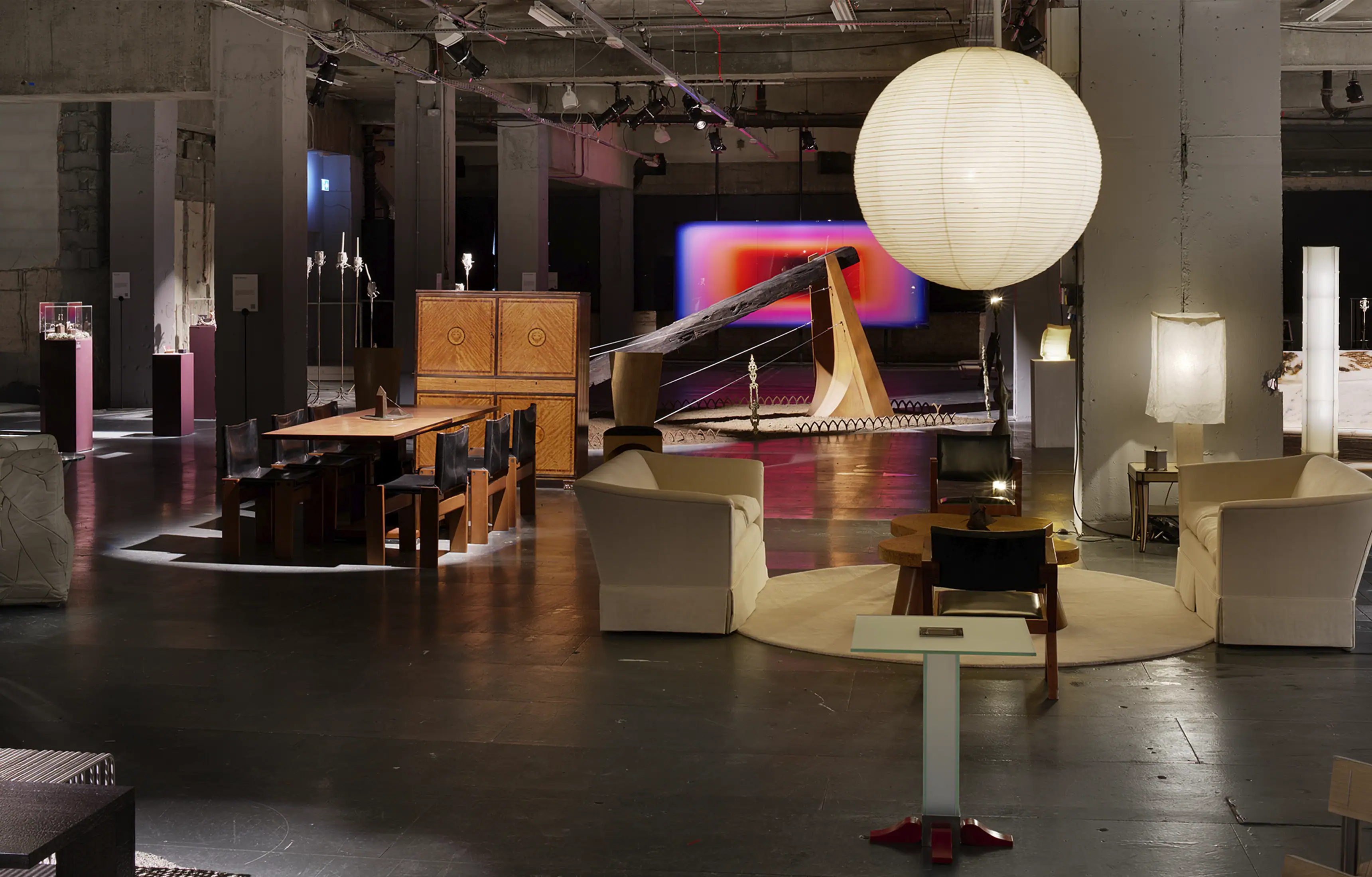
Basic.Space brought its first London event to The Old Selfridges Hotel on Orchard Street from 12 to 14 June 2026, a private preview on the first evening followed by two days open to the public. The event was creative-directed by Juliana Salazar and built around four categories treated as one continuous space rather than four separate sections: design, art, fashion and sound.

That framing, disciplines collapsed into a single room, is the easy headline. The harder and more useful one is what Basic.Space actually is by the time it reached London. Founded by Jesse Lee as a digital marketplace for design, the company has spent the past three years turning itself into something closer to a holding structure for how collectible design gets bought, and the room it chose for its UK debut is itself a piece of unfinished Selfridges history that most visitors walked past without knowing.

A platform that also owns Design Miami
Basic.Space is not a start-up testing an idea. In October 2023 it acquired Design Miami/, the fair that has spent nearly two decades functioning as the establishment benchmark for collectible design worldwide. The deal was structured as an all-stock transaction: Design Miami/ kept its own chief executive, Jennifer Roberts, while Lee became chairman across both businesses. That arrangement matters more than it looks. It means the company staging a three-day pop-up above a London food hall is the same company that runs the fair against which every other collectible design event in the world measures itself.

Lee has described the logic behind the acquisition directly: “Design isn’t just a product category; it’s a mindset.” London was not the first place that mindset was tested outside Miami. In March 2025, Basic.Space opened Design.Space at the Pacific Design Center in West Hollywood, an invitation-only marketplace built around an “IRL to URL” model, physical browsing backed by a mobile app for purchase, stocked with pieces that ranged from a Pierre Paulin sofa reupholstered in material recovered from Christo and Jeanne-Claude’s wrapped Arc de Triomphe to five hundred vintage Ettore Sottsass telephones pulled from a Stanford University time capsule. London is the same model relocated and compressed into three days, with the department store references dropped and the venue itself doing more of the argument.

The room has been empty since 2008
The Old Selfridges Hotel sits directly above the Selfridges food hall at 1 Orchard Street, inside a building that is Grade II listed and was designed principally by the American architect Daniel Burnham, with the frontispiece by Francis Swales and further work by British architects R. Frank Atkinson and Thomas Smith Tait. The store opened in stages from 1909, with the full building complete by 1928.

A hotel operated within that building for decades before it closed in 2008. The upper floors then sat largely unused for well over a decade, surfacing occasionally as a raw exhibition space, including a 2013 show on London subculture staged in what organisers described at the time as a cavernous, unfinished industrial room. Selfridges itself changed hands in December 2021, when the Thai retail group Central Group and the Austrian firm Signa bought the store for £4 billion, and Signa’s then-executive chairman spoke publicly about restoring a luxury hotel and apartments into that same long-empty space. Signa collapsed into insolvency at the end of 2023 and sold down its Selfridges stake through 2024, leaving Central Group as the building’s principal owner. That restoration has not happened in the time since. What exists instead, for now, is exactly what Basic.Space used: a large, undressed room inside a landmark building, available for events precisely because its next permanent use has not yet been decided.

That is the detail the original announcement left out entirely, and it changes what the venue means. Basic.Space was not staging a pop-up in a generic warehouse. It was staging one inside a room that Selfridges’ current owners have already said, at least once, they intend to turn back into a functioning hotel.

What was actually in the room
The four-pillar framing sounds abstract until it is attached to the objects. Marcin Rusak, the Polish designer whose practice is built on suspending real flowers inside resin, sources his material from local flower markets and stalls rather than growing or commissioning it, then cuts the set resin into blocks and sheets that expose the flowers’ cross-sections, petals and stems reading like veins or fossils once they are sliced through. Rusak works in two variants of the same idea: Flora Perma, a non-ageing resin that fixes the flowers permanently and reads closer to stone, and Flora Temporaria, which keeps changing after the piece is finished, so that petals shift volume over time and leave small voids of light around their own structure. Permanence and decay sit inside the same material, which is exactly the tension the room itself was built on.

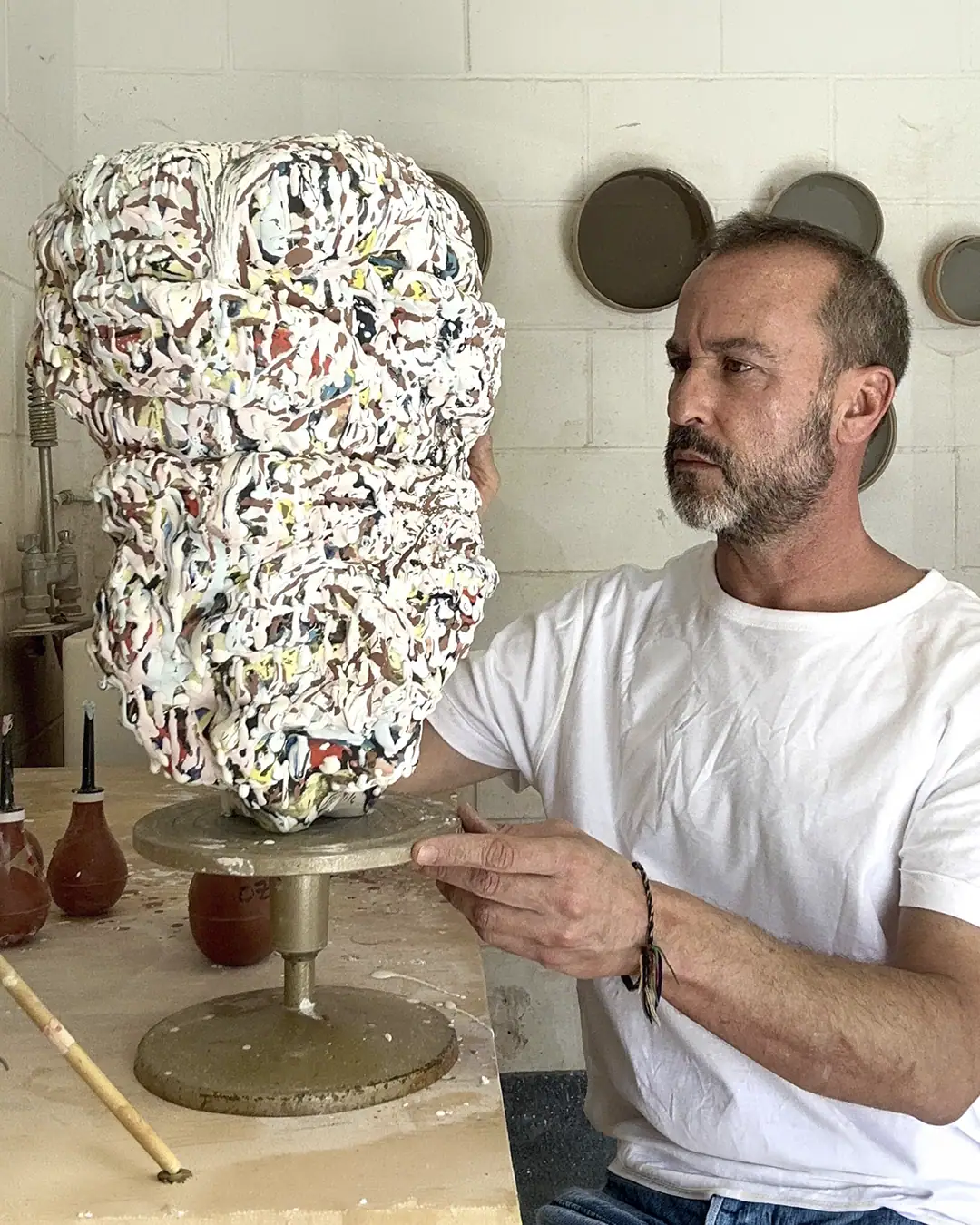
Brodie Neill brought his “ocean terrazzo” technique, first shown as the Gyro table at the London Design Biennale in 2016. Neill collects plastic waste from beaches in Tasmania, Hawaii and Cornwall, sorts it by colour, cleans and sterilises it, then mixes the chips with resin to form a composite that is CNC cut and inlaid rather than moulded, so the finished surface fans from white at the centre to black at the edges, blue, brown and green chips visible throughout. Like Rusak’s resin, the waste is left legible rather than smoothed away.

Samuel Ross, who built the fashion label A-COLD-WALL* before extending into sculpture and furniture represented by the Friedman Benda gallery, appeared alongside Completedworks, the jewellery line founded by Anna Jewsbury and worn by Emma Watson and Keira Knightley among others, known for silhouettes that borrow more from sculpture than from conventional jewellery-making. Faye Toogood, showing with the Italian furniture house Meritalia, debuted her Crease collection at the London event: an armchair, two sofas and a folded-metal coffee table built around exposed seams left deliberately visible on the surface rather than hidden inside the upholstery, a construction method borrowed directly from garment-making by a designer who ran her own clothing line before she designed furniture. Toogood’s new pieces were shown next to historical Meritalia work by Gaetano Pesce and Carlo Contin, which put a debut collection in direct conversation with two of the pieces that built the company’s reputation in the first place.

Rick Owens appeared too, presented not by his own studio but by Carpenters Workshop Gallery, the collectible-design gallery that has given Owens repeated solo exhibitions in London, including Glade in 2019 and Rust Never Sleeps in 2025, rather than a single one-off booking. The least expected name in the room was Telepathic Instruments, the synthesiser company founded by Kevin Parker, best known as the musician behind Tame Impala. Parker’s company builds physical instruments, most notably a synthesiser called the Orchid, and its presence turned the show’s fourth stated pillar, sound, into something more than a curatorial gesture: an actual instrument-maker sitting in the same room as a jeweller, a streetwear designer and a furniture house with a hundred years of history behind it.

Two London galleries inside the platform’s own art initiative
Basic.Space runs a dedicated art arm called PLATFORM, and its London contribution came from two galleries based in the city itself, Nicoletti and Albion Jeune, alongside artists Illya Goldman Gubin and Nara Lee. Both galleries are recent additions to London’s map rather than established institutions. Nicoletti, founded in 2018 by Oswaldo Nicoletti and Camille Houzé, moved from a smaller space in Bethnal Green into a converted Shoreditch warehouse in September 2024, buying the building rather than renting it, a decision Houzé has described as keeping “a sense of progression alive” during a difficult market for galleries generally. Albion Jeune, founded by Lucca Hue-Williams, opened only in November 2023, on Little Portland Street. Folding two such recent galleries into the event, rather than importing art from elsewhere, was a specific choice: it meant the “local” element of an otherwise international line-up, participants also came from Berlin, Paris, Seoul, Melbourne and Los Angeles, was carried by galleries actively building a base in the city rather than by names selected purely to represent it.

Creative direction sat with Juliana Salazar, a stylist and creative director better known for fashion work, including a widely covered campaign for Asics, than for conventional design-fair curation. That background fits the show’s stated premise more precisely than a design specialist’s might have: an event built on refusing hierarchy between fashion, furniture, art and sound arguably needed someone whose own career already moves between those categories rather than sitting inside one of them.

Frequently asked questions
What is Basic.Space?
A digital marketplace for design, art and fashion founded by Jesse Lee. Since October 2023 it has also owned Design Miami/, the long-running collectible design fair, with Lee serving as chairman across both.
Where and when was the London event held?
The Old Selfridges Hotel, 1 Orchard Street, London, from 12 to 14 June 2026, with a private preview on the first evening and public access on the following two days.
What is the Old Selfridges Hotel?
The former in-store hotel within the Grade II listed Selfridges Oxford Street building, which closed in 2008. The upper floors have been used periodically for events and exhibitions since, and Selfridges’ current owner, Central Group, has previously discussed restoring a hotel in the space.
Who curated the event?
Juliana Salazar, a stylist and creative director, worked as creative director on the London debut.
Which designers and brands were included?
Among others: Marcin Rusak, Brodie Neill, Samuel Ross, Completedworks, Faye Toogood with Meritalia, Rick Owens (presented by Carpenters Workshop Gallery) and Telepathic Instruments, the synthesiser company founded by Kevin Parker of Tame Impala.
Is this connected to Design Miami?
Yes, indirectly. Both are now part of Basic.Space, though Design Miami/ continues to operate independently with its own chief executive, Jennifer Roberts.


Final thoughts
Strip away the curatorial language and Basic.Space’s London debut is a company that owns the world’s most established collectible design fair, testing whether a compressed, three-day, multi-discipline version of that same idea works outside Miami and outside its Los Angeles prototype. It does that testing inside a room with its own unresolved story: a hotel that closed in 2008, inside a building whose owners have already said, at least once, that they would like to reopen it as one again. Marcin Rusak’s flowers cast in resin and Brodie Neill’s reclaimed ocean plastic were, without anyone stating it directly, sitting in a space that shares their basic premise, that something set aside does not have to stay that way.


Leave a Reply