
Design Travel · Lake District
Reading Time: 8 minutes
Brimstone is the old word for sulphur, one of the three ingredients that made gunpowder work. The 16-suite hotel of that name in the Lake District sits on the site of the valley’s own gunpowder works, closed in 1930, and its two later additions have kept doing exactly what that works always did: turning the valley’s own ground into something worth exporting.
Introduction
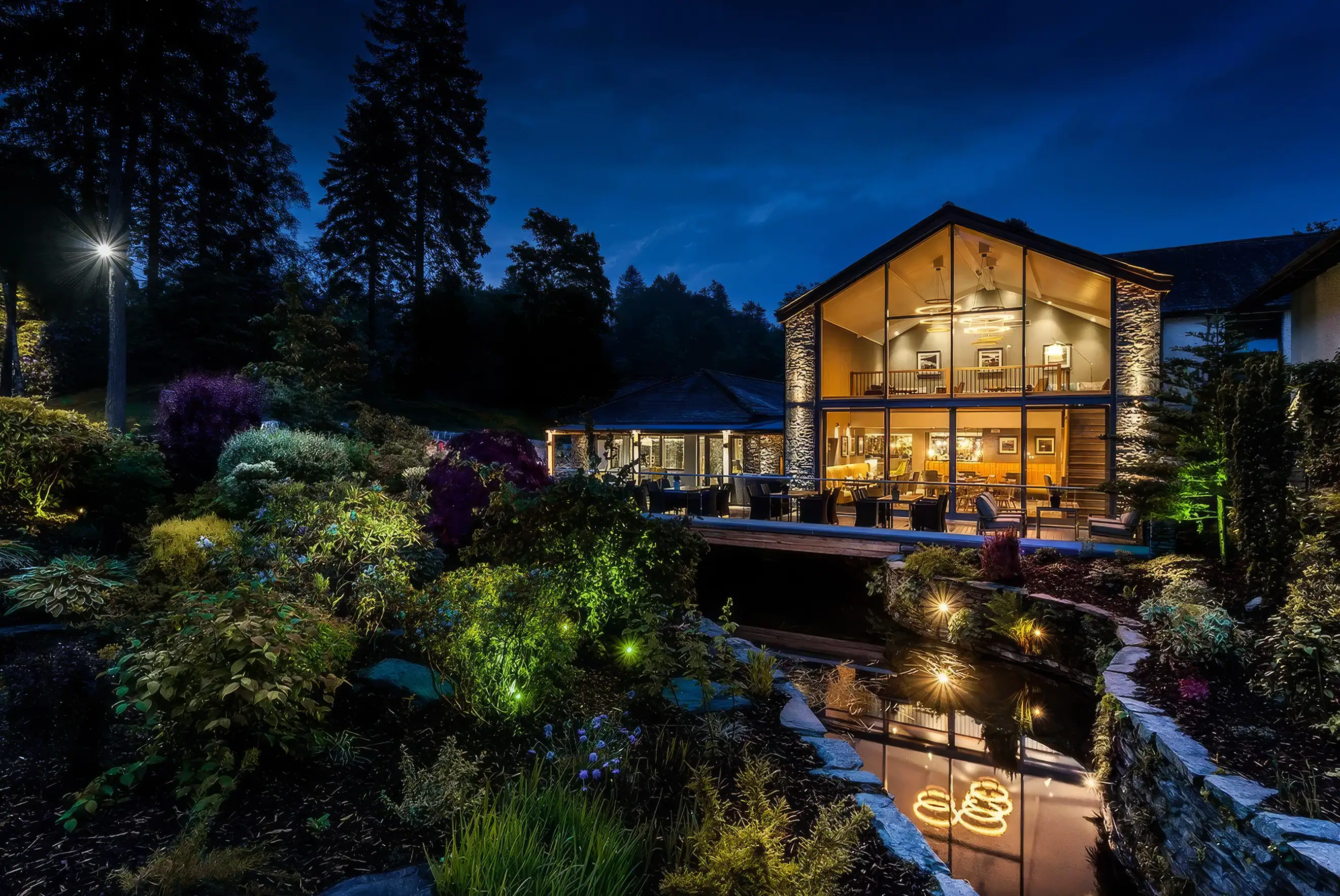
Brimstone Hotel, a 16-suite adults-only boutique property within the 35-acre Langdale Estate near Ambleside in the Lake District, opened in June 2013 after an 18-month build costing £3.2 million. It was designed by Unwin Jones Partnership as architect and project manager, with interiors by Greyline Design, structural engineering by Bingham Yates and Partners, building services by Davies Partnership, landscape design by Westwood Landscape, and construction by Thomas Armstrong Construction Ltd. The hotel has since gained a standalone spa, designed in 2017 by Curveline Design Ltd under Mark and Catherine Green, and a public-area refresh completed in 2020 by Blenheim Design.

Most coverage of Brimstone treats the name as mood: something dark, warm and vaguely elemental to suit a slate-and-timber lodge in the fells. It is not a mood word. Brimstone is the historic English name for sulphur, and sulphur, alongside saltpetre and charcoal, is one of the three ingredients of gunpowder. The hotel stands on the site of the valley’s own gunpowder works. That is not a coincidence anybody built into the branding as a private joke. It is the actual history of the ground the building sits on, and it deserves to be named as clearly as any other design credit in this piece.

The valley made gunpowder for a hundred years before it made hospitality
The site now occupied by the Langdale Estate began as a 17th-century woollen mill, processing wool from local flocks using power drawn from Great Langdale Beck. In 1823, an entrepreneur recognised that the same water power and remote setting that suited a mill also suited something considerably more volatile, and the Elterwater Gunpowder Works began production on the site. Elterwater specialised in slow blasting cartridges rather than the faster powders made at some rival works, supplying the local slate quarrying industry along with export markets in North America and South Africa.

Gunpowder is a mixture of three materials in fixed proportion: saltpetre, imported into Cumbria from India, Chile and Germany; sulphur, shipped in from Italy and Sicily; and charcoal, burned locally from the valley’s own woodland. The works closed in 1930, undone by the economic depression and by the arrival of dynamite and other modern explosives that made a black powder mill obsolete. It had operated for 107 years, longer than the hotel that now carries its most volatile ingredient’s old name has yet existed by a wide margin.

From munitions to timeshare to boutique hotel, in three ownership eras
A local landowner turned the site into a holiday destination after the gunpowder works closed, building a small hotel, several furnished cottages, a guest house and dormitories across the same 35 acres between 1930 and 1981. In 1981, the Langdale Partnership redeveloped it as a timeshare resort, adding 80 Scandinavian-style lodges and converting the original small hotel into a high-end country club. Ownership then passed through two brewers, Matthew Brown Brewery in 1987 and Scottish & Newcastle Breweries the year after, before Langdale Owners plc bought the estate outright in 1996, with the timeshare owners themselves holding control. That structure is still how the estate is owned today.

Brimstone arrived within that ownership as a deliberate step up in ambition: a standalone, adults-only 16-suite hotel built new within the wider estate rather than another phase of timeshare lodges. The choice to build rather than convert an existing structure matters, because it meant Unwin Jones Partnership and Greyline Design were free to design a building around the valley’s own materials from the ground up, rather than working within an inherited shell.
The building sources its own valley the same way the gunpowder works did
Brimstone’s walls, roofing slate and internal stone finishes were sourced from Burlington’s Elterwater quarry, in the same village as the historic gunpowder works, worked into cedar cladding, rendered walls and timber-framed balconies with structural glass balustrades. The design carries genuine sustainability specification rather than a token gesture: wall insulation rated at 0.19 W/m²K and roof insulation at 0.1 W/m²K, LED lighting on PIR sensors, VRV heating and cooling, heat recovery ventilation, sensor-linked wood burning stoves in the suites, rainwater collection, and a construction process that drew 90 per cent of its subcontractors and materials from local suppliers. The project won recognition at the Northern Design Awards across four categories, including Best Eco/Sustainability Build and Best Hotel Interior Design.
Individual suites carry that same material logic through to guest-facing detail rather than confining it to plant rooms and specification sheets. Fireside Suites are built around slate chimney breasts. Mezzanine Suites use cast-iron staircases with timber railings to connect their split levels. Duet Suites include a handmade wooden trunk table sourced from local suppliers. There is a further detail here that is either a genuine piece of design wit or a remarkable coincidence: sulphur’s atomic number is 16, and Brimstone has exactly 16 suites.

A spa built to hold heat the way the works once held explosive potential
Brimstone Spa opened in 2017 as a standalone two-storey building, designed by Curveline Design Ltd under Mark and Catherine Green, and engineered by Davies Partnership. It holds seven distinct thermal experiences, including a Himalayan salt steam grotto and a lava sauna, an infinity pool that runs from an indoor space out into the landscape, 10 treatment rooms, and a private spa suite known as The Bubble, with twin treatment beds and its own air bath. Five further chill-out zones and an outdoor sauna with its own wood burning stove complete the building. Treatments under the Pure Alchemy range use natural, organic, locally sourced ingredients, packaged in recycled glass jars, with birch branches for the traditional Venik treatment cut locally rather than imported.

Where the 2013 building sources its stone and timber from the valley, the spa sources its treatments the same way, using birch, local water and locally blended oils rather than an imported product line. It is a smaller-scale version of the same instinct that built the original works: take what the valley actually produces and turn it into something a visitor will pay to experience.

The 2020 refresh kept the palette and warmed the register
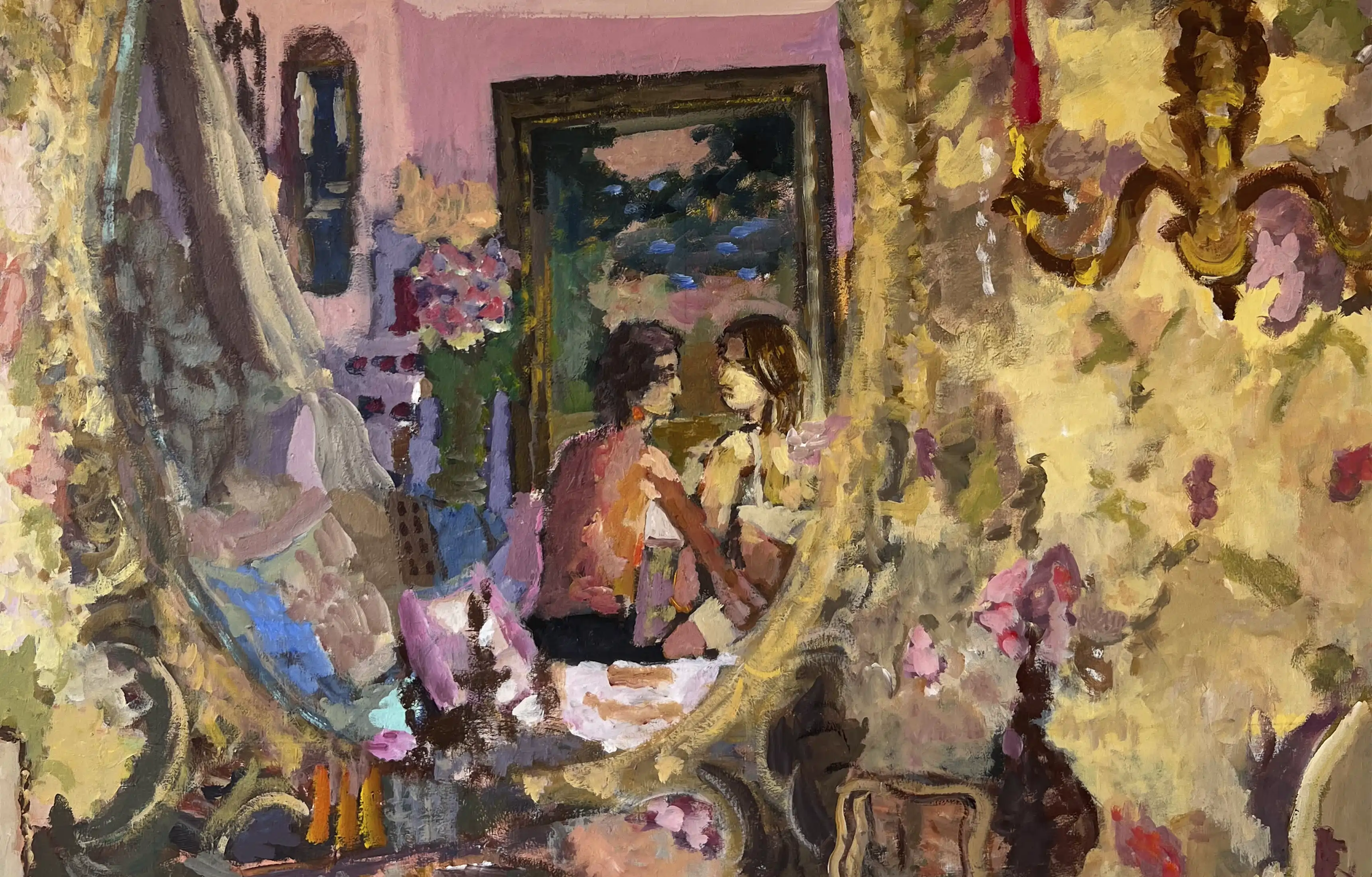
Blenheim Design refreshed Brimstone’s 16 rooms and public areas across 1,102 square metres, completed in 2020. Fireplaces were rebuilt in green slate with wood mantels and oversized mirrors, deliberately scaled to emphasise the building’s double-height spaces. Velvet and linen textiles were introduced against the existing rustic stone and timber to soften the palette without abandoning it, and custom wood tables were commissioned from timber grown on the estate’s own forest, a detail that continues the same principle of building from the valley’s own resources rather than importing furniture wholesale. Wall paintings depicting local poets and writers were added through the public rooms, giving the refresh a literary layer the original 2013 interior did not carry. Separate refurbishment works, engineered by Davies Partnership, relocated the hotel’s reception and reconfigured the restaurant for all-day dining, including a Josper charcoal oven installed in the reworked kitchen, a small and probably unintentional echo of the one ingredient in the valley’s old gunpowder recipe that was always made on site rather than shipped in.

What the design argument actually is
Read the three phases together, 2013, 2017 and 2020, and the pattern is consistent rather than coincidental. Every addition to Brimstone has sourced itself from the same 35 acres the gunpowder works once occupied: slate from the same village’s quarry, timber from the estate’s own forest, treatments built from local water and local plants, even a name borrowed directly from the site’s own industrial chemistry rather than invented for the brochure. A hotel that simply evoked the Lake District with generic alpine styling would have been a much easier brief to write and a much less interesting one to design. What Unwin Jones Partnership, Greyline Design and every studio that has touched the building since actually did was treat the valley’s own resources and its own history as the material palette, the same discipline the works themselves practised when they turned local charcoal and imported sulphur and saltpetre into something worth shipping to North America and South Africa. The gunpowder works closed because dynamite made its product obsolete. The valley did not stop being useful. It just had to find a second thing worth making from what was actually there, and the second thing turned out to be hospitality built the same way.

Frequently asked questions
Where is Brimstone Hotel and how many suites does it have?
Brimstone Hotel is within the Langdale Estate near Ambleside in the Lake District, Cumbria, and has 16 suites.
Why is it called Brimstone?
The hotel sits on the site of the Elterwater Gunpowder Works, which operated from 1823 to 1930. Brimstone is the historic English name for sulphur, one of gunpowder’s three core ingredients alongside saltpetre and charcoal.
Who designed Brimstone Hotel?
Unwin Jones Partnership was architect and project manager for the original 2013 building, with interiors by Greyline Design. Curveline Design Ltd, led by Mark and Catherine Green, designed the standalone Brimstone Spa in 2017, and Blenheim Design completed a refresh of the rooms and public areas in 2020.
When did Brimstone Hotel open?
Brimstone opened in June 2013, after an 18-month build costing £3.2 million, following six months of enabling works on the site.
What is the Elterwater Gunpowder Works?
It was a gunpowder manufacturing works on the same site, operating from 1823 to 1930, producing slow blasting cartridges for the local slate quarrying industry and for export to North America and South Africa, before closing amid economic depression and the rise of dynamite.
Is Brimstone part of a larger estate?
Yes. Brimstone is a standalone boutique hotel within the wider 35-acre Langdale Estate, which also includes the Langdale Hotel, self-catering lodges and shared leisure facilities, owned collectively by its timeshare owners through Langdale Owners plc.

Final thoughts
Brimstone’s own marketing has occasionally mentioned that its name means sulphur, but almost nothing written about the hotel connects that fact to the actual, dated, sourced history of the ground beneath it: a working gunpowder mill that ran for 107 years, closed by the same industrial progress that made its product obsolete, on a site that changed hands through two breweries and a timeshare partnership before becoming, eventually, a hotel named quite literally after what the valley used to manufacture. Whether the coincidence of 16 suites and sulphur’s atomic number of 16 was deliberate or not, it is the kind of detail that rewards a reader for noticing it, which is exactly what good design is supposed to do.

The building that resulted has been added to twice since 2013, by a spa and by a refresh, and both additions kept faith with the same instinct: source the valley’s own materials, and let them do the talking. That is a harder discipline to sustain across three separate design teams and seven years than it looks, and it is the actual achievement here, not the alpine mood board most coverage settles for.


Leave a Reply