

ART & CULTURE · LONDON
Reading time: 10 minIn November 2021, Colin Gold filled a former dockside building in East London with sculpture made from the offcuts of construction: found materials assembled into forms that read as architecture with its working shown. Titled Is This The End or Just The Beginning, the show asked what a building’s discarded parts remember about the process that made them. It did so inside Art in the Docks, a Royal Docks venue that had itself opened only four months earlier, in a building shaped by the same industrial history the work was made from.
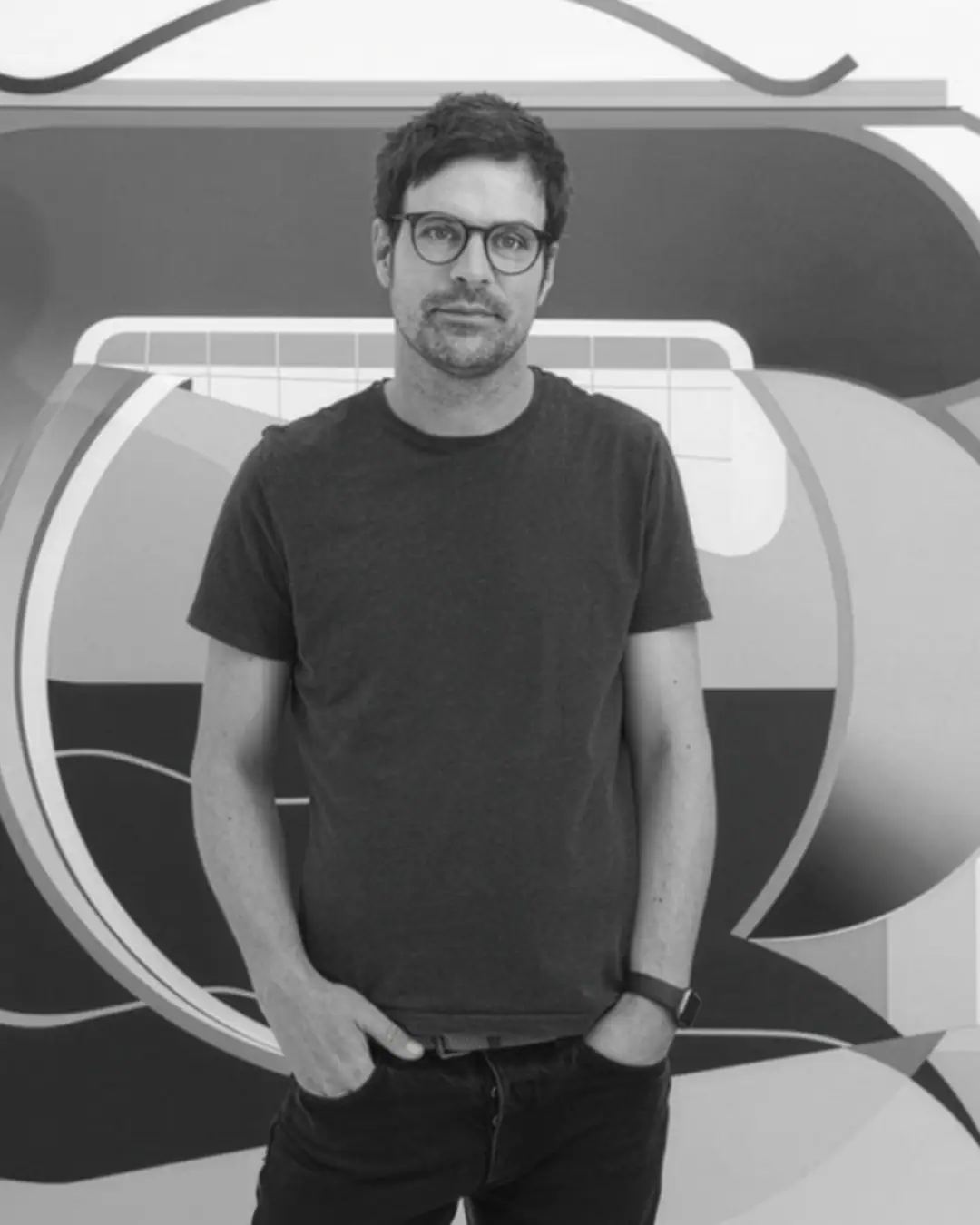
Colin Gold works across sculpture, installation and assemblage, and his method starts with what a construction site leaves behind. Timber offcuts, salvaged metal, broken masonry and the incidental materials of a building site are gathered, cut and reassembled into forms that carry the memory of the process that produced them. In November 2021 that body of work filled Art in the Docks, a gallery in the Hamme Building on Shackleton Way, in the Royal Docks of East London, for a solo exhibition titled Is This The End or Just The Beginning.

The show sat at the meeting point of two subjects the Royal Docks know intimately: construction, and reinvention. Once the largest enclosed dock system in the world, the Royal Docks spent much of the twentieth century demonstrating what an industrial economy leaves behind when the ships stop coming, and much of the twenty-first turning that legacy into something new. Gold’s work, built from the residue of building rather than from finished material, answered that history directly rather than illustrating it from a distance.
This piece sets out what the work actually was, who made it, what Art in the Docks is as a platform, and why the Royal Docks are such a considered setting for it.

Assemblage that reads as architecture with its process left visible
Gold’s sculptures are built, not carved or cast. Found timber, salvaged metal fixings, broken masonry and the small material casualties of a building site are cut, stacked, bolted and layered into structures that keep the evidence of their own assembly on the surface rather than smoothing it away. A joint stays a joint. A cut edge stays a cut edge. The result reads as a fragment of a building caught mid-construction, or mid-demolition, with the distinction between the two left deliberately unresolved.

That ambiguity is the point. Is This The End or Just The Beginning treated architecture, material reuse and social commentary as one continuous subject rather than three separate ones. A stack of salvaged formwork timber becomes a comment on how quickly a city discards the material that shapes it. A run of bent rebar, still holding the geometry of the concrete it once reinforced, becomes a record of a structure that no longer exists. The materials are never disguised. Gold’s assemblage keeps the sourcing visible, so a viewer can trace a finished form back to the demolition or construction site it came from, and the work does its arguing through that traceability rather than through a title card.

An architect’s discipline, an artist’s hands
The distinction Gold draws between the two ways of working is architectural training talking to itself. Asked about his process, he has said: “It’s interesting, the link between your hands and your brain… the difference between making something pre-programmed, like an architectural drawing, and when creating an idea, an emotion, a statement or comment, three-dimensionally, where your hands become an extension of the thought process.”
That is a specific and unusual thing for a sculptor to say, because it names architectural drawing as the comparison point rather than painting or drawing in the fine art sense. It suggests a practitioner who has made the pre-programmed kind of work, the drawing that specifies a structure before a single material is cut, and who now deliberately works the other way: starting from material already in hand and letting the form emerge through the making rather than through the plan. The found materials in Is This The End or Just The Beginning are not props borrowed to make a point about waste. They are the working method of someone who understands, from the inside, the difference between designing a structure on paper and discovering one with his hands.

Gold has also spoken about what the finished pieces are for. “I don’t produce works with the idea that they are directly for sale or deliberately commercial,” he has said. “I intend them to be used in the inclusion of a narrative.” That framing matters for how the exhibition holds together. The individual assemblages are not conceived as standalone objects to be collected and dispersed. They are built to sit inside a story about a place, a material or a process, which is exactly the role Art in the Docks gave the show: a narrative about the Royal Docks, told in the material the docks themselves generate.

Art in the Docks: a platform built by the people using it
Art in the Docks is a collective of artists based in the Hamme Building, a former industrial structure at 25 Shackleton Way in the Royal Docks, close to the Thames and the DLR line that now serves the area. The venue opened to the public for the first time in the summer of 2021, with an inaugural group show running from 24 July to 15 August that year and featuring around fifteen exhibiting artists across sculpture, painting, design, installation, photography and live performance. Colin Gold was among that opening cohort, before returning that November with his own solo exhibition.

The venue’s opening was supported by Bow Arts, an education arts charity founded in 1994 that has become one of East London’s most established providers of affordable studio space for artists who would otherwise struggle to find it. Bow Arts already runs around forty studios nearby at Royal Albert Wharf, alongside RAW Labs, a public-facing community hub offering workshops, markets and exhibitions, with surplus income from its studio lettings reinvested into an education programme that reaches roughly a hundred schools a year. That model, affordable space funding public programming, sits behind Art in the Docks’ own position as a platform for artists whose work might not otherwise find a wall in a part of London still building its gallery infrastructure from scratch. The venue’s stated commitment to inclusiveness and cultural diversity is not a marketing line borrowed from elsewhere in the sector; it is the operating logic of the charity that helped establish it.

From the largest docks in the world to an Enterprise Zone
The Royal Docks were built to solve a problem the rest of London’s port could not: ships were getting too big for it. Victoria Dock opened in 1855, cut deep enough and fitted with the latest cranes to take the new generation of iron-hulled steamships. Albert Dock followed in 1880, the first in London to bring railway lines directly to the quayside and to offer refrigerated warehousing for perishable cargo shipped in from across the empire. The third and final dock opened in 1921, and it was that opening, performed by King George V, that gave the whole complex the “Royal” name it still carries. At their peak, the Royal Docks formed the largest enclosed dock system in the world, moving grain, meat, fruit and tobacco through a stretch of East London that grew entire neighbourhoods, Custom House, Silvertown, Canning Town, around the jobs the docks created.

Container shipping made docks this size obsolete faster than anyone expected. The Royal Docks closed to commercial traffic on 7 December 1981, and the regeneration that followed, led first by the London Docklands Development Corporation, has been one of London’s longest-running rebuilding projects. The Docklands Light Railway arrived in 1987, London City Airport opened the same year on a runway built along the old quay, the University of East London established its largest campus on Royal Albert Dock in 1999, and Thames Barrier Park turned reclaimed industrial land into the capital’s largest new riverside park in half a century. The Emirates Air Line cable car linked Royal Victoria Dock to North Greenwich in 2012. Today the area operates as England’s only Enterprise Zone, with billions of pounds of investment targeted at the waterfront by 2038, and the Elizabeth line now puts Custom House minutes from central London.
That history is what makes placing contemporary art here so meaningful. The Royal Docks are a working case study in what happens to a landscape once its original industrial purpose disappears, and in what gets built, and by whom, once a site is decided worth reusing.

A show that landed on a genuine anniversary
Here is the connection that does not appear in any listing for the exhibition: Is This The End or Just The Beginning opened in November 2021, almost exactly a century after King George V’s 1921 opening of the dock that gave the Royal Docks their name. Gold’s work, built from the discarded material of construction and demolition, went on show in the same calendar year as the hundredth anniversary of the moment that completed the docks as a working system, in a building that is itself a piece of the docks’ industrial fabric repurposed for a new use.
Art in the Docks had opened its doors for the first time only four months before Gold’s solo show, which means his work was among the very first exhibitions to test what the venue could do with a full space rather than a shared group hang. A gallery built inside a former dockside industrial building, in its opening season, hosting an artist whose sculptures are literally made from the leftover material of building sites, is not a coincidence worth glossing over. It is the clearest demonstration the show had of its own argument: that what gets treated as waste, whether a stack of salvaged timber or a disused dock building, is frequently the material a place’s next chapter is built from.

Waste, memory and what gets kept
The themes running through Is This The End or Just The Beginning, urban life, environmental awareness, memory and cultural heritage, are not abstract concerns layered onto the work after the fact. They follow directly from the method. A material pulled from a demolition site carries a building’s memory in a literal sense: its cut marks, its wear, its scale relative to a structure that no longer stands. Assembling those fragments into new forms is an act of preservation as much as an act of making, keeping something of a discarded building in circulation rather than letting it go to landfill.
The exhibition’s title asks its question directly rather than answering it for the viewer. Is a demolished structure, or a discarded material, an ending or the raw material of a beginning. Gold’s work treats that as a live question rather than a settled one, which is consistent with his own account of what the pieces are for: not objects made to be sold and admired in isolation, but material assembled to carry a narrative that keeps being told. In a location whose entire modern story is the reuse of what an earlier industry left behind, that is a genuinely well-matched question to be asking.

Final thoughts
It would be easy to describe Is This The End or Just The Beginning as an artist making a point about recycling. That undersells what Colin Gold actually did with the material in front of him. His assemblages do not moralise about waste; they demonstrate, physically and at close range, that the distance between a discarded building material and a finished piece of architecture is a question of attention rather than value. A joint left visible, a cut edge left rough, a piece of salvaged rebar left in the shape the concrete gave it: these are decisions made with the same seriousness an architect brings to a drawing, just made with the hands instead of a pen.
What the show actually did was locate that argument inside a place built on exactly the same premise. The Royal Docks were the largest dock system in the world, then stood empty, then became the site of one of London’s longest regeneration projects, converting the physical remains of an industrial economy into a university campus, an airport, a park and, eventually, a gallery inside a former dockside building. Art in the Docks itself, only months old when Gold’s exhibition opened, is a working example of exactly the transformation his sculptures describe.
That is why the title asks its question rather than settling it. An end and a beginning are not opposites in the Royal Docks. They are the same event, viewed from either side of a construction site.
What was Is This The End or Just The Beginning?
It was a November 2021 solo exhibition by the multidisciplinary artist Colin Gold at Art in the Docks in East London, made up of sculptural assemblages built from found construction materials.
Who is Colin Gold?
Colin Gold is a multidisciplinary artist working in sculpture, installation and assemblage, whose practice draws on architectural training and turns found materials from construction and demolition into three-dimensional work.
Where is Art in the Docks?
Art in the Docks is based in the Hamme Building at 25 Shackleton Way, in the Royal Docks in East London, close to the River Thames and served by the DLR.
What is Art in the Docks?
Art in the Docks is a collective of artists that opened its Royal Docks venue to the public in the summer of 2021, supported by the East London education arts charity Bow Arts, with a stated focus on inclusiveness and cultural diversity.
What materials did Colin Gold use in the exhibition?
The work was built from found and salvaged materials associated with construction and demolition, including timber offcuts, metal fixings and masonry, assembled using techniques drawn from building and architectural process.
Why are the Royal Docks called “Royal”?
The name comes from the third and final dock in the complex, opened in 1921 by King George V. Victoria Dock (1855) and Albert Dock (1880) had opened earlier; together the three became known as the Royal Docks.
When did the Royal Docks close, and what happened afterwards?
The Royal Docks closed to commercial shipping on 7 December 1981. Regeneration led by the London Docklands Development Corporation has since brought the Docklands Light Railway, London City Airport, a University of East London campus, Thames Barrier Park and, more recently, Elizabeth line connections at Custom House.
Is Art in the Docks still open?
Art in the Docks continues to operate as a gallery in the Royal Docks, with a rolling programme of exhibitions by artists working across sculpture, painting, installation, photography and performance.



Leave a Reply