
ART & CULTURE · STOCKHOLM
Reading time: 8 minStockholm Furniture & Light Fair 2019 opened at Stockholmsmässan with roughly four exhibitors in five drawn from Sweden, Denmark, Norway and Finland, which is the entire point of the fair. Tom Dixon turned marble industry offcuts into a new material called Swirl, and Sami Kallio designed a Scandinavian dining collection wooden enough that it needed a Finnish cabinetmaker to get right. The story of the week was material, told at a scale a showroom cannot manage.
Stockholm Furniture & Light Fair 2019 ran from 5 to 9 February at Stockholmsmässan in Älvsjö, the exhibition halls south of the Swedish capital, as the trade-facing centre of Stockholm Design Week, which continued across the city from 4 to 10 February. It is the largest design event in the Nordic region, and its organisers have kept it that way deliberately: roughly 80 per cent of exhibitors each year come from Sweden, Denmark, Norway and Finland, which makes the fair less a showcase for Scandinavian design than an internal audit of it, with the remaining international halls providing the comparison.
That balance is what makes the fair worth reporting on its own terms rather than as a preview of Milan two months later. A Swedish lighting studio, a Danish furniture house steeped in archive reissues, and an Italian brand built on pop provocation all exhibited within the same halls, and each answered the same underlying question differently: what does a piece of furniture or a light fitting need to be made of, and why.
Four names carried that argument furthest in 2019: Pholc, the Swedish lighting brand; Tom Dixon, showing a genuinely new material for the first time in several years; & Tradition, exhibiting both a reissued 1930s Danish icon and a new solid-wood dining collection; and Seletti, bringing Italian pop design into direct contrast with the fair’s prevailing restraint. Kährs and Fritz Hansen, two of the oldest names in Scandinavian production, exhibited alongside them, each making a case for longevity in a fair otherwise dominated by launches.
Pholc’s lighting, built around a visible circuit
Pholc, the Swedish lighting brand founded in Stockholm, showed two pendant designs at the 2019 fair that approached the same idea, a light source rendered as a visible path rather than a fixed point, from opposite directions.
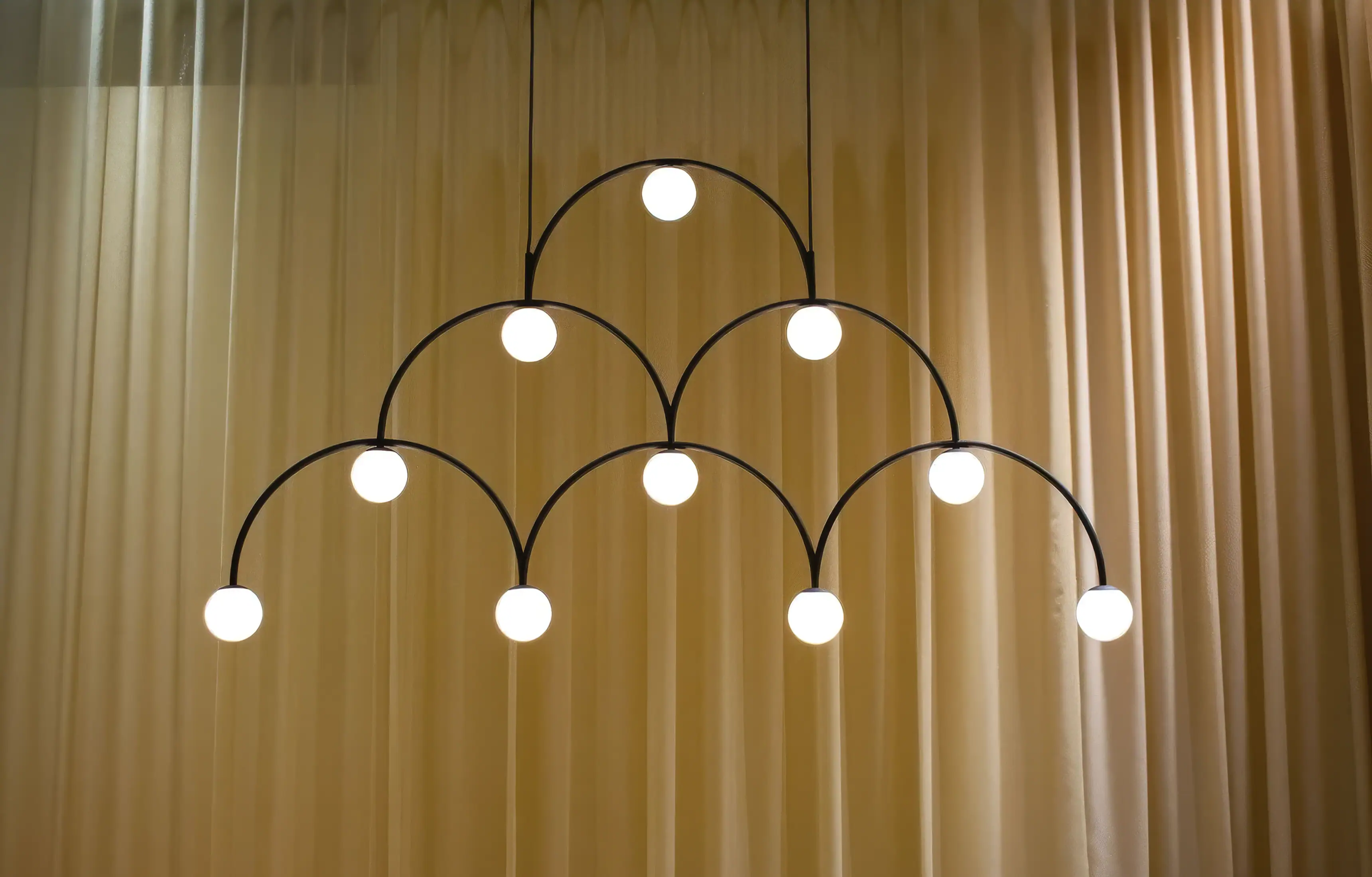
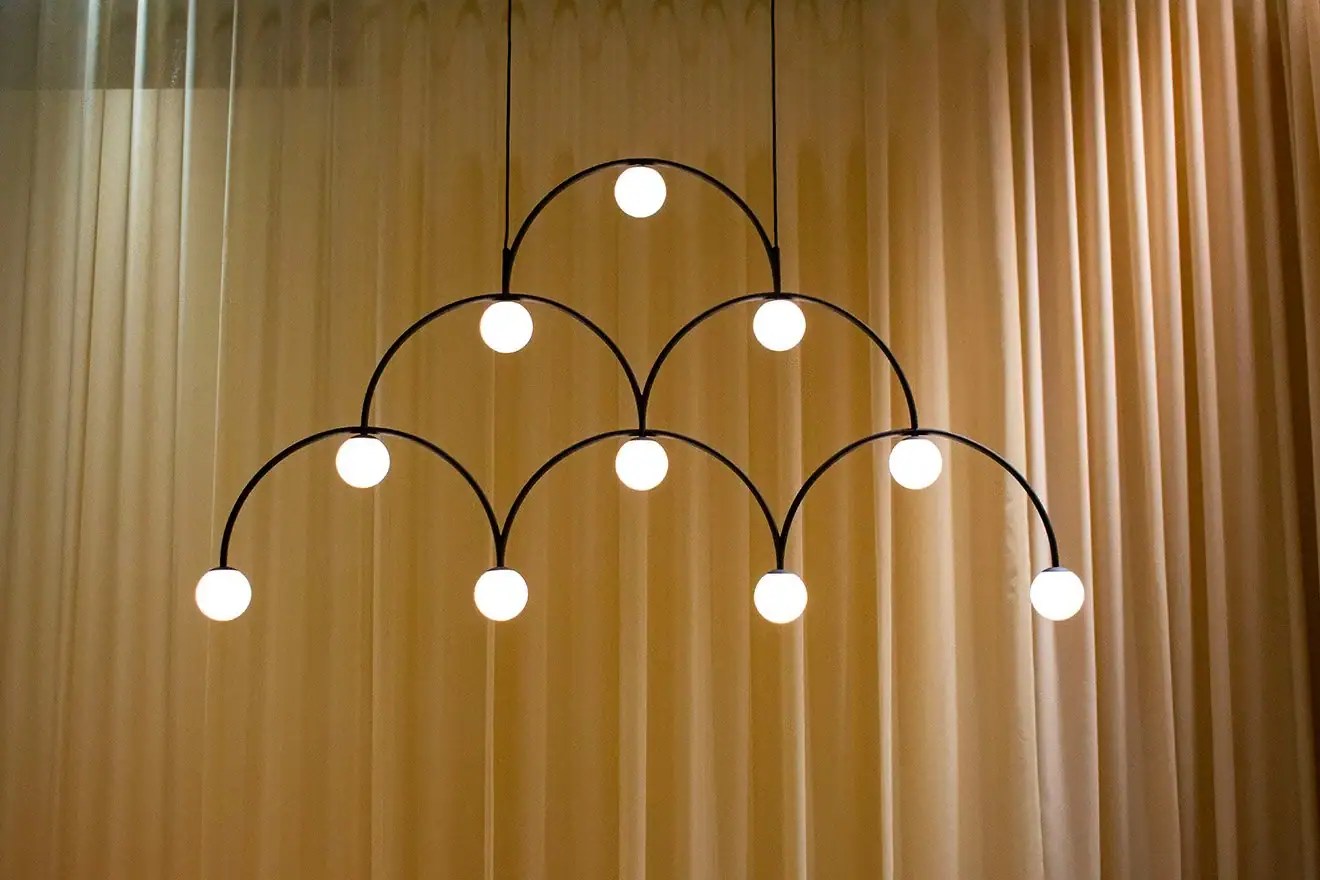
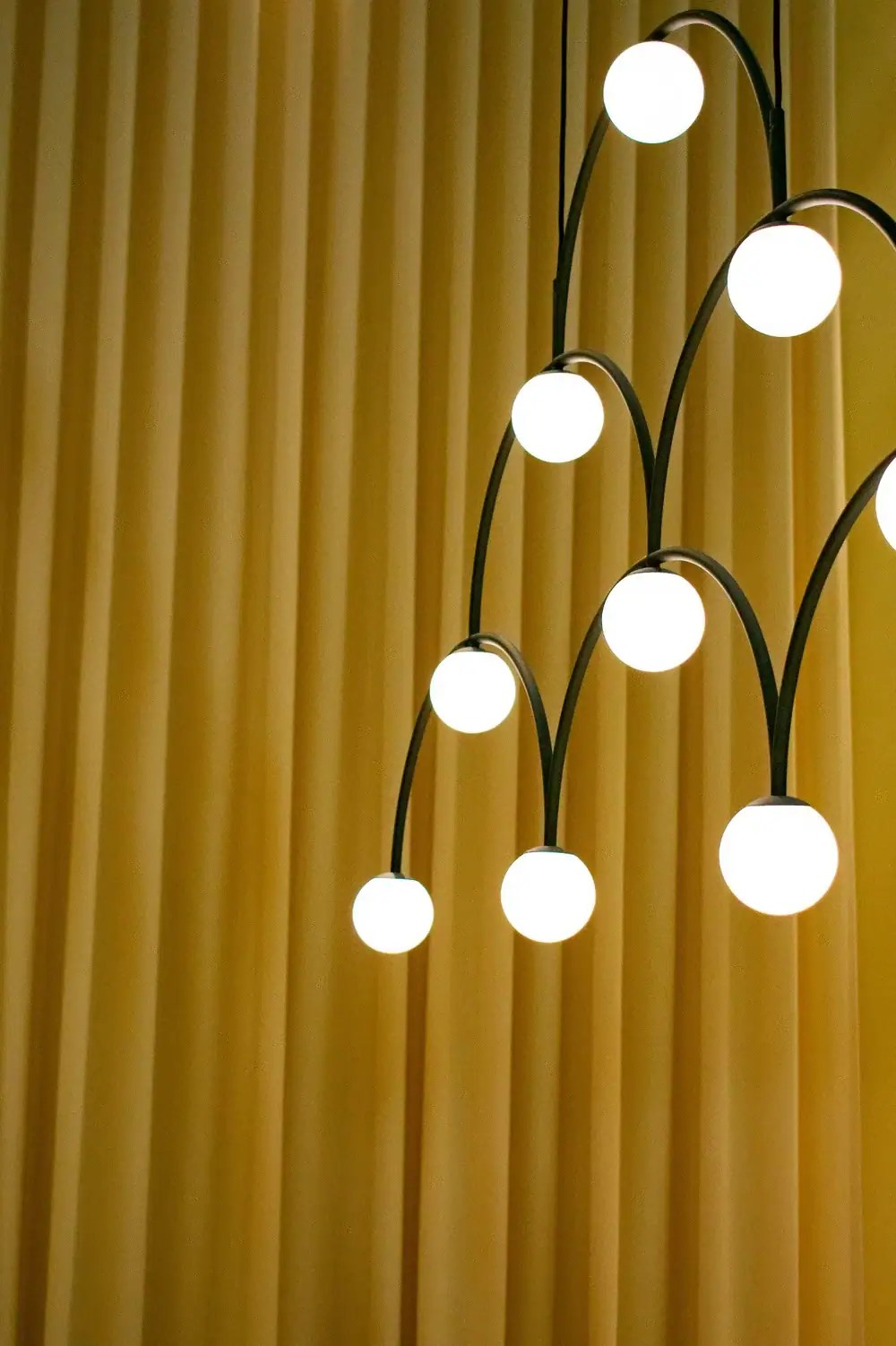
Bounce 169, designed by Monika Mulder, is a ten-bulb pendant in metal and opal glass that stretches 169 centimetres across the ceiling. Mulder has described the brief she set herself as graphic rather than purely functional: a lamp with “a focus on the path the electricity is drawn from light spot to light spot,” each of its ten bulbs held in an arc that reads as a single continuous gesture rather than ten separate fittings. In its matte black finish it photographs almost as a piece of line drawing suspended in the room, closer to a mobile sculpture than a conventional chandelier.
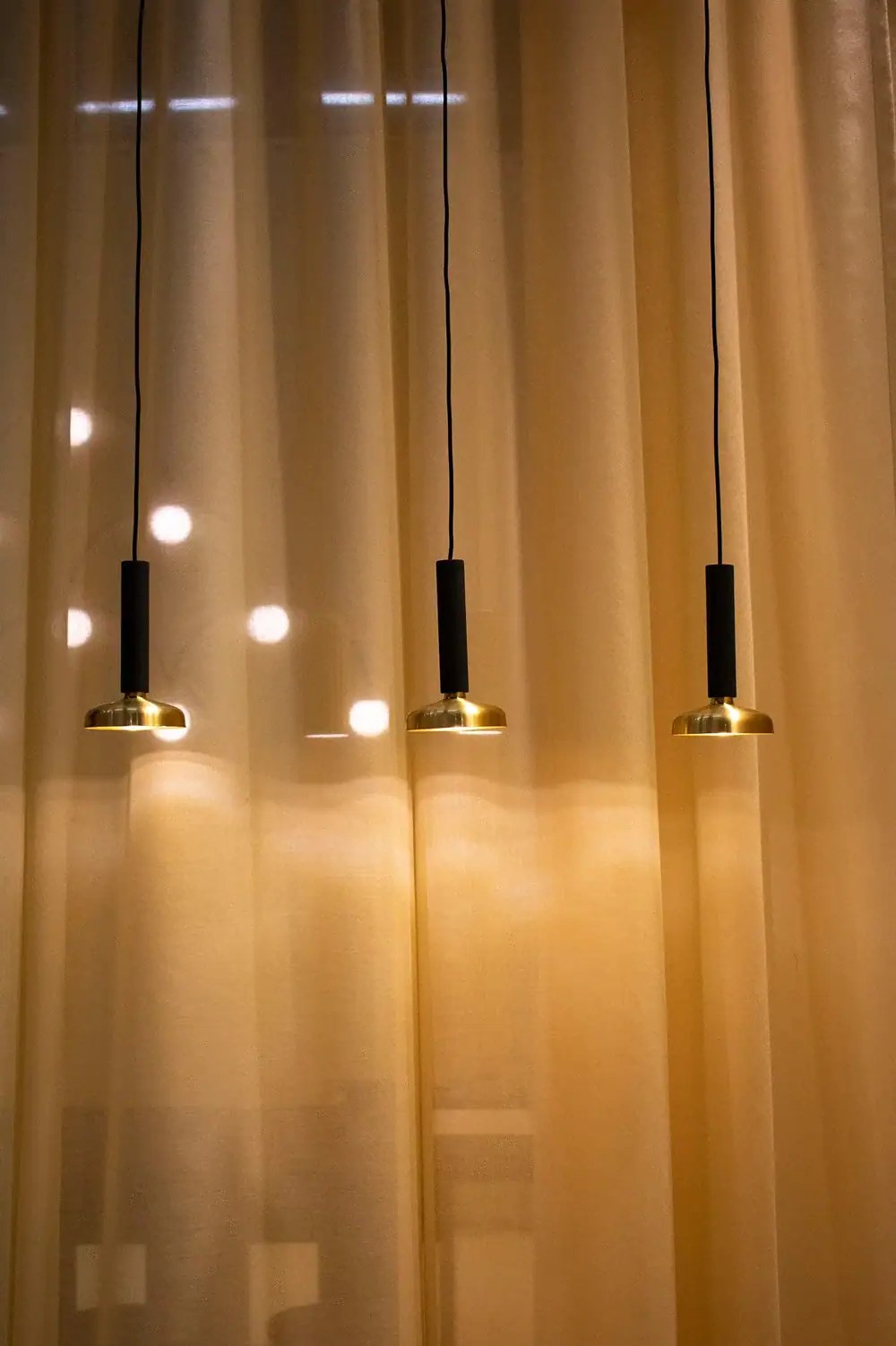
Blend, designed by Sabina Grubbeson, took a quieter route to a related idea. Grubbeson, who trained in Sweden in the early 2000s before founding her own studio, Grubbeson Design, in 2010, works across lighting, furniture and textiles with a stated preference for reducing a design to its essential form. Blend pairs a brass frame with an opal glass diffuser and draws on both Scandinavian restraint and the layered, considered proportions associated with Japanese design, producing a pendant that reads as a single soft volume from most angles rather than as a collection of visible parts. Where Bounce 169 makes its structure the point, Blend hides its structure entirely, and showing both within the same stand was, whether deliberate or not, a genuinely useful piece of curation: two ways of answering the same design brief, a bulb that needs to disappear into a room, sitting a few metres apart.
Tom Dixon’s Swirl: a new material made from waste
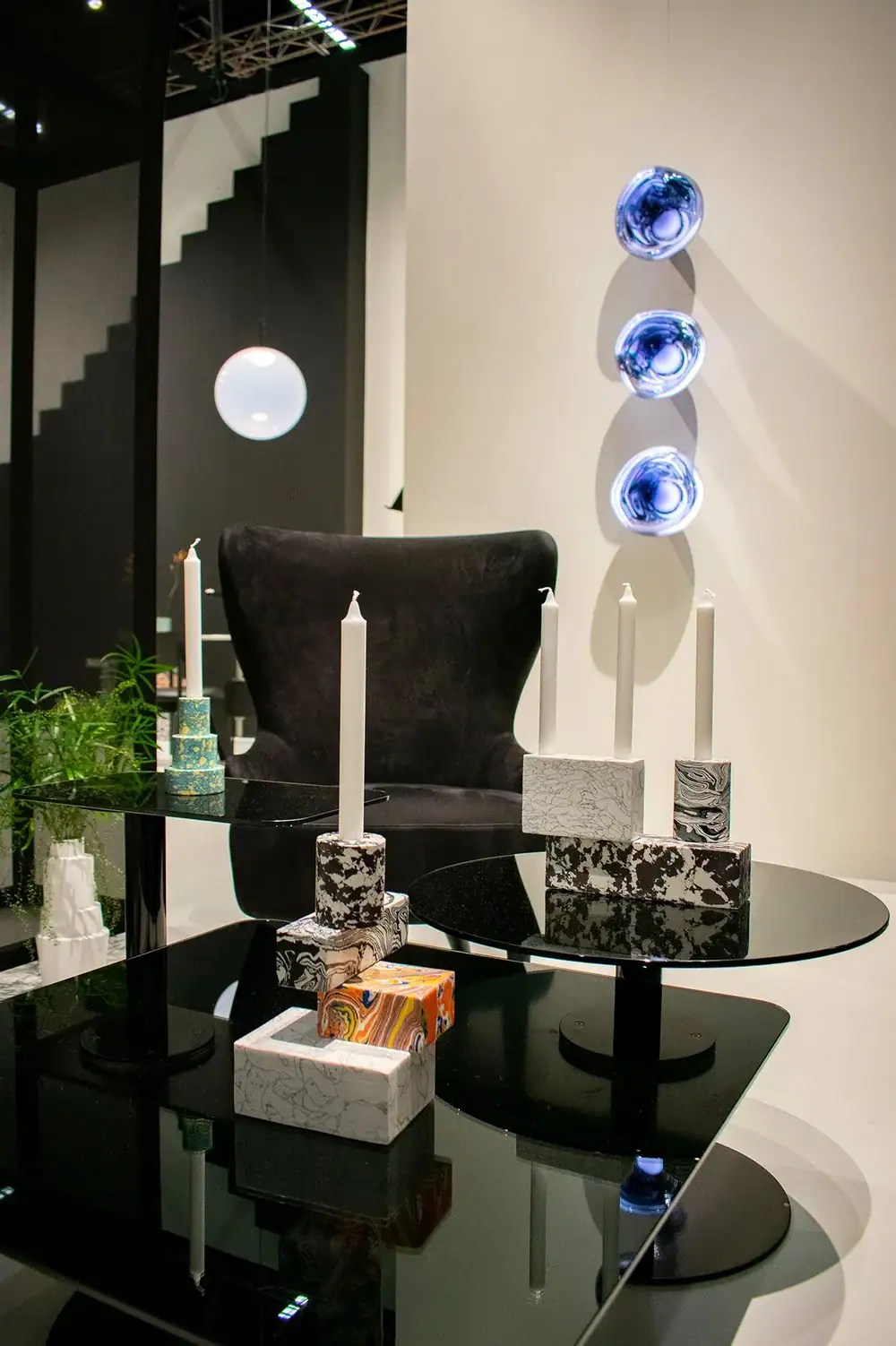
The most significant single launch of the week came from Tom Dixon, who introduced Swirl, a material developed specifically for the 2019 season and shown as a full collection of candleholders, a two-part candelabra, bookends and vases.
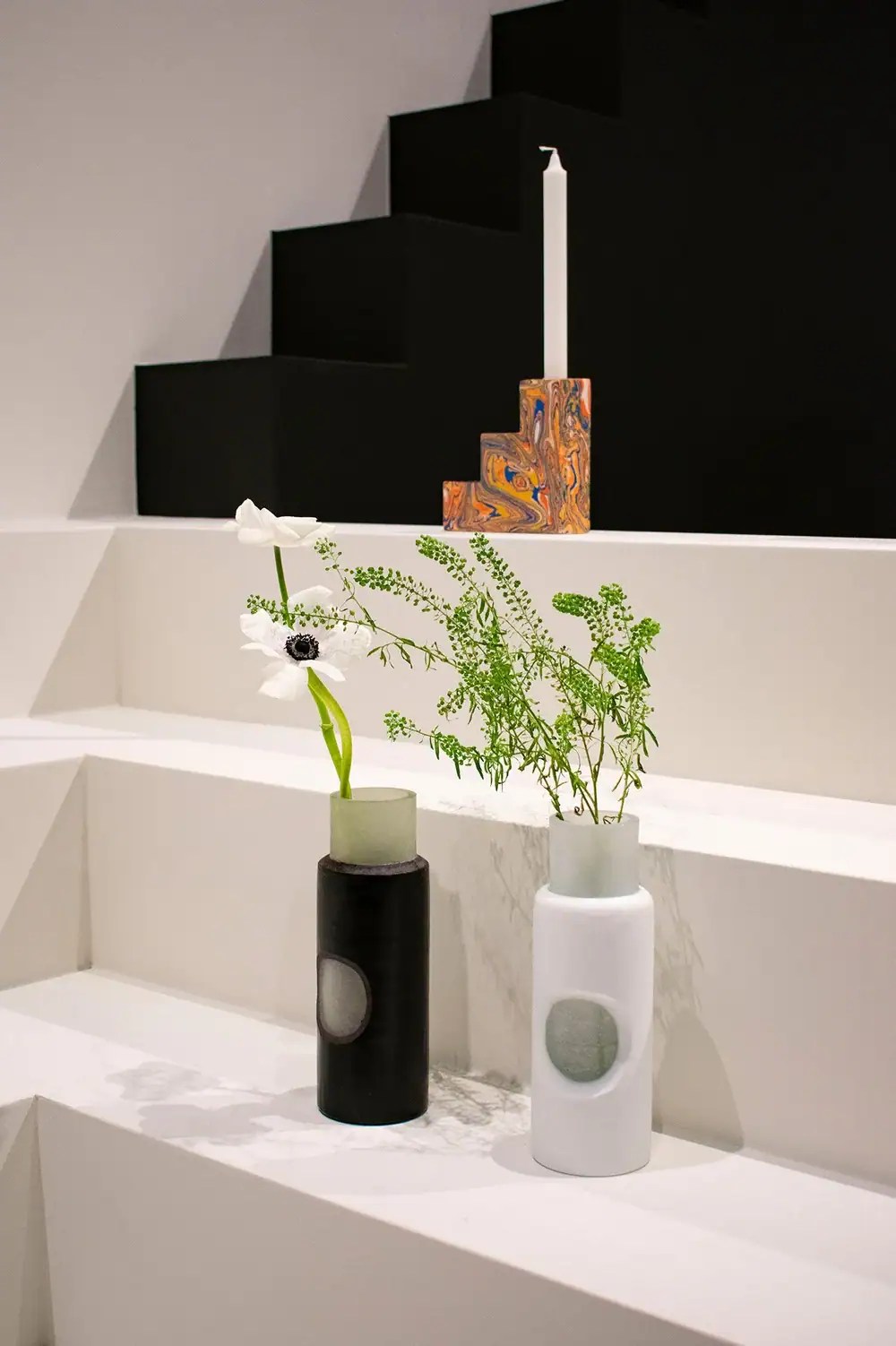
Swirl is made from recycled powdered residue left over from marble processing, the fine waste dust that stone yards produce in volume and have historically had to discard. Dixon’s studio mixes that powder with pigment and resin, casts it into solid blocks, and then saws, slices and turns those blocks on a lathe to produce the finished pieces. The result is a material with the weight and cool touch of solid stone but with the swirling, layered colour pattern of marbled paper, because the pigment moves through the block during casting rather than being applied to a surface afterwards. No two pieces carry quite the same pattern.
This is worth dwelling on, because it is the detail a listings page tends to skip in favour of describing the finished shapes. Dixon has spoken for years about his attachment to marble as a material, including an earlier collection cut from green forest marble sourced in India and turned by hand-lathe workers in Rajasthan and Agra. Swirl is a different kind of marble story: not a quarried stone reworked, but a waste stream, the powder a stone yard would otherwise pay to dispose of, given a second life as a solid decorative material through nothing more complicated than pigment, resin and a lathe. It is a genuinely simple piece of material engineering, and it turns an offcut into an object with more presence, arguably, than the polished slab it came from.
Dixon showed Carved alongside Swirl: a collection of mouth-blown, double-layered glass accessories in black and white, each piece blown as two fused layers of glass and then worked so the outer layer is cut back to reveal the contrasting colour beneath. Where Swirl is about material sourced from waste, Carved is about a much older glassblowing technique, cased glass, applied with unusual restraint, in only two colours, so the technique itself, rather than a decorative motif, carries the whole design.
& Tradition: an 80-year-old chair and a new wooden collection
& Tradition, the Danish furniture house built on both archive reissues and new commissions, showed two collections that made the same case from different ends of the timeline.
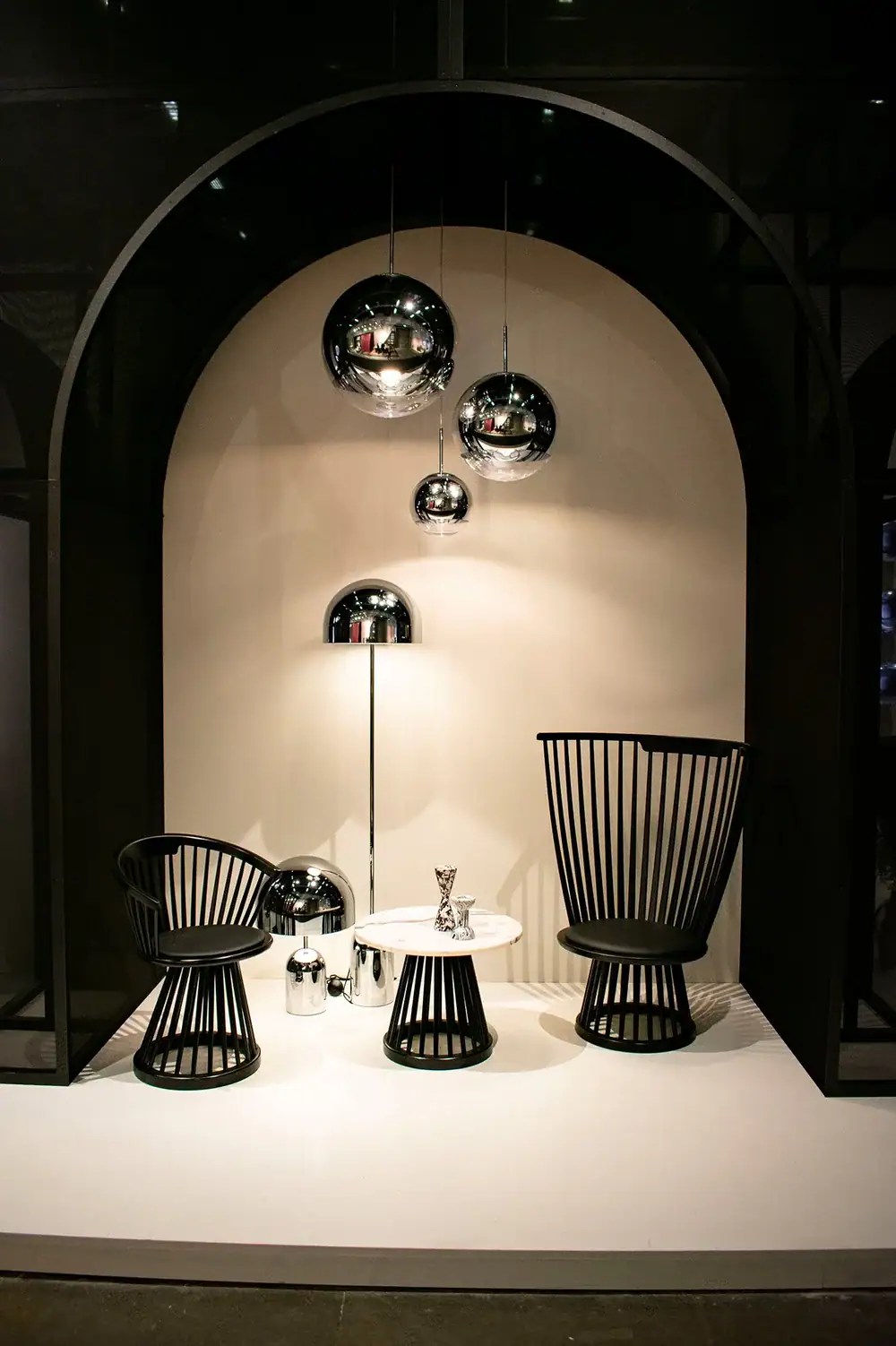
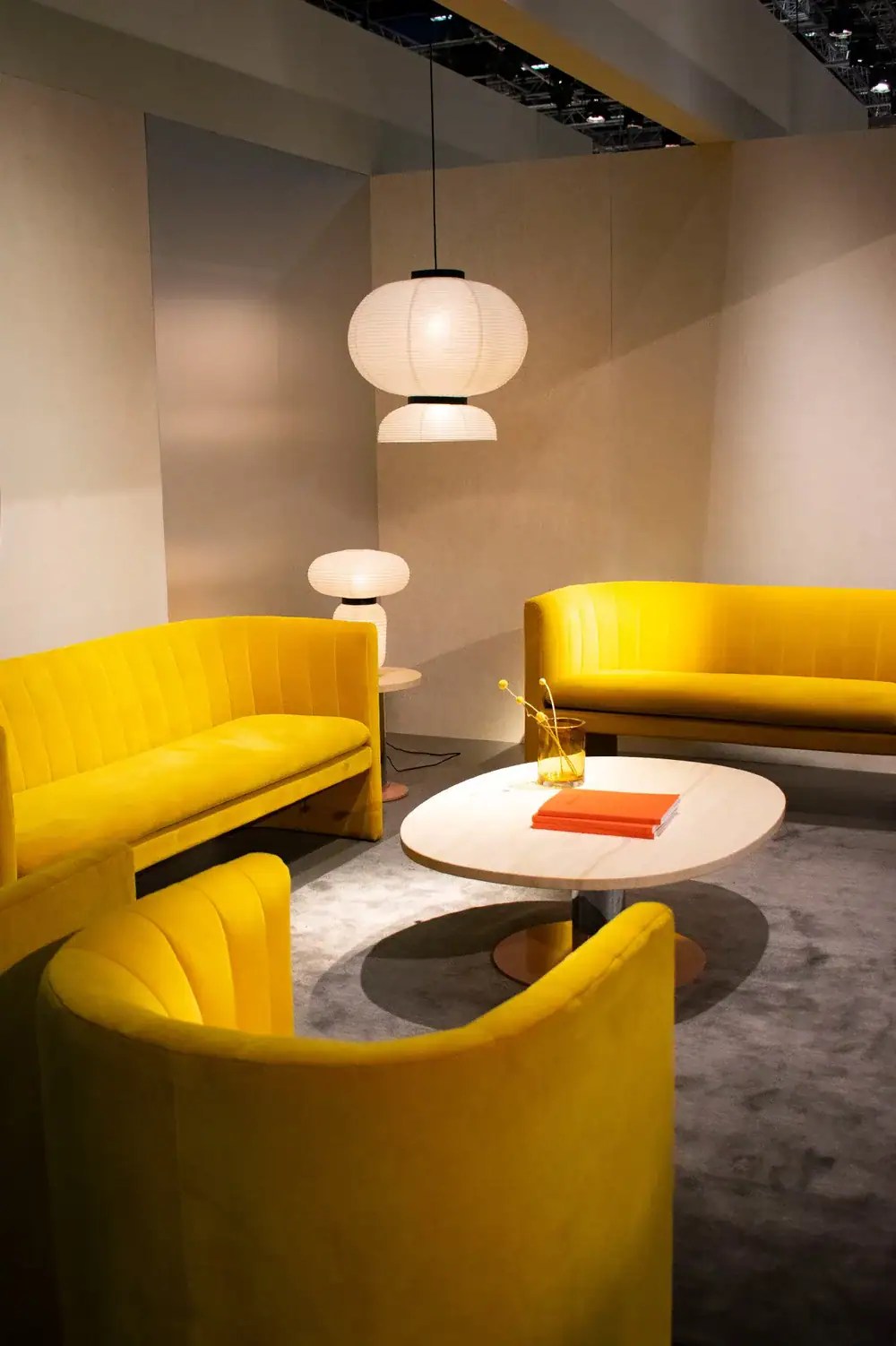
The Little Petra, designed by the Danish architect Viggo Boesen in 1938, is the older of the two by eight decades. When Boesen first showed it, the chair won praise from the Danish Cabinetmakers’ Guild and was exhibited in New York and Berlin, and it has since been read as one of the clearest examples of Funkis, the Danish design movement of the 1930s that pushed back directly against the sparer lines of the Bauhaus. Where Bauhaus furniture argued for geometry stripped to its function, Little Petra argued the opposite: a rounded, low-slung frame with deep, generously padded upholstery and a pair of winged sides that fold gently around the sitter, offering several different positions to settle into rather than one correct posture. At the 2019 fair, & Tradition showed it in its current fabric-led editions, still built to the original 1938 proportions, which is unusual longevity for a chair whose main competitor at launch was an entire architectural movement telling designers to do less.
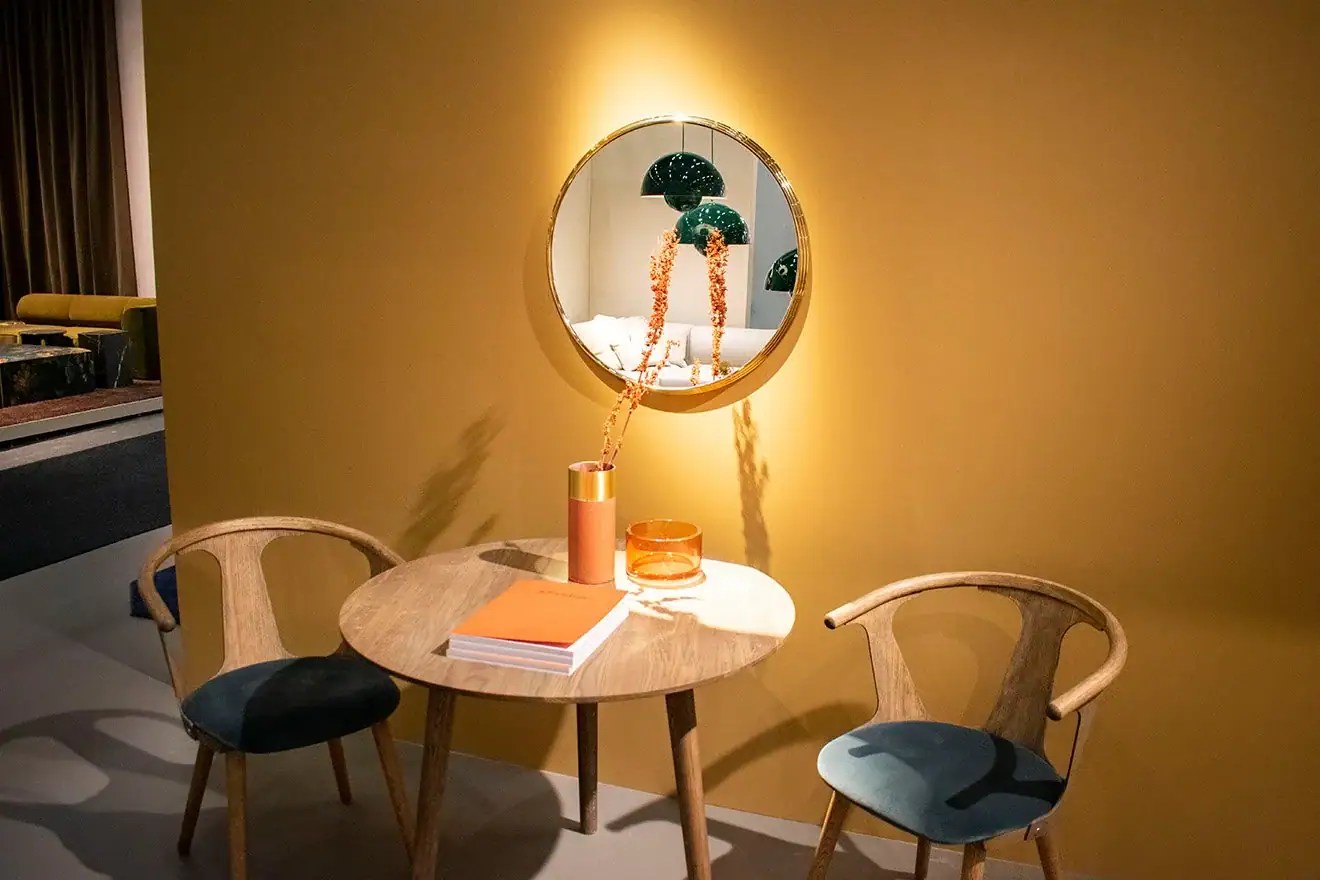
Beside it stood In Between, a dining collection of chairs, tables and bar stools designed by Sami Kallio, a designer born in Finland and raised in Sweden who trained as a cabinetmaker and specialises in woodturning. Kallio’s collection is built entirely around solid wood joinery and finish rather than upholstery or metal, offered across a range of wood tones so a buyer can match table, chair and stool exactly or deliberately mismatch them. Shown next to Little Petra, In Between made an implicit argument about continuity: an 80-year-old chair built on upholstered comfort, and a brand-new collection built on the oldest Scandinavian material discipline there is, cabinetmaking, exhibited as two branches of the same tradition rather than an old piece and a new one competing for attention.
Seletti and the Toiletpaper collision
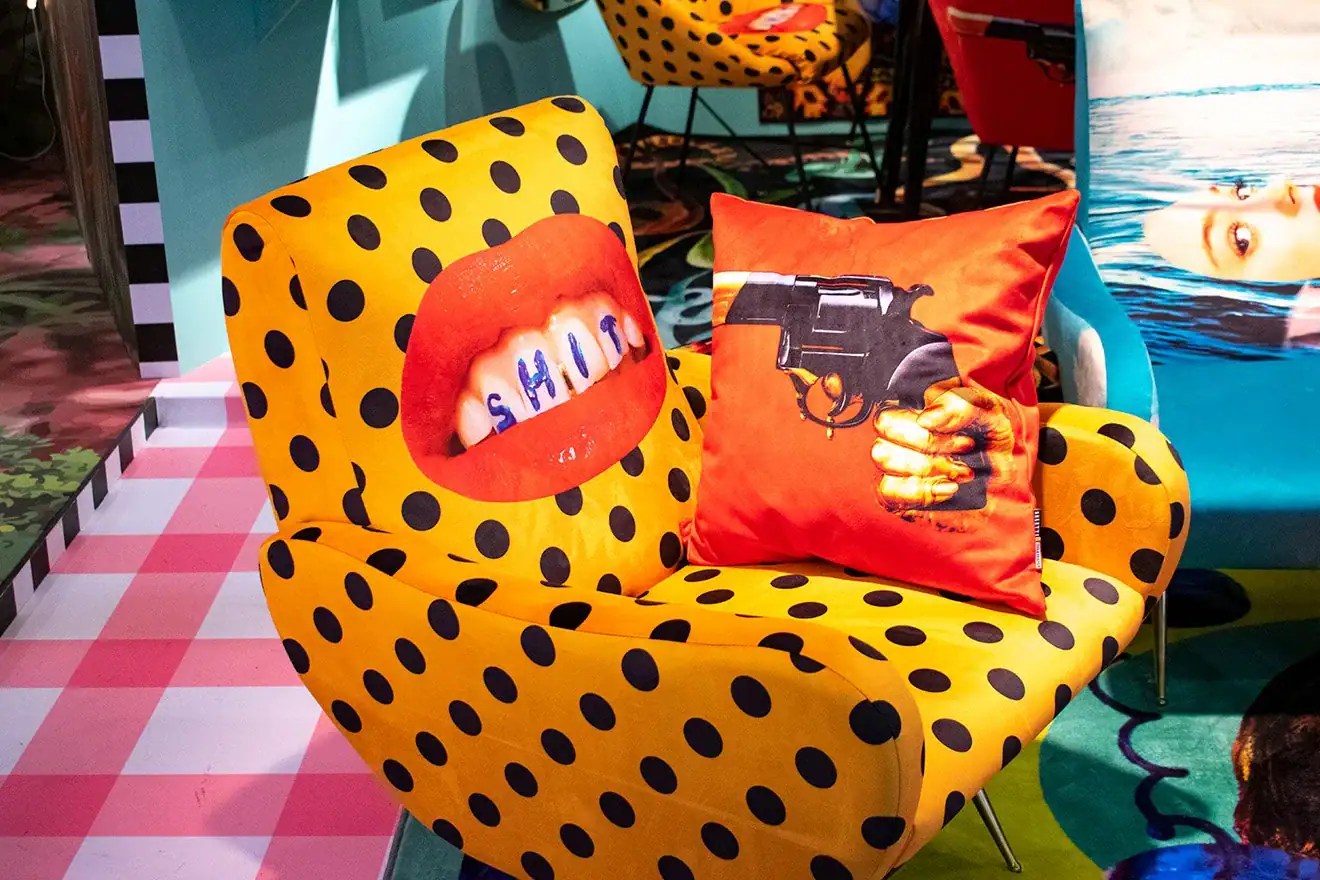
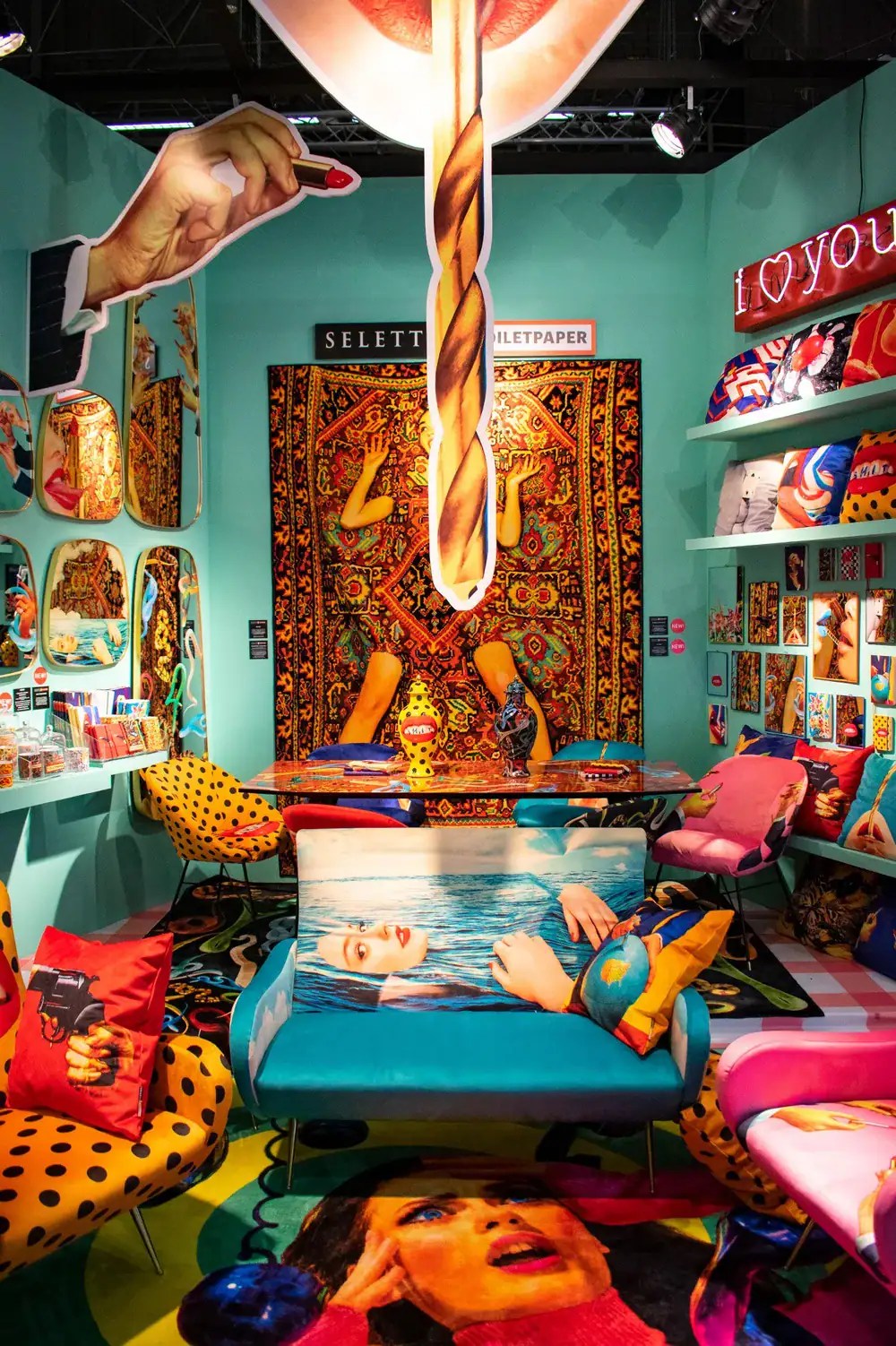
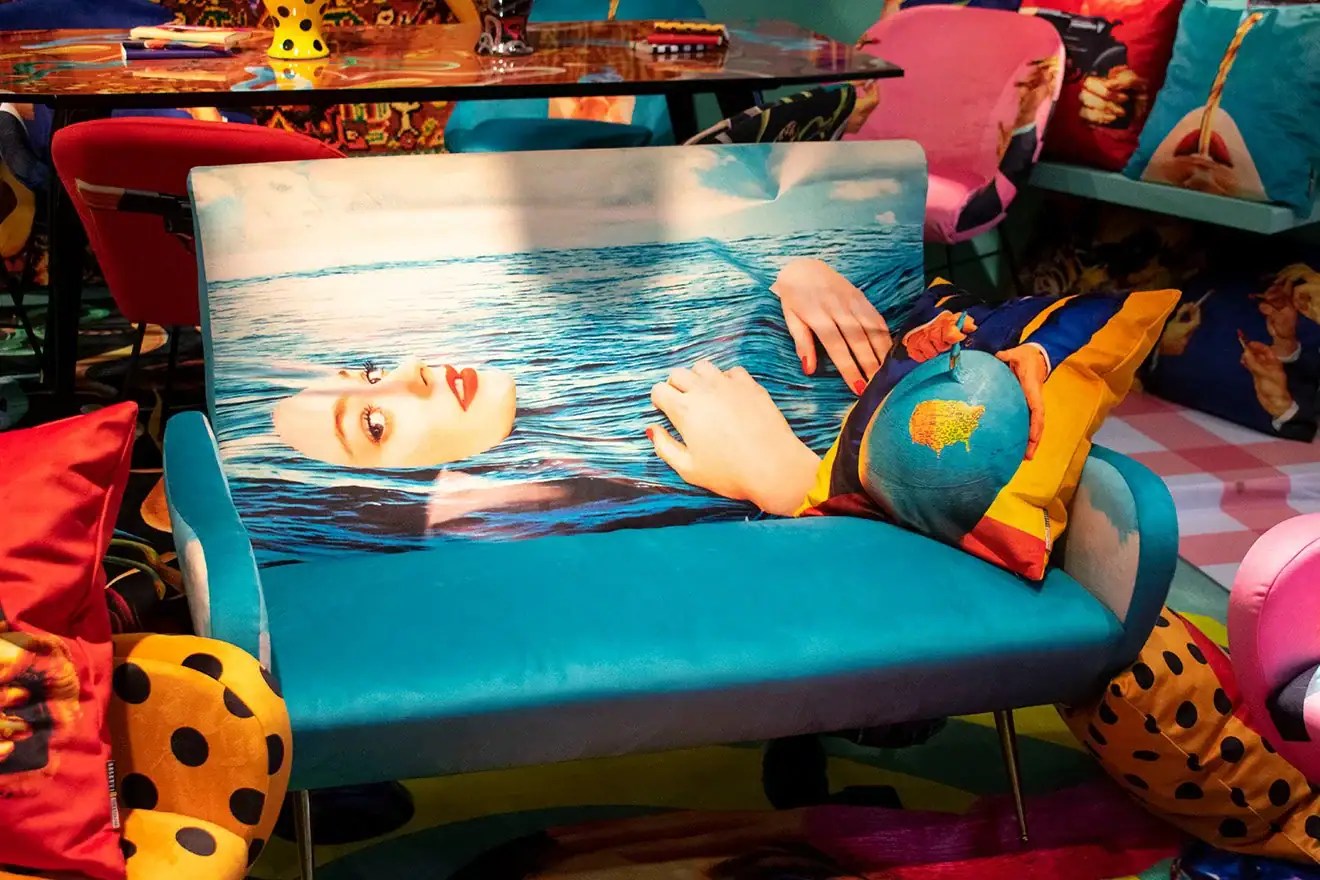
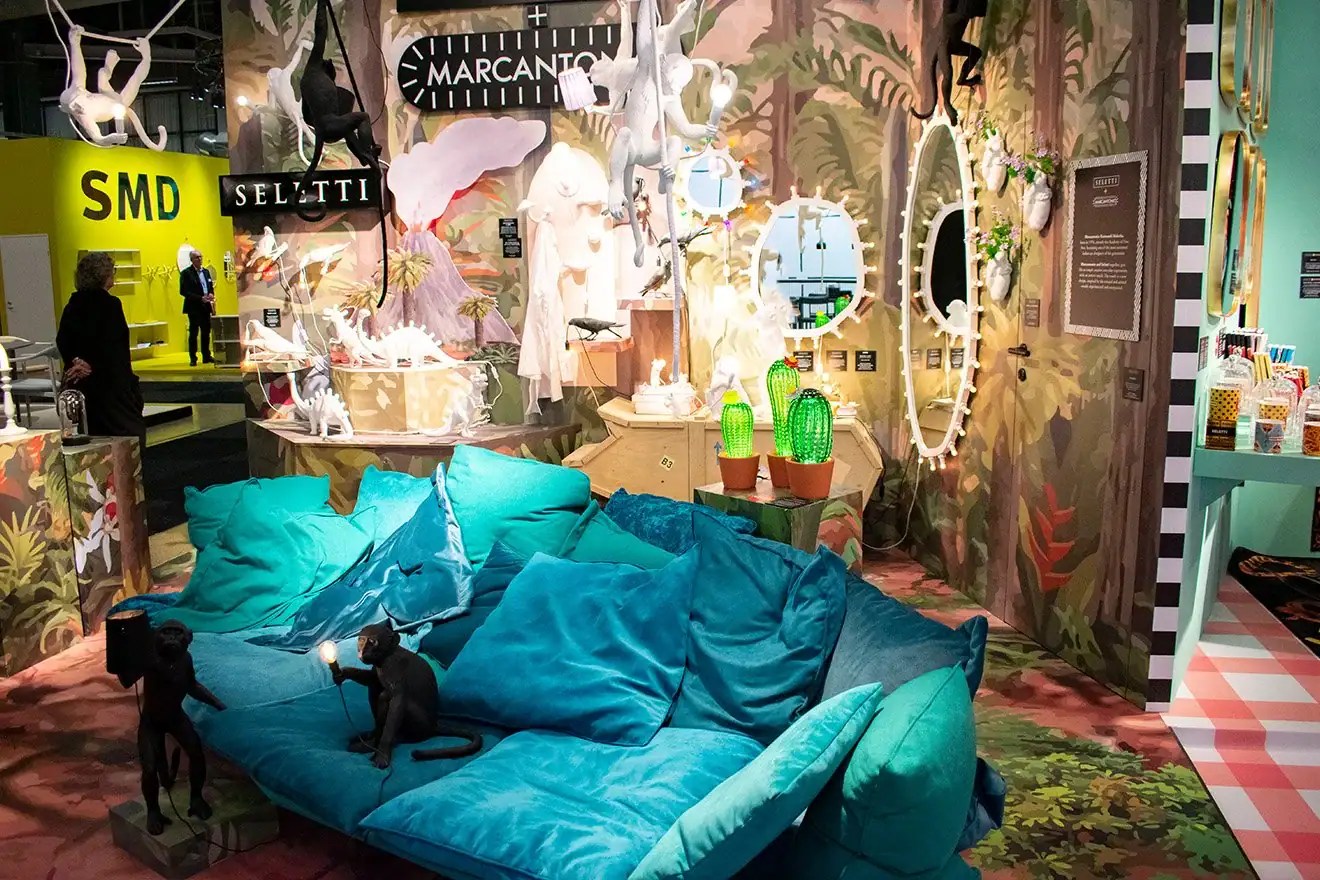
Where the Scandinavian brands at the fair tended toward restraint, Seletti, the Italian design house founded in 1964 in Cicognara, in Lombardy, brought a deliberately different register. Its stand centred on Toiletpaper, the surrealist image collaboration with the artist Maurizio Cattelan and photographer Pierpaolo Ferrari, which Seletti first translated into homeware in 2013 and has expanded steadily since. The 2019 showing included the Rug Lady carpet design and further pieces from the collection’s recurring vocabulary of lips, snakes and hyper-saturated colour.
Seletti also showed its collaboration with the designer Marcantonio Raimondi Malerba, built around oversized animal figurines, including a monkey figure, each holding a bulb aloft as its own light source, alongside a series of vases modelled on the anatomical form of a heart valve. Placed within a fair built largely on Nordic restraint, the Seletti stand worked as a genuine counterpoint rather than a clash: proof that the same event can hold a chair designed to disappear into a room and a lamp designed to be the loudest thing in it, and that both are legitimate answers to the same brief.
Kährs and Fritz Hansen: two long histories on the same show floor
Two of the oldest names at the fair used their stands to make the case for longevity itself.
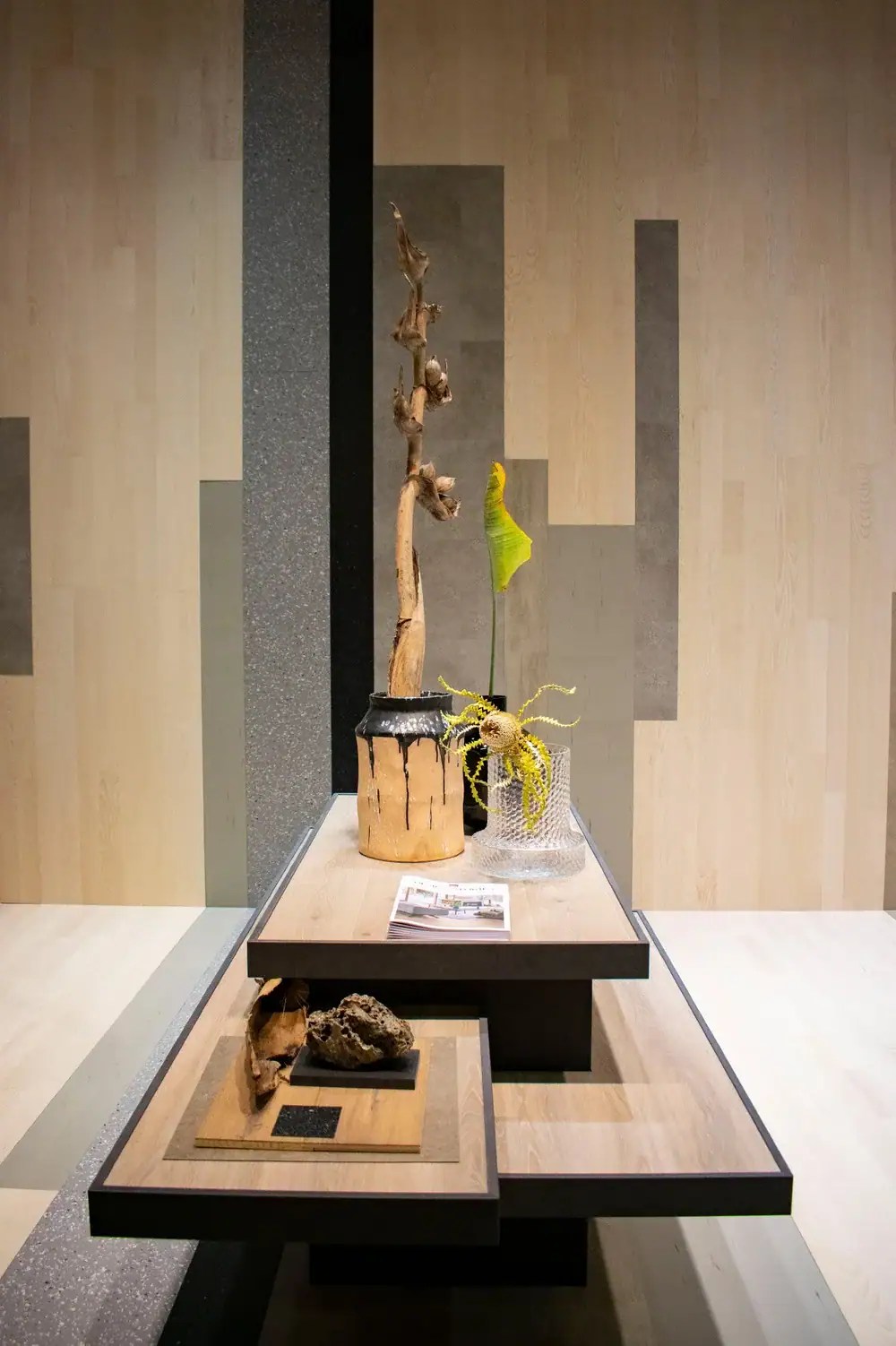
Kährs, the Swedish wood flooring manufacturer, was founded in 1857 in Nybro by Johan Kähr, and by 2019 had been trading continuously from the same town for more than 160 years. The company’s stand carried that history lightly rather than as heritage marketing, showing flooring designs applied across several surfaces and finishes rather than leaning on the founding date. It is worth noting, because it rarely gets mentioned alongside the brand’s more visible design collaborations, that Kährs holds one of the foundational patents in modern flooring: its 1941 patent for a multilayer, engineered hardwood floor construction is the technical basis for most engineered wood flooring produced today, Kährs’ own or otherwise.
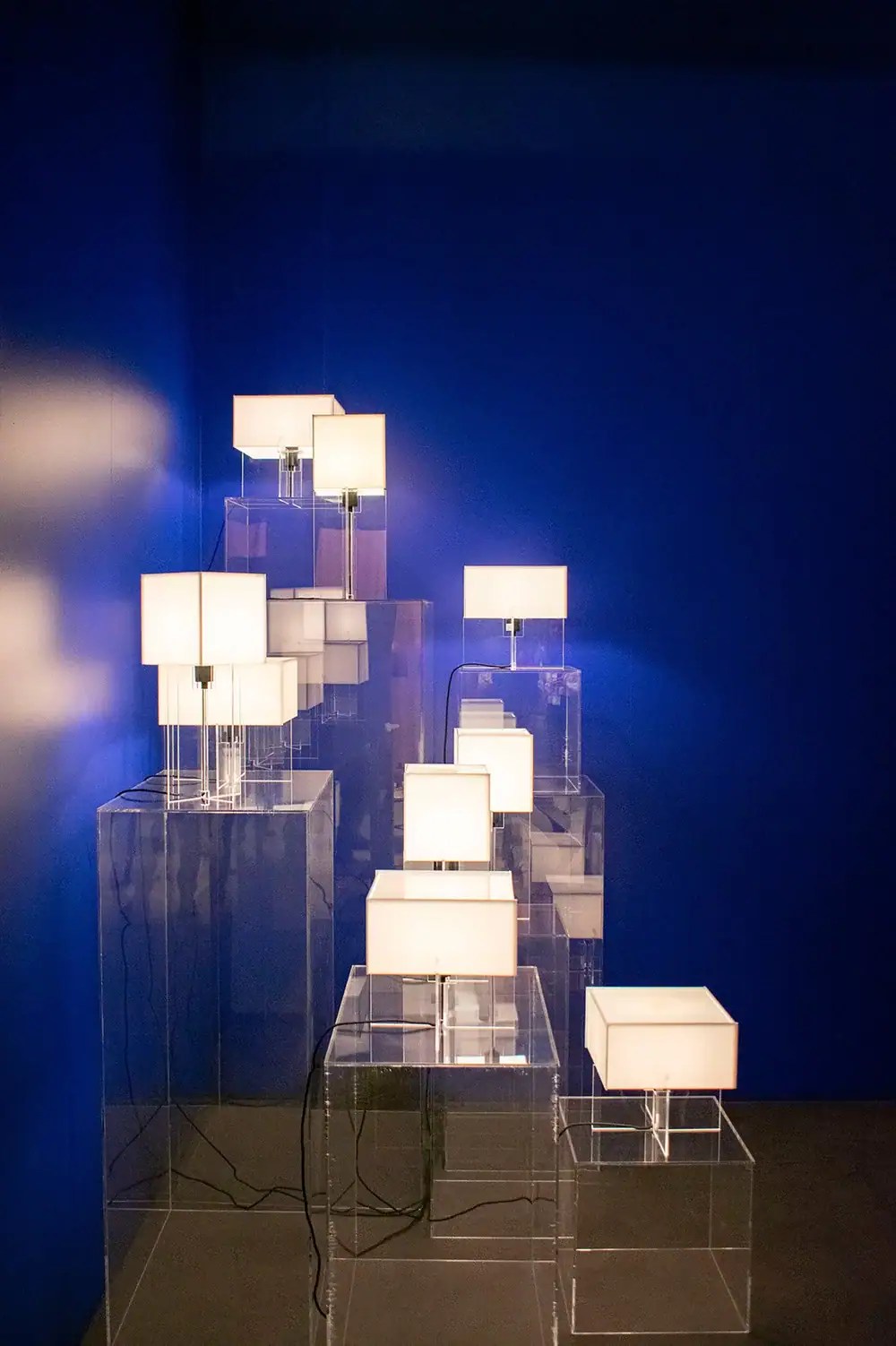
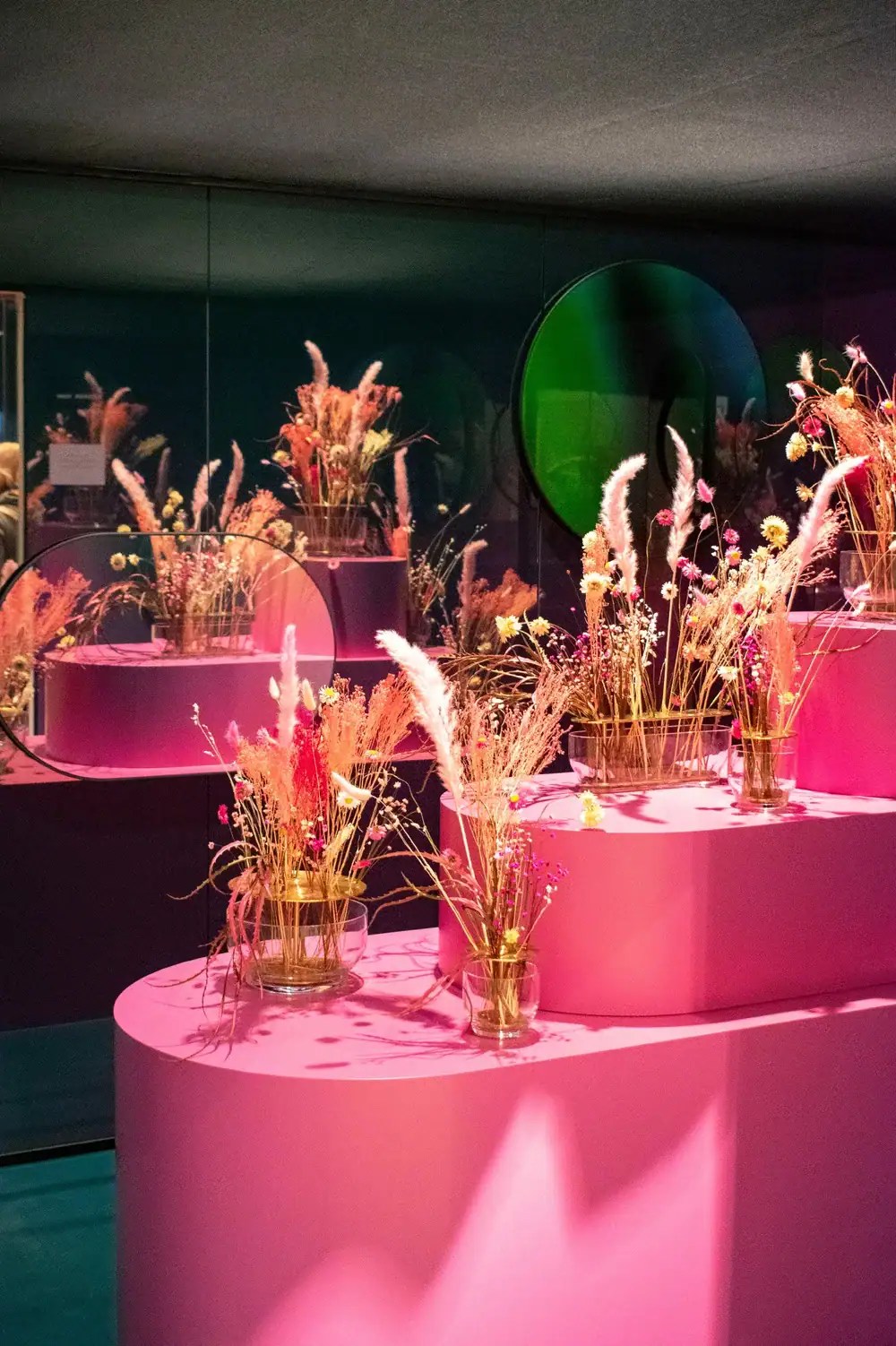
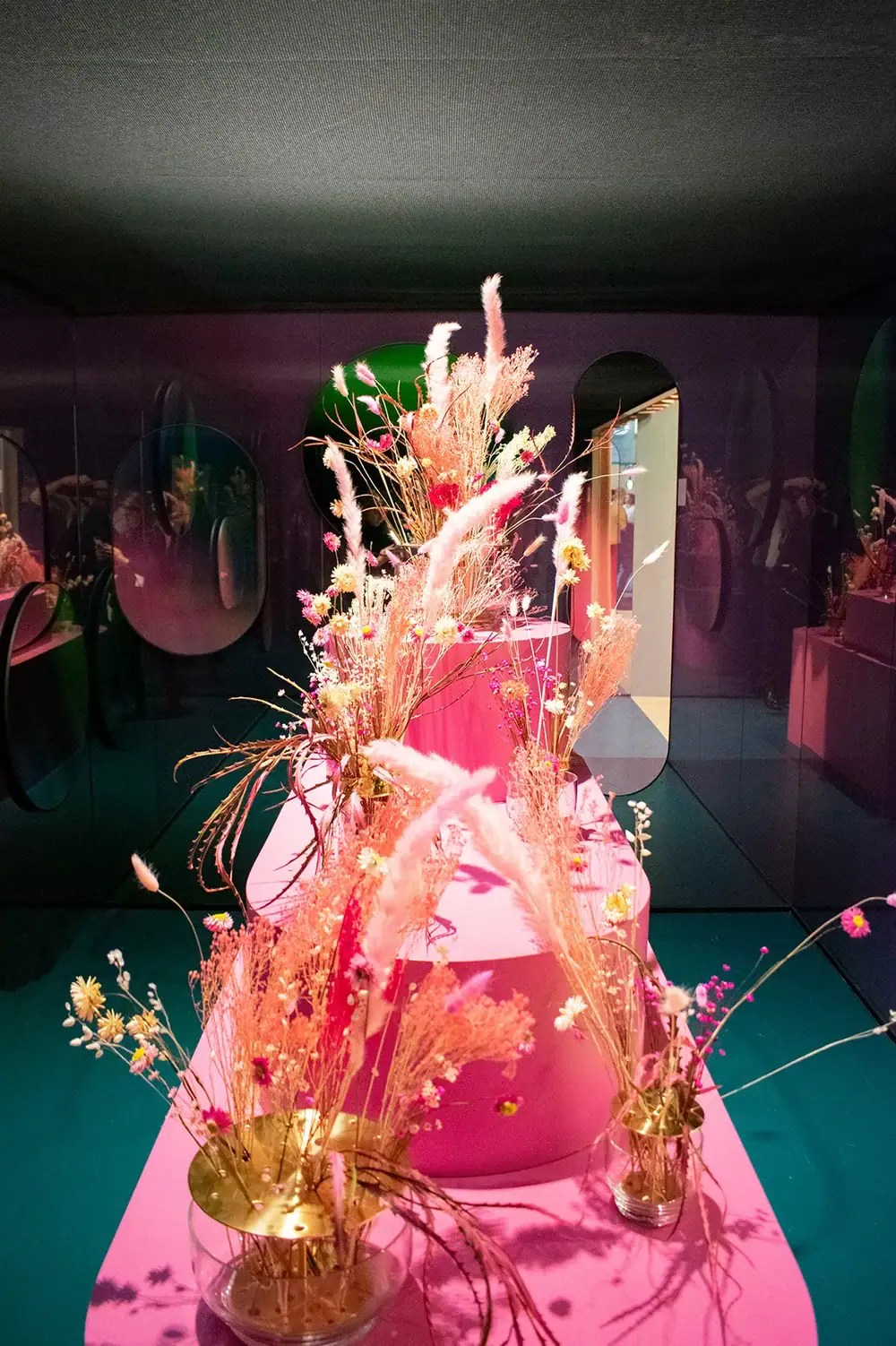
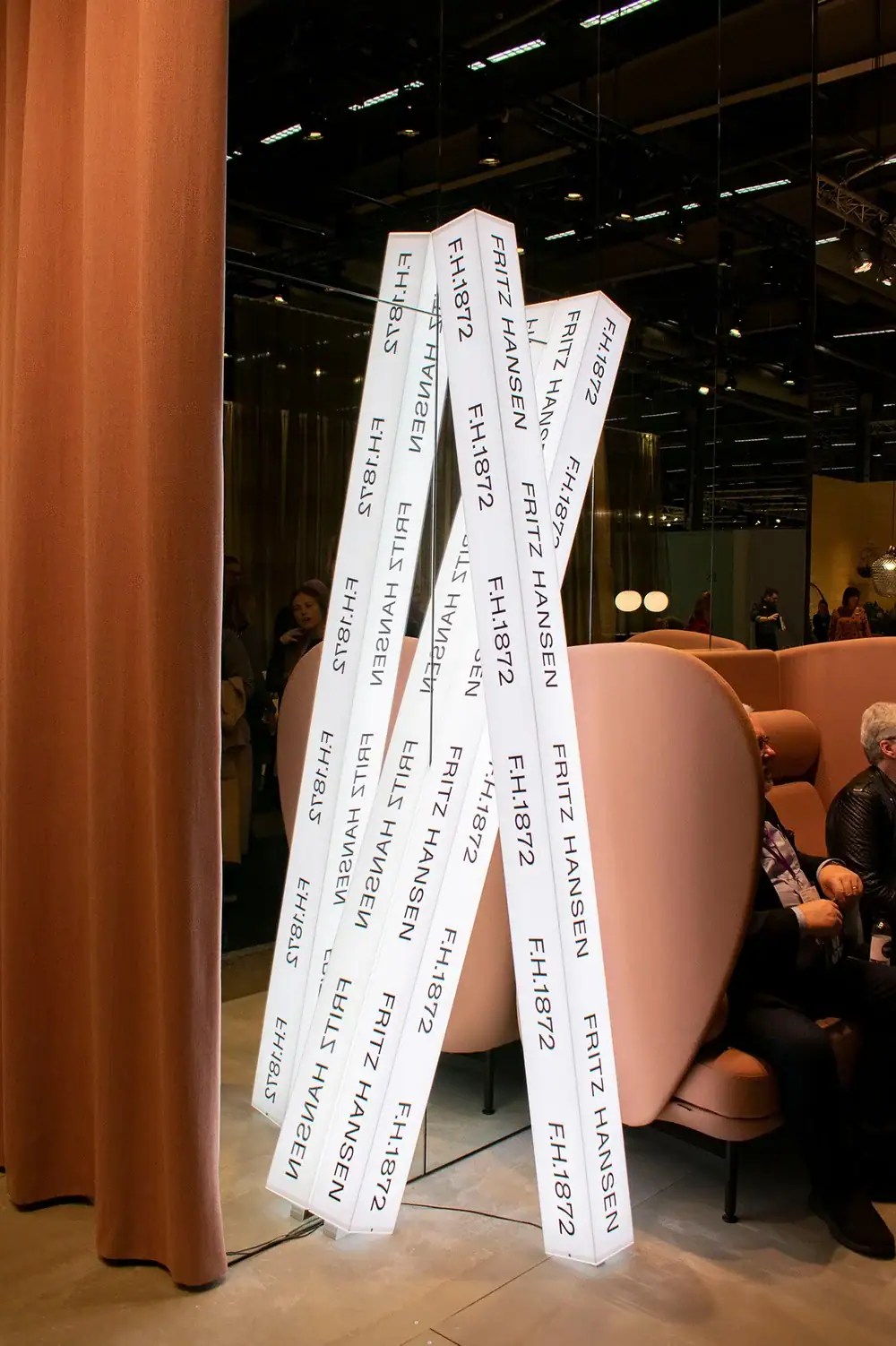
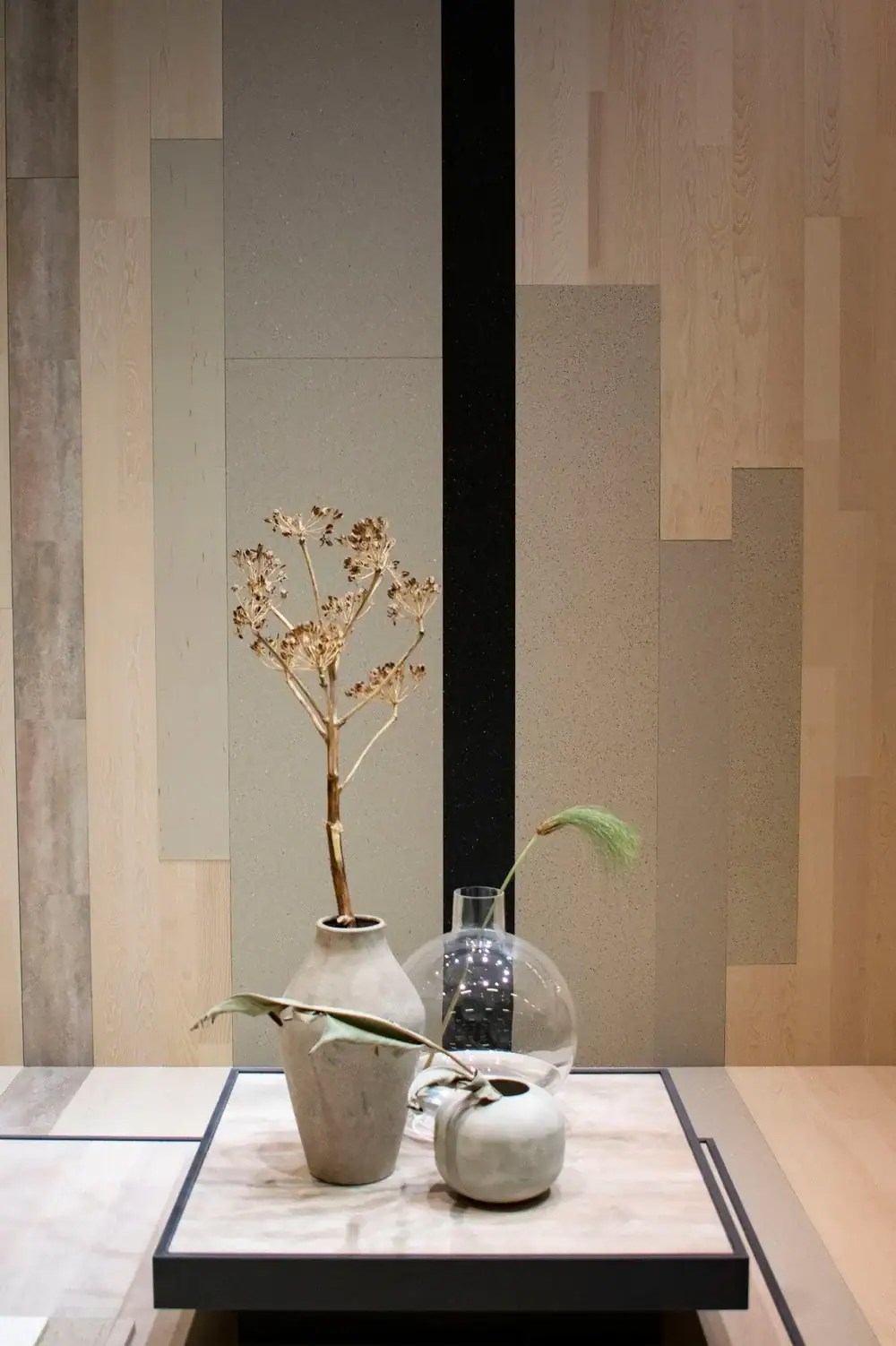
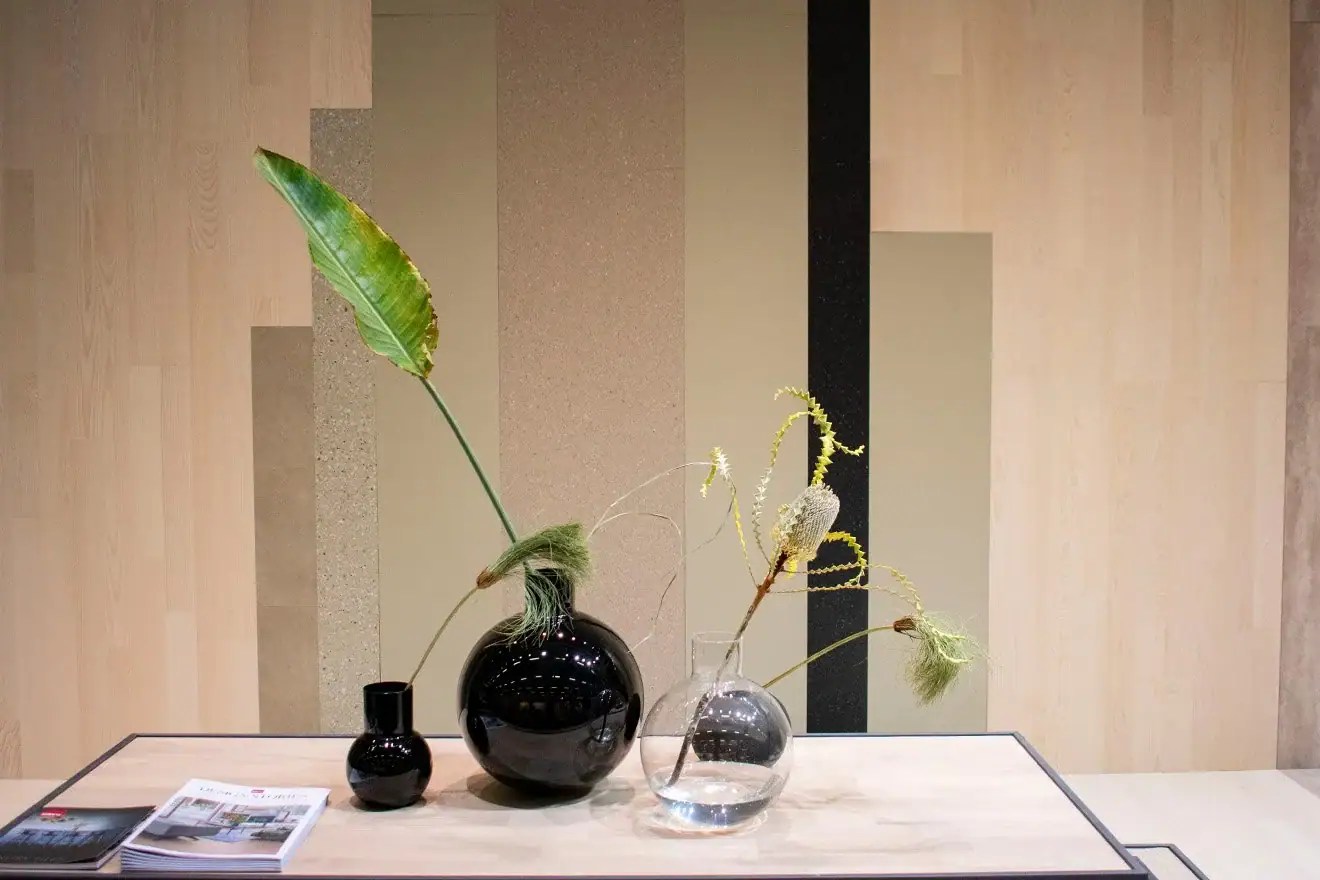
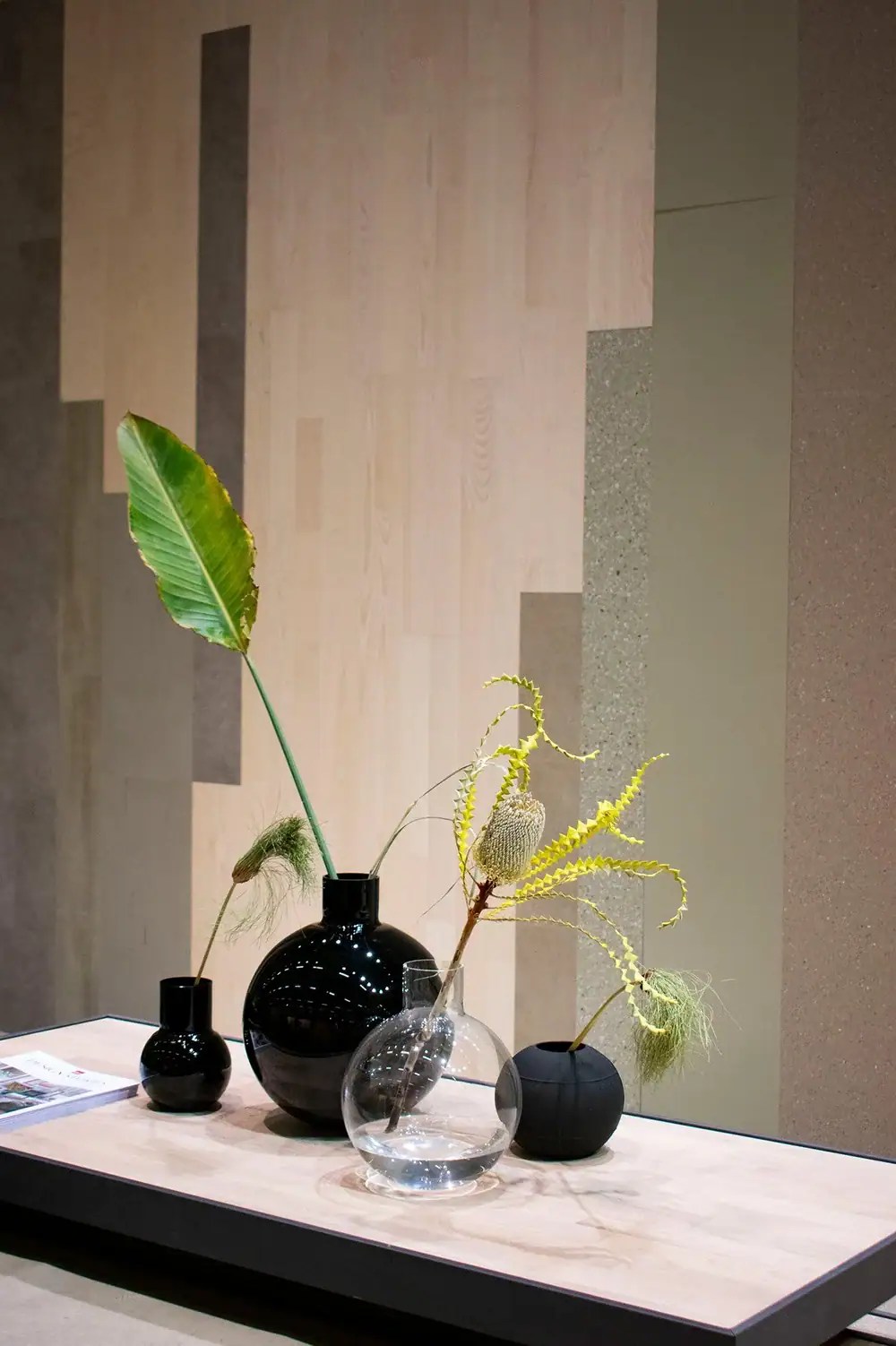
Fritz Hansen, the Danish furniture and lighting house founded in 1872 and long associated with Arne Jacobsen’s Egg and Series 7, showed the Ikebana vase, designed by the Spanish designer Jaime Hayon, in a mirrored display intended to let each mouth-blown vase read from every angle. Hayon has described the design as intended to “honour every flower placed within it,” built around the Japanese art of ikebana, where a single stem is given room rather than crowded into an arrangement. Fritz Hansen paired the vases with its Cross-Plex table lamp range, staged on clear acrylic podiums against a blue backdrop, a presentation choice that put the lamps’ geometry, rather than any single material, at the centre of the display.
Final thoughts
It would be easy to read Stockholm Furniture & Light Fair 2019 as a lighting and furniture trade show and leave it there. What the halls at Älvsjö actually contained was a working demonstration of how differently a group of serious studios can answer the same brief. Pholc put a visible circuit and a hidden one on the same stand. Tom Dixon turned a stone yard’s waste powder into a material worth casting, sawing and lathing into objects that carry no trace of where the powder came from. & Tradition showed an 80-year-old chair built to argue against minimalism standing beside a brand-new collection built entirely on cabinetmaking discipline, and let the two make the case for each other.
None of that requires a shared aesthetic to hold together, and the fair does not attempt to impose one. What it offers instead is proximity: put a Danish reissue, a new Swedish pendant and an Italian pop collaboration within walking distance of each other, and the differences become the argument. That is what roughly four exhibitors in five being Scandinavian actually buys the fair, a baseline specific enough that the remaining fifth reads as genuine contrast rather than noise.
The fair returns to Stockholmsmässan each February, and the studios that showed there in 2019, Tom Dixon’s material research chief among them, are worth tracking forward rather than treating as a single week now closed.
When was Stockholm Furniture & Light Fair 2019 held?
It ran from 5 to 9 February 2019 at Stockholmsmässan in Älvsjö, within the wider Stockholm Design Week, which continued across the city from 4 to 10 February.
Why is Stockholm Furniture & Light Fair considered the largest in the Nordic region?
It draws the highest concentration of Scandinavian exhibitors of any furniture and lighting fair in the region, with roughly 80 per cent of exhibitors each year coming from Sweden, Denmark, Norway and Finland.
What material did Tom Dixon introduce at the 2019 fair?
Tom Dixon introduced Swirl, a material made from recycled marble industry powder mixed with pigment and resin, cast into blocks and then sawn, sliced and turned on a lathe into candleholders, a candelabra, bookends and vases.
Who designed the Little Petra chair shown by & Tradition?
The Danish architect Viggo Boesen designed the Little Petra in 1938. & Tradition continues to produce it to its original proportions.
What is Pholc’s Bounce 169 pendant made of?
Bounce 169, designed by Monika Mulder, is made of metal and opal glass and holds ten bulbs arranged in a continuous arc across its 169-centimetre span.
What is the Toiletpaper collection shown by Seletti?
Toiletpaper is Seletti’s ongoing collaboration with artist Maurizio Cattelan and photographer Pierpaolo Ferrari, first produced as homeware in 2013, applying their surrealist imagery to rugs, tableware and objects.
How old is Kährs, the Swedish flooring company?
Kährs was founded in Nybro, Sweden, in 1857 and has traded continuously from the same town for more than 160 years.
Who designed the Ikebana vase shown by Fritz Hansen?
The Spanish designer Jaime Hayon designed the Ikebana vase for Fritz Hansen, a mouth-blown piece built around the Japanese art of flower arranging.


Leave a Reply