

ART & CULTURE · LONDON
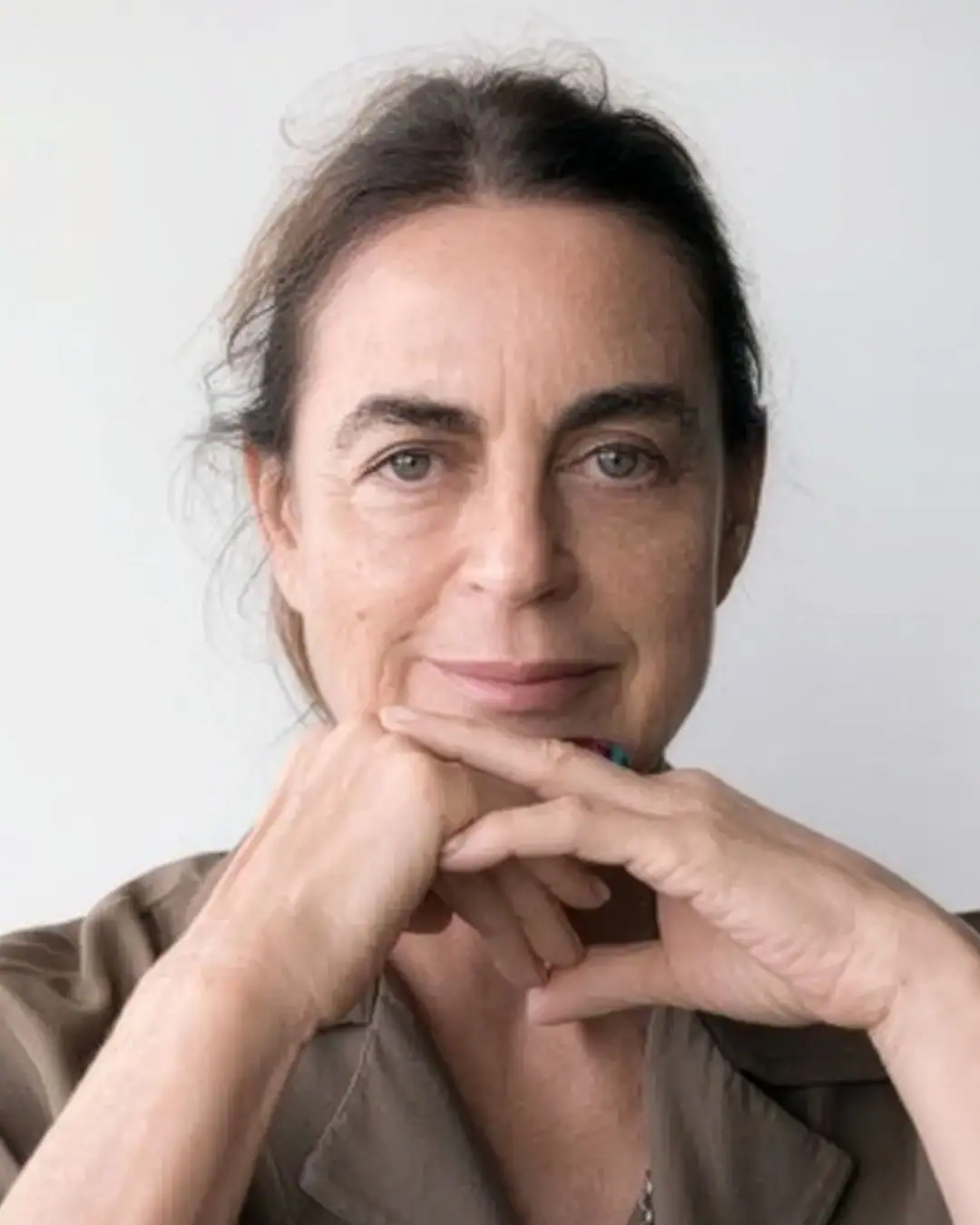
Reading time: 7 minCoco Dávez did not set out to remove faces from her paintings. She was trying to fix one, using whatever red paint was closest to hand, when she realised the portrait still worked without it. That accident, roughly a decade ago now, produced the Faceless series that filled her first UK solo show at Maddox Gallery in May 2019 and has since travelled from a Westbourne Grove gallery wall to an open street in southern Spain.
Introduction
Coco Dávez, the professional name of the Madrid-based painter Valeria Palmeiro, brought her Faceless portraits to London for the first time in May 2019, filling Maddox Gallery’s Westbourne Grove space with large acrylic canvases of Amy Winehouse, David Bowie, Frida Kahlo, David Hockney, Pablo Picasso, Yayoi Kusama, Jackie Kennedy, Jean-Michel Basquiat, Coco Chanel, Grace Jones, Iris Apfel and Andy Warhol, each rendered in flat, saturated colour with the face left entirely blank. It was her first UK solo exhibition, and it sold out. Nobody in the room needed a wall label to identify most of the subjects, which was precisely the point: a leather jacket, a particular haircut, a signature pair of glasses did the work a face usually does.
That show is now more than seven years behind her, and the version of Faceless a visitor encounters today looks nothing like a fixed body of work from a single spring. It has become something closer to an ongoing project Dávez keeps adding subjects and settings to, most recently as a free, open-air exhibition along a pedestrian street in Estepona, on Spain’s Costa del Sol, in the summer of 2025. Telling this story properly means going back to how it started, since the accident that produced it explains more about why the technique works than the finished paintings do on their own.

The accident with a tube of red paint
Dávez is entirely self-taught. She began painting at twenty-one with no formal art training, having started her professional career in London around 2010 as an illustrator for the Spanish newspaper El Mundo, and she has described the moment the Faceless technique arrived as pure chance rather than a planned departure. She was painting a portrait of the singer Patti Smith and was unhappy with how the face had come out. “The collection came about literally by a stroke of luck,” she has said. “I was actually painting a portrait of Patti Smith and I was unhappy with the facial features so painted over her face in red.”
What happened next is the part worth sitting with. Rather than starting the portrait over, Dávez looked at what remained: a recognisable silhouette, a coat, a familiar tangle of hair, and a flat red void where a face should have been. “I could still see her without seeing her face,” she has said. That is a precise description of what the technique actually does to a viewer, and it is a more useful way into her work than “faceless portraits” alone, which undersells how much information a painting can carry once it stops relying on the one feature most portraiture treats as indispensable.
She has also pointed to an art-historical precedent for the idea, rather than claiming to have invented facelessness in painting outright. “Picasso’s portrait was deliberately faceless and set the precedent for the collection,” she has said, naming the artist she cites as her primary influence. Picasso is a considered reference rather than a convenient one: his own portraits regularly abstracted or reassembled facial features into something no longer legible as a face in the conventional sense, which gave Dávez’s accidental discovery a lineage to sit inside rather than leaving it as a one-off technical trick.

From a social media following to a Netflix commission
Dávez built an audience for the Faceless paintings largely through social media before any gallery came calling. “I’m always observing, but from my experience, social networks have mostly helped me to gauge feedback,” she has said of that period, describing it as a way of testing new work against a public response in real time rather than waiting for a show to find out whether a piece landed. The performance artist Marina Abramović was among the people who noticed, naming Dávez as an artist to watch, and the attention that followed helped land Dávez a place on Forbes’ 2019 “30 Under 30” list for art and culture, the same year as the Maddox Gallery debut.
The same year, Netflix commissioned Dávez to create artwork tied to Stranger Things, and brands including Chanel, Dior, Kenzo, Prada, Puma, Samsung, Vogue and Loewe had already begun commissioning work or collaborations from her. That is an unusually fast route from a ruined painting of Patti Smith to a global fashion and entertainment client list, and it happened almost entirely before the London show gave her a UK gallery presence at all. The Maddox exhibition was less a launch than a formal confirmation of an audience that had already found her.
What the technique is actually doing
Faceless paintings work because Dávez commits fully to the removal rather than softening it. The face is not blurred, shadowed or partially obscured. It is a single flat plane of colour, usually one of the portrait’s boldest, sitting inside an otherwise detailed rendering of clothing, hair and posture painted in what she has described as a blend of Neorealism and Pop Art, thick unconstrained brushwork against pure, high-saturation acrylic. The effect asks a viewer to do a specific kind of work: identify a famous person using only the visual evidence a face would normally make unnecessary to notice consciously, a collar shape, a hairline, the particular slouch of a shoulder.
That is also why colour choice carries so much weight in each painting. With the face gone, the colour a subject is rendered in becomes one of the few remaining tools for conveying character rather than just likeness. Dávez has spoken about choosing colour combinations that reveal something of a subject’s temperament rather than simply making a striking image, which is a harder brief than it sounds once the most expressive part of a human face is no longer available to help.
The paintings themselves are not small studies. Dávez works in acrylic on canvas across a handful of set formats, from around 54 by 65 centimetres up to 130 by 162 centimetres, a scale that gives the flat colour field standing in for a face genuine physical presence in a room rather than reading as a graphic flourish on a smaller sheet. At the larger end of that range, the blank plane where a face should be is close to life-sized, which is part of why the paintings hold a gallery wall, or in Estepona’s case an outdoor street front, as confidently as a conventional portrait would.

From a sold-out London gallery to an open street in Spain
Dávez returned to Maddox Gallery’s Westbourne Grove space in March 2023 with a second solo show, Partners in Time, which marked the first time she painted the Faceless subjects in pairs rather than alone: Freddie Mercury and David Bowie, Andy Warhol and Jean-Michel Basquiat, John F. Kennedy and Jackie Kennedy, Vivienne Westwood and Malcolm McLaren, Pablo Picasso and Coco Chanel, Sandy and Danny from Grease. “I paired people who mean something to me personally, and who I associate together in my mind,” Dávez has said of the selections. “With my choice of colours, I strive to find a mix that reveals a sense of the subject’s character.” Maddox Gallery’s artistic director, Maeve Doyle, framed the show as a question about “the role of traditional relationships and exploring the importance of certain people in our lives, who stimulates us and who completes us.”
By the summer of 2025, Faceless had moved well beyond a gallery format altogether. Seventeen works, several painted specifically for the occasion, filled a free, open-air exhibition along Calle Terraza, a pedestrian street in Estepona, on subjects including Picasso, Bowie and the Spanish flamenco singer Camarón de la Isla, integrated directly into the street’s existing murals and architecture rather than hung in a white-walled room. It was the format’s third international outing after earlier presentations in London and Hong Kong, and it landed the same year Dávez’s own account of the project marked ten years since the Patti Smith painting that started it. A technique discovered by accident in a single studio session has, in a decade, become a project with its own touring life, moving from a sold-out sixteen-day show behind a Westbourne Grove shopfront to a free public street display that anyone walking through central Estepona could wander into unannounced.
Frequently asked questions
Who is Coco Dávez?
The professional name of Valeria Palmeiro, a self-taught, Madrid-based painter born in 1989, known for the Faceless portrait series.
What is the Faceless series?
Portraits of cultural icons painted with the face left as a single flat block of colour, identified instead through clothing, hair and posture. The technique began by accident while Dávez was painting Patti Smith.
Where was Coco Dávez’s first UK show?
Maddox Gallery, Westbourne Grove, London, in May 2019, a sold-out solo exhibition and her first in the UK.
Has the Faceless series continued since 2019?
Yes. Dávez returned to Maddox Gallery in March 2023 with a second show, Partners in Time, pairing subjects for the first time, and in 2025 presented an open-air Faceless exhibition of seventeen works on a pedestrian street in Estepona, Spain, following earlier outdoor presentations in London and Hong Kong.
Who has Coco Dávez collaborated with?
Brands including Chanel, Dior, Kenzo, Prada, Puma, Samsung, Vogue and Loewe, and Netflix, which commissioned artwork tied to Stranger Things in 2019.

Final thoughts
A ruined painting of Patti Smith is a strange origin point for a decade-long body of work, and Dávez’s own account of it resists the temptation to dress the accident up as a masterstroke. She was unhappy with a face, painted over it, and noticed the portrait still worked. Everything since, the Forbes recognition, the Netflix commission, two sold-out Maddox Gallery shows seven years apart, an open street in Estepona lined with paintings anyone could walk past for free, has followed from taking that one accidental observation seriously rather than treating it as a mistake to correct. The technique still asks the same question it asked in a single red-flooded canvas in a Madrid studio: how much of a person is actually carried in the parts of a portrait nobody thinks to look at first.

Leave a Reply