

DUBAI DESIGN WEEK · DUBAI
Reading time: 7 minA cabinet veneered in dyed palm leaf. A coffee table made from off-cut travertine nobody wanted. A pendant light spun from palm fibre. The most interesting furniture at Downtown Design 2024 was not shipped in from Milan, and that is the shift worth paying attention to.
Design fairs are often written up as spectacle, and the more useful story is what they are for.
A trade fair like Downtown Design is where specification happens. Architects and interior designers walk it in November with live projects in their heads, and what they touch, sit on and put on a schedule there ends up in the region’s hotels, offices, restaurants and homes for the following two or three years. The fair does not report on the region’s interiors. It decides them.


LASVIT
Which makes the balance of what is on show the thing worth reading. For most of the past decade that balance has tilted heavily towards imported European design: Italian furniture, Czech glass, Danish lighting, all excellent and all arriving from somewhere else.
The 2024 edition, held at Dubai Design District from 6 to 9 November 2024 alongside Dubai Design Week, was the clearest sign yet that the balance is moving. The most rigorous work in the building came from six UAE-based designers making furniture out of palm leaf, palm fibre, discarded travertine and local steel.


LASVIT
Tanween: the material argument
Tanween is Tashkeel’s design programme, founded in 2013 by Tashkeel with the late Roanne Dods, and its 2024 edition ran for eleven months, from 8 January to 15 November 2024, before unveiling at Downtown Design. Designers work with engineers, scientists and local manufacturers, and everything is produced in the UAE.
That last condition is the whole point. Anyone can design a chair inspired by heritage. Making it in the Emirates, from materials the Emirates actually has, is a considerably harder brief, and it is the one that builds an industry rather than a mood board.
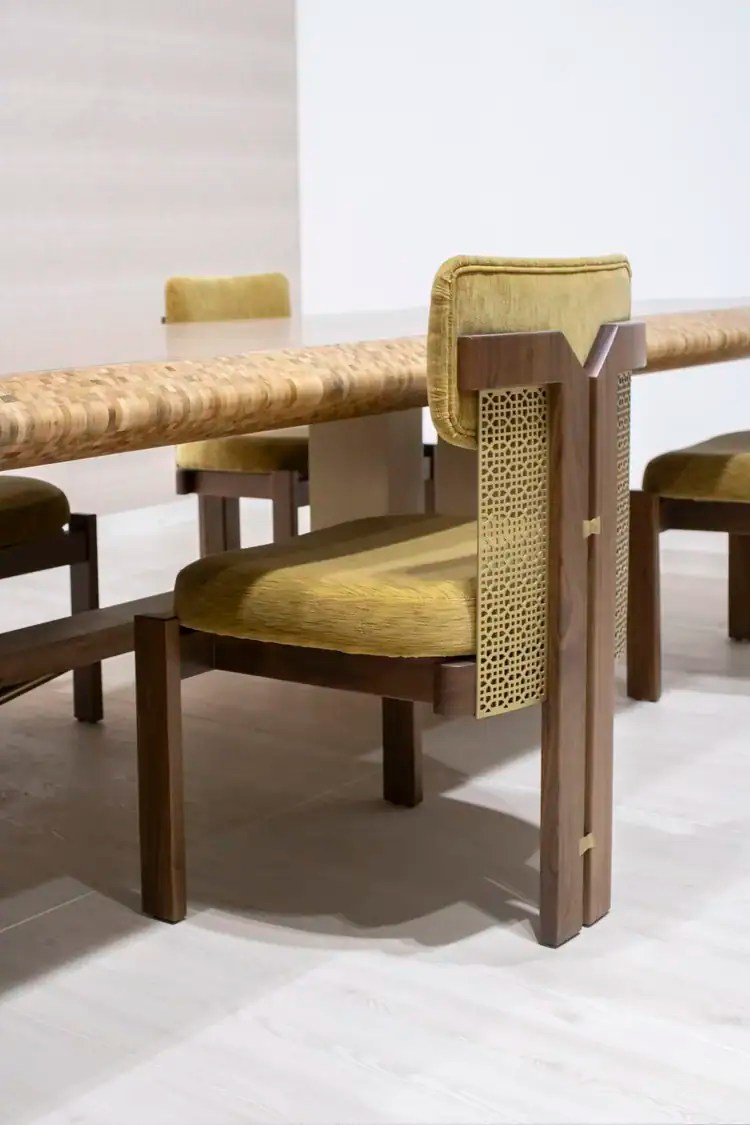
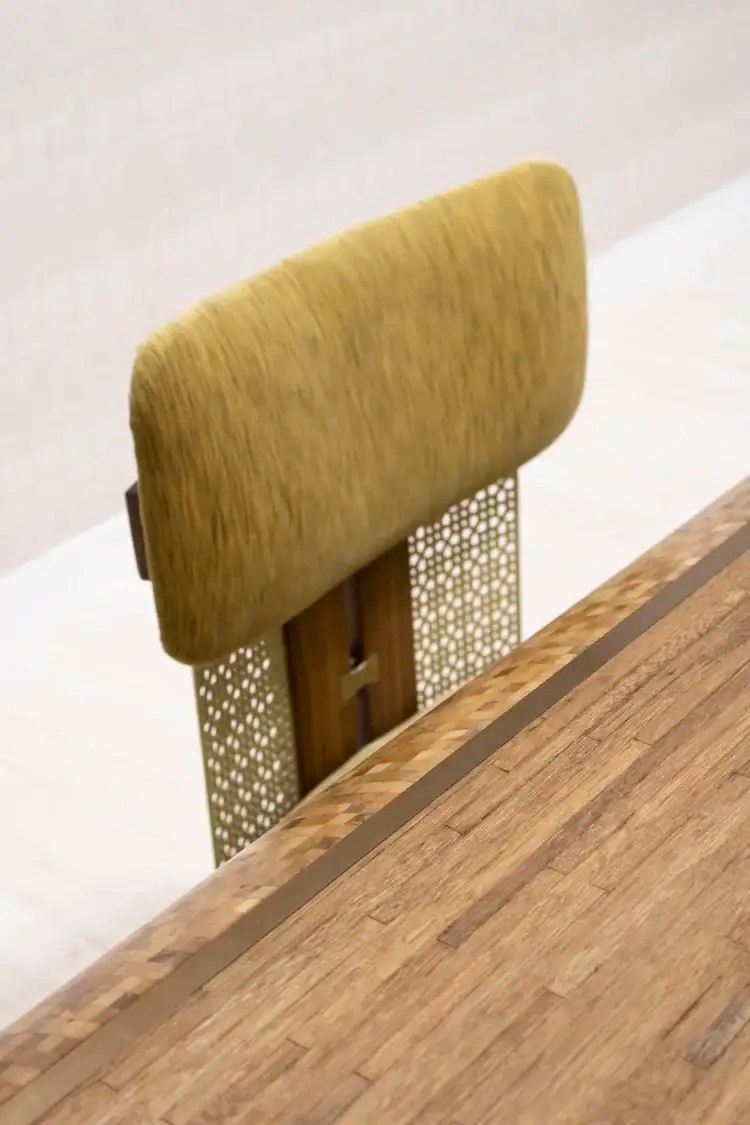
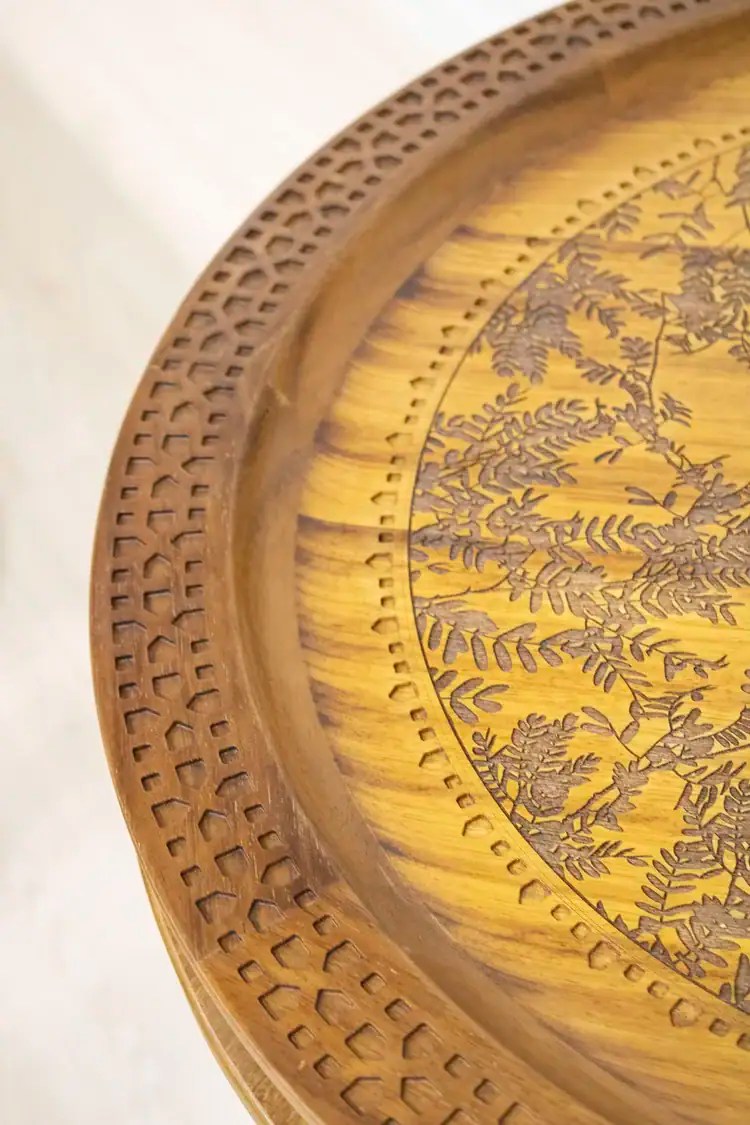
Tashkeel’s Tanween
The 2024 pieces show what that produces.
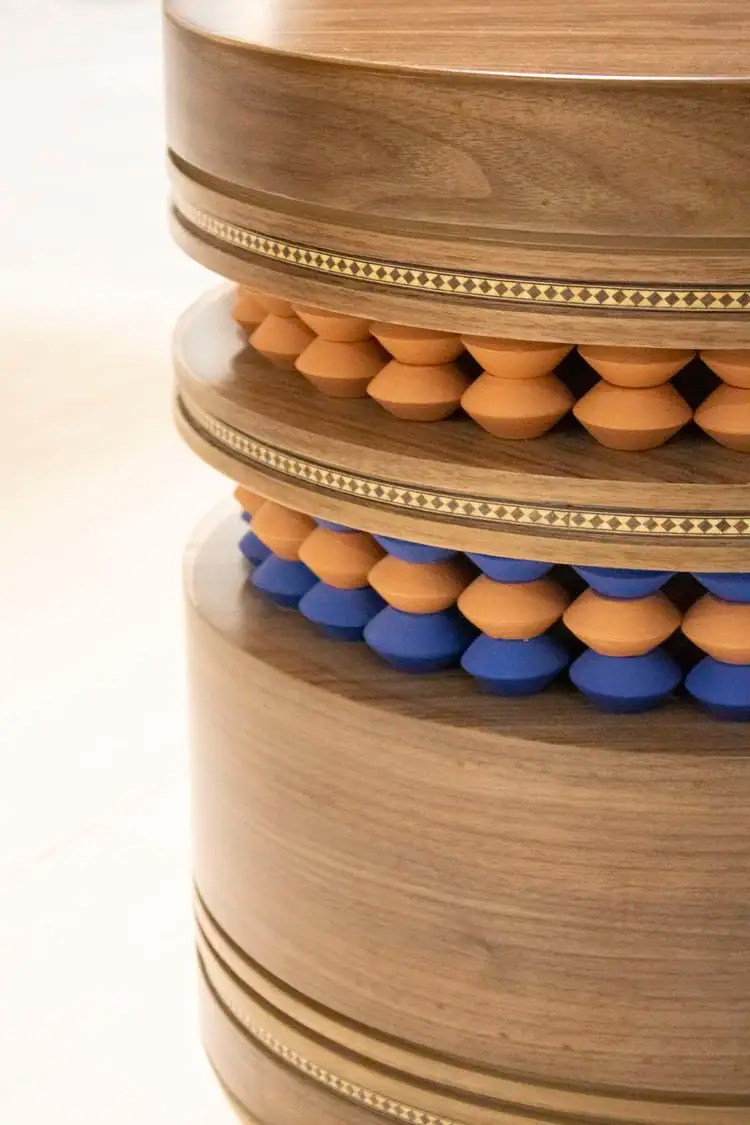
One Third Studio, the collective of Amna Bin Bishr, Duna Ajlan and Dania Ajlan, made Taleed, a cabinet veneered in dyed palm tree leaves, using a marquetry technique developed for the material and patterned after the burqa’a. Palm leaf is the most abundant material in the country and among the least used in contemporary furniture. Turning it into marquetry, which is a precision veneer craft, is exactly the kind of translation that gives a local material a commercial future.
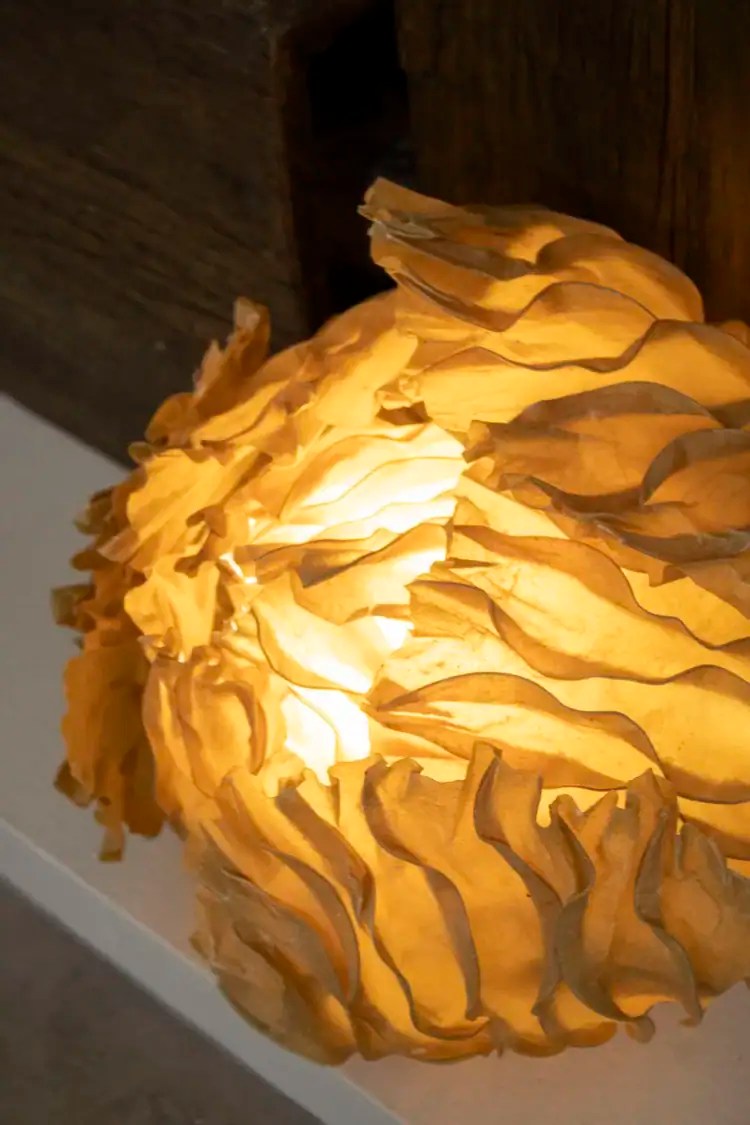
Khadija Al Mazimi’s FAY pendant light pairs palm fibre with LED. Palm fibre diffuses light with a warmth and irregularity no moulded polymer manages, and it is a by-product rather than a crop.
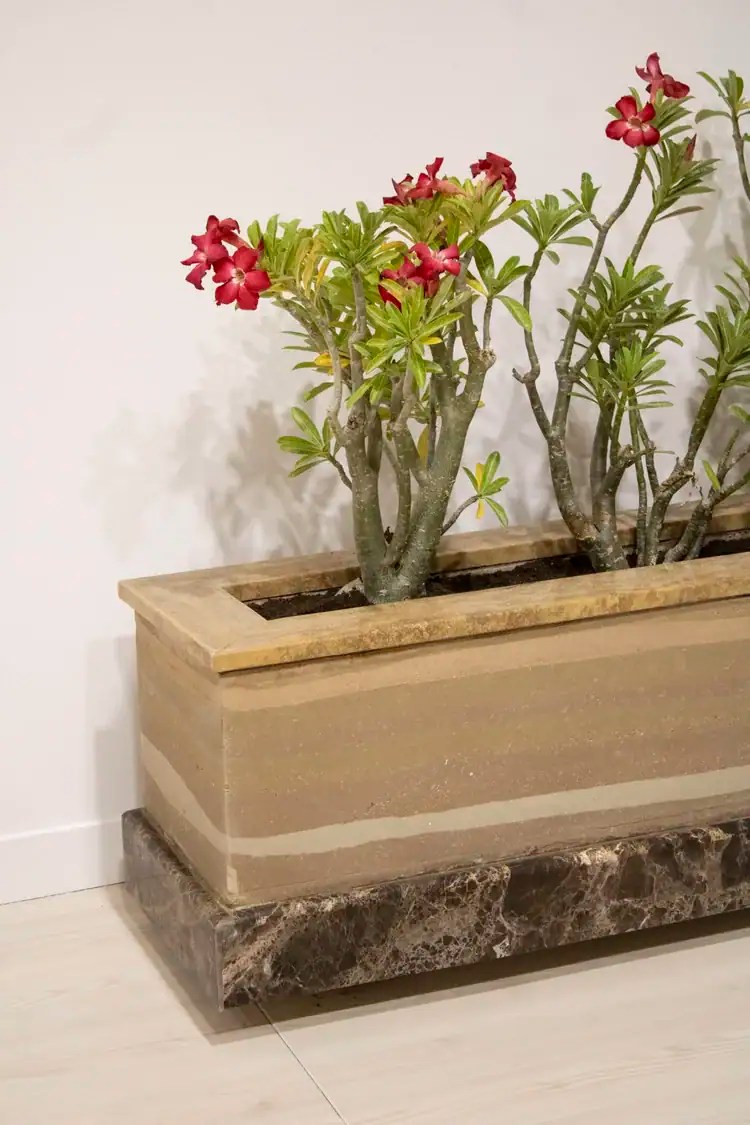
Tashkeel’s Tanween
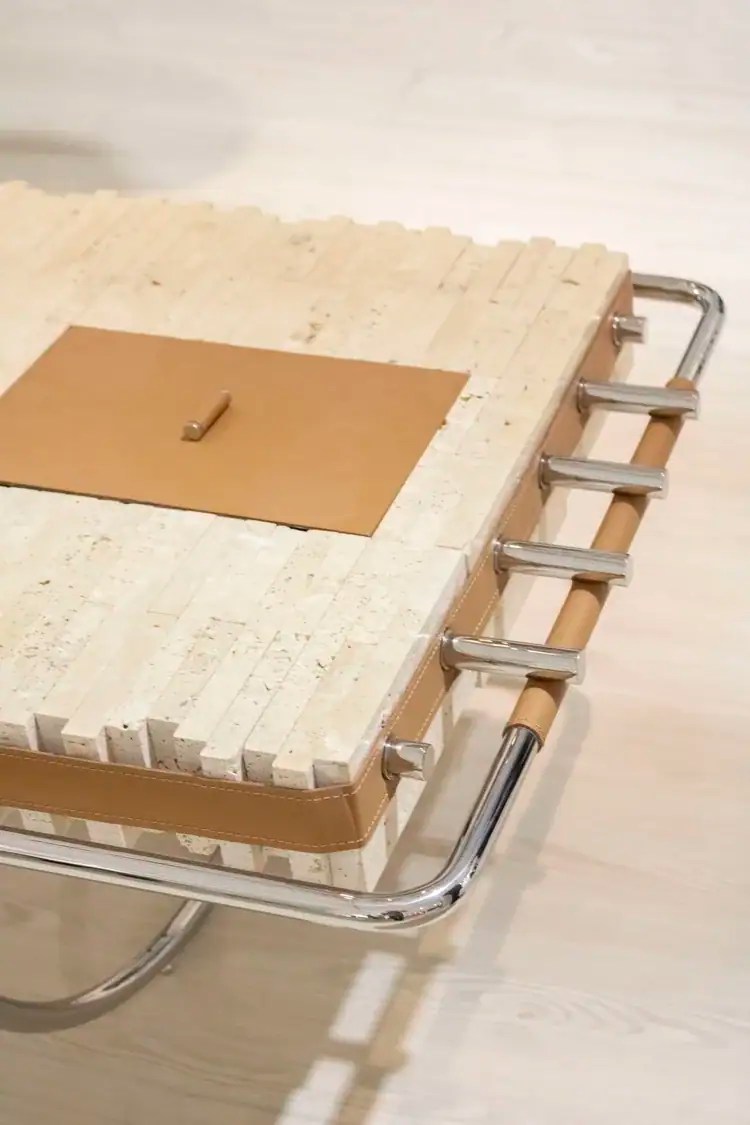
Samara & The Poet Studio built the Sanad coffee table from off-cut travertine, the stone left over from larger cuts and normally discarded. Travertine is porous, banded and heavy, and using off-cuts means accepting whatever banding arrives, so the modular assembly is doing real work rather than styling.
Rimsha Kidwai’s Kashi brings together wood, clay blocks and a handcrafted Sadu cushion, holding Emirati and South Asian craft traditions in one geometric stool. Given the composition of the UAE’s population, a piece that treats both traditions as native is more honest than one that treats only one of them that way.
Atelier Vierkant
Majid Al Bastaki’s BO NAJ-MA, in wood and steel, takes its cue from the steel doors of neighbourhood houses, which is a genuinely overlooked piece of Emirati visual vernacular. Osama Rashad’s KUNOOZ coffee table draws its base from the funnel drip method of making coffee.
None of these are decorative gestures. They start from a material or a process that exists here and work outwards.
Atelier Vierkant
What the imported brands were doing
Set that against the European stands, and the comparison is instructive.
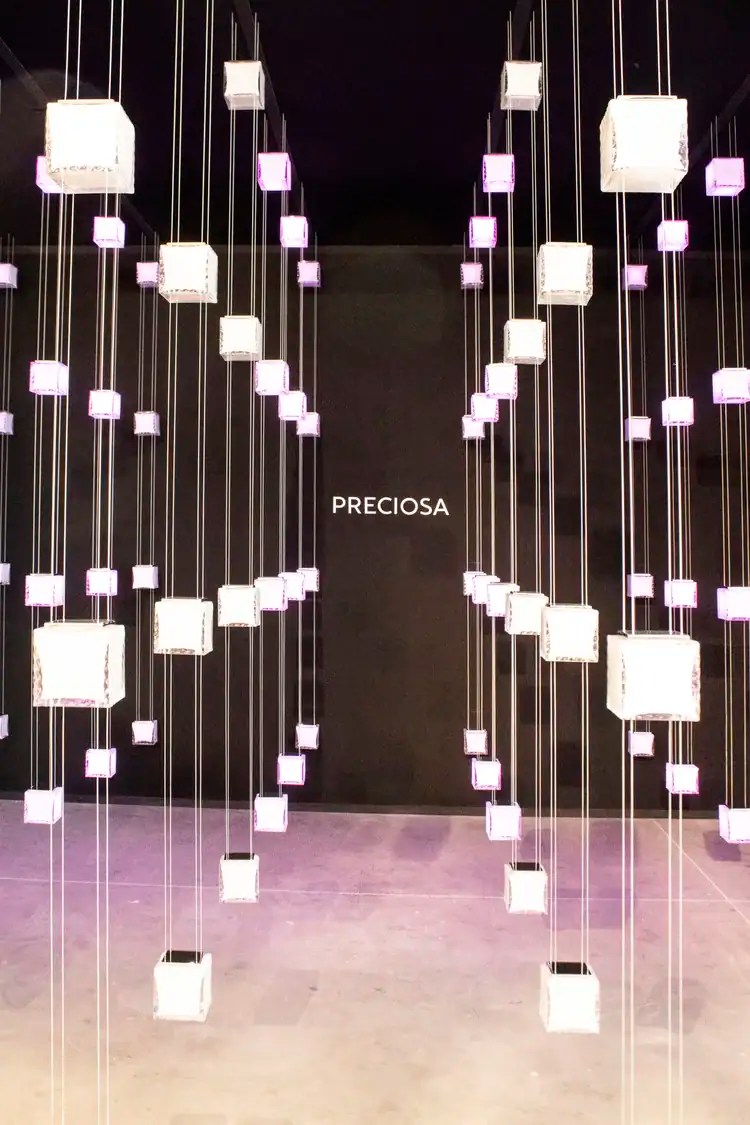
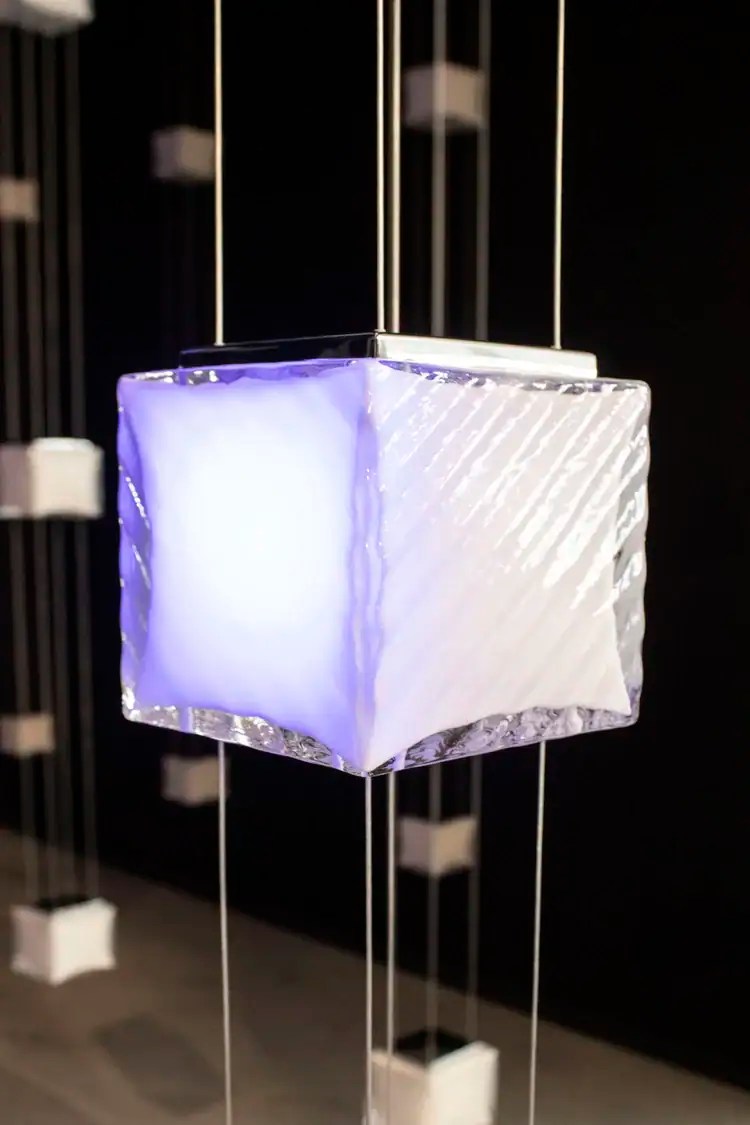
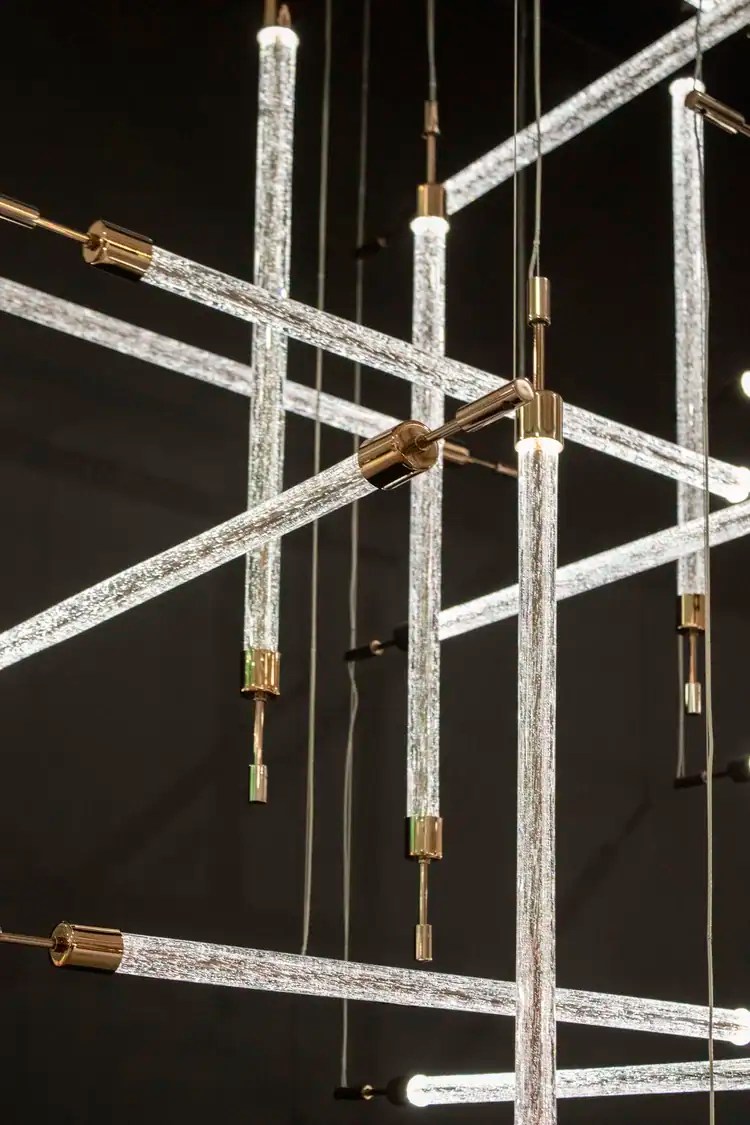
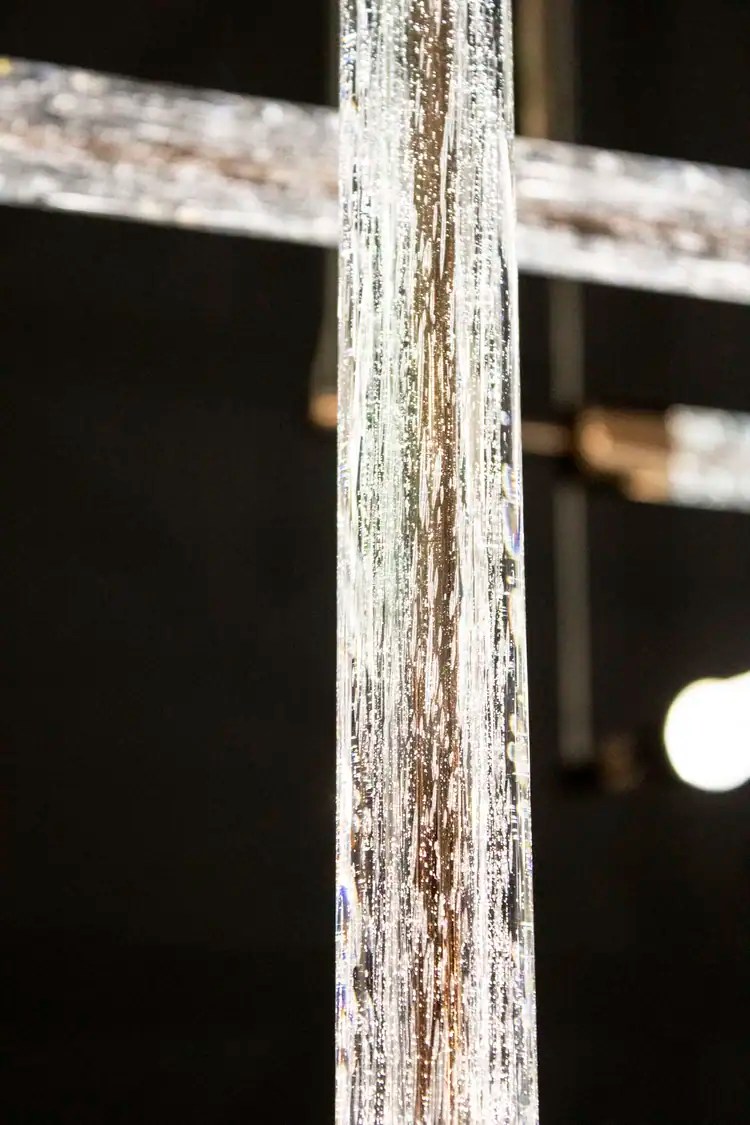
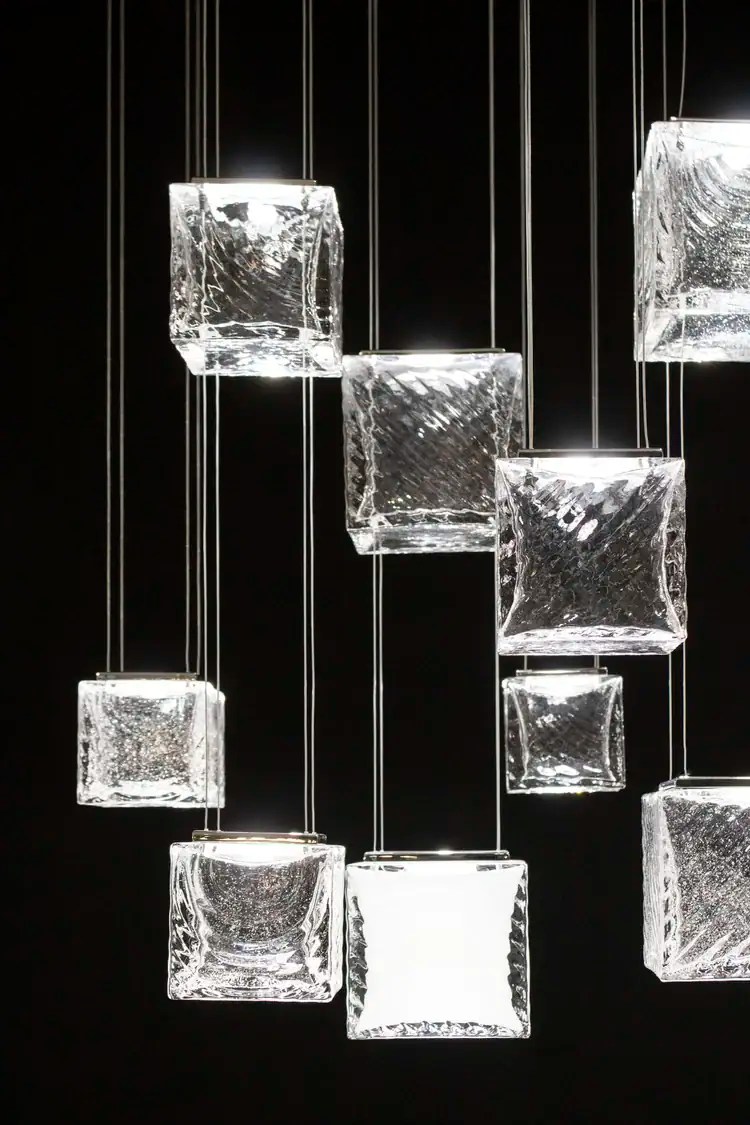
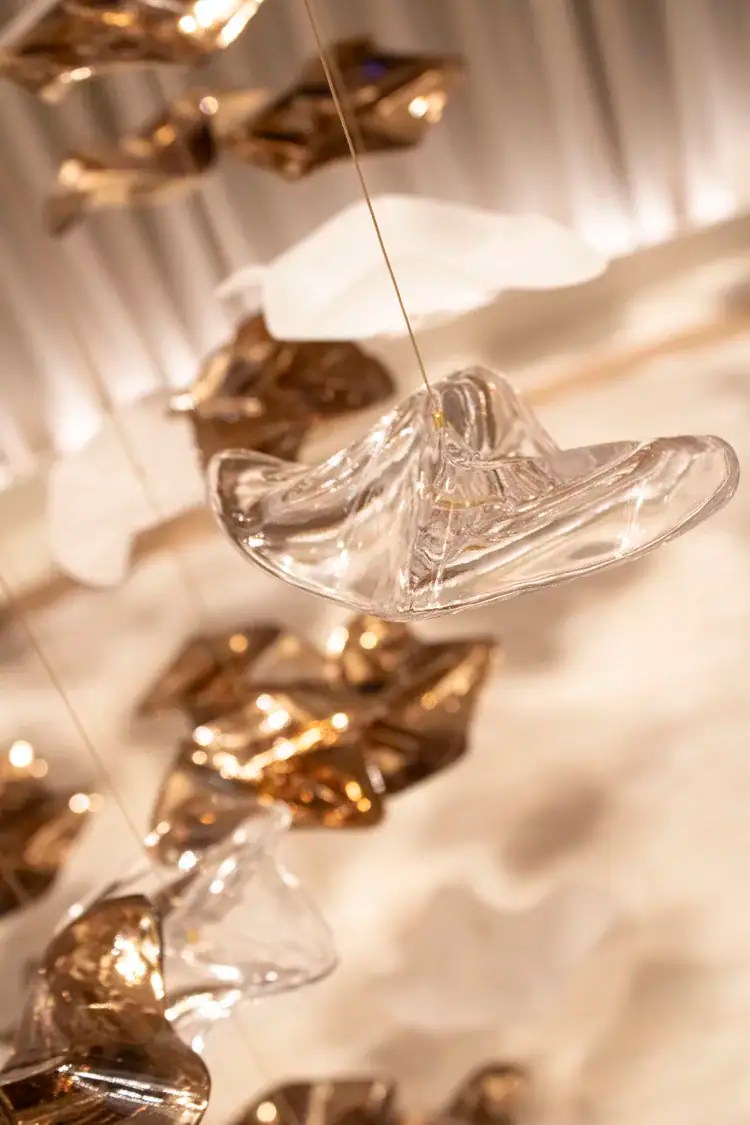
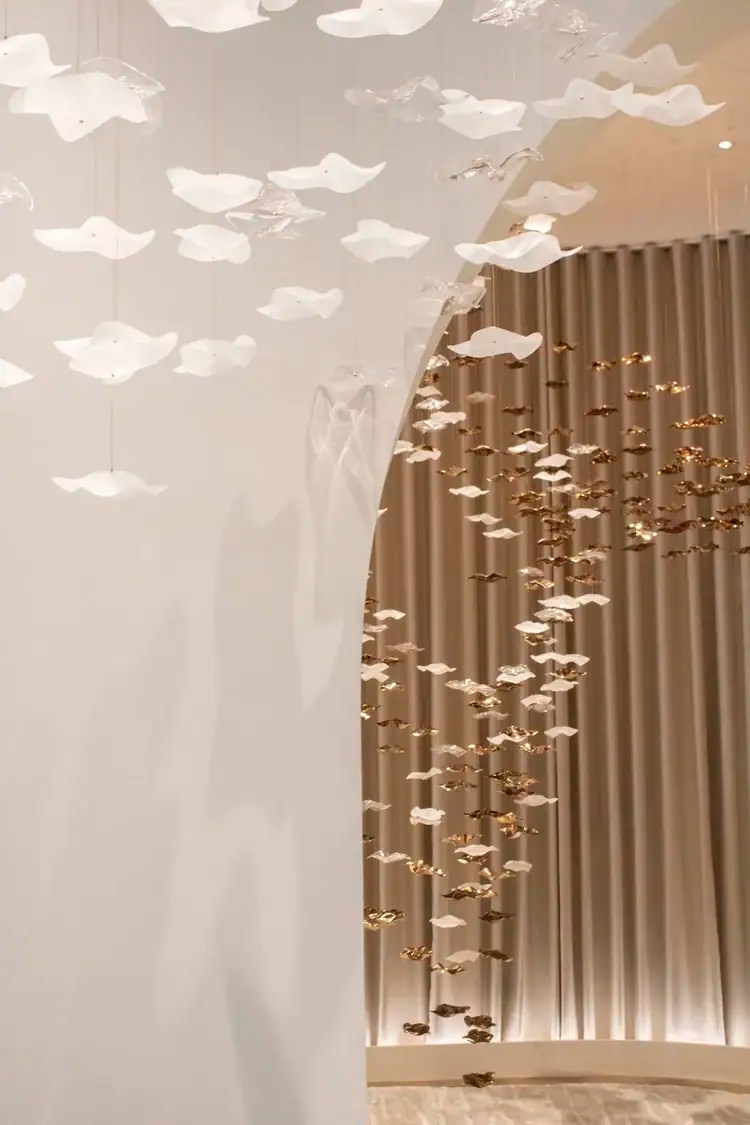
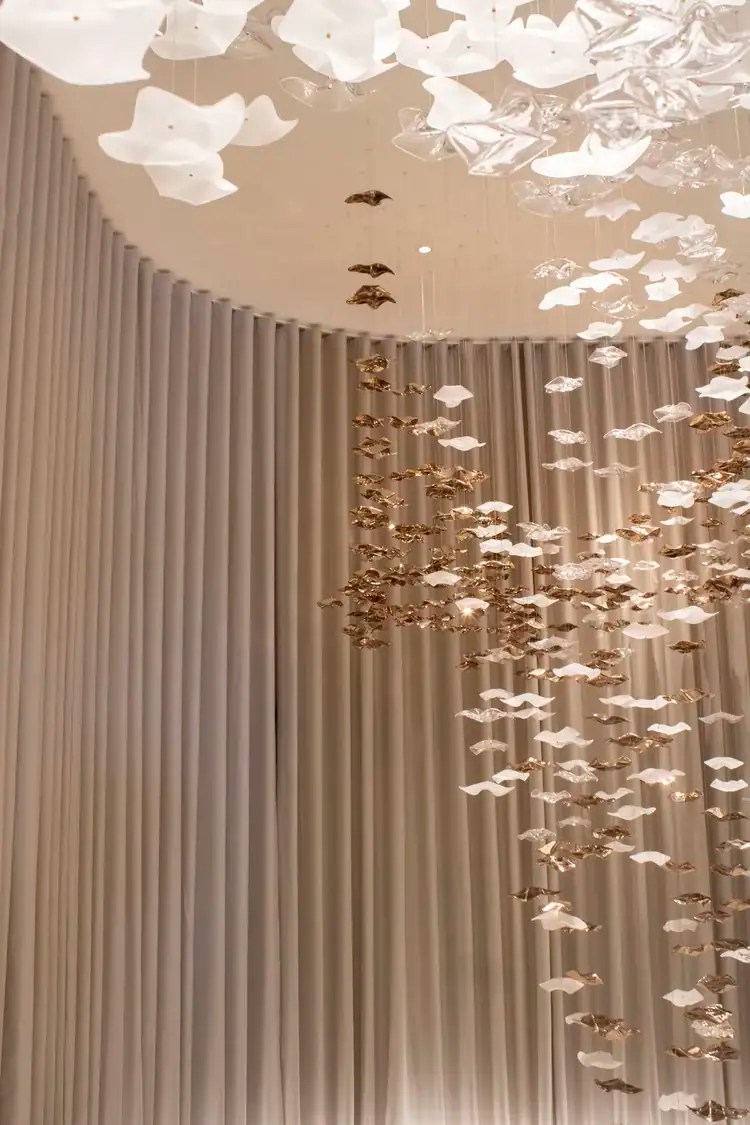
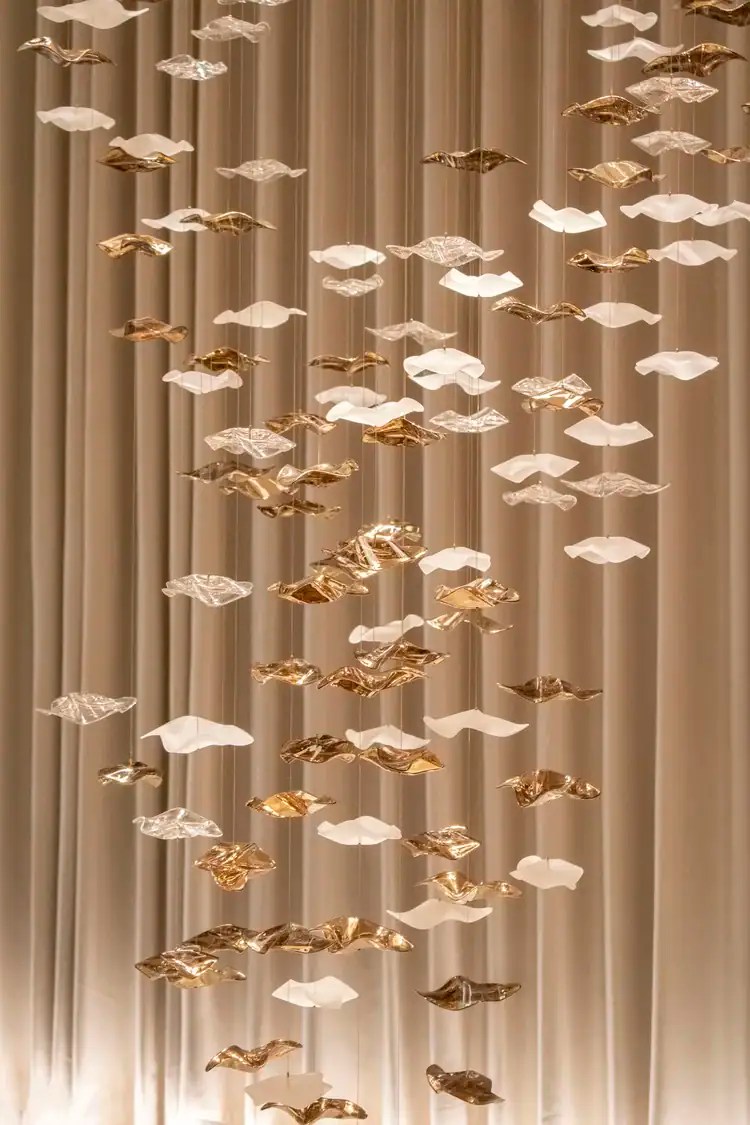
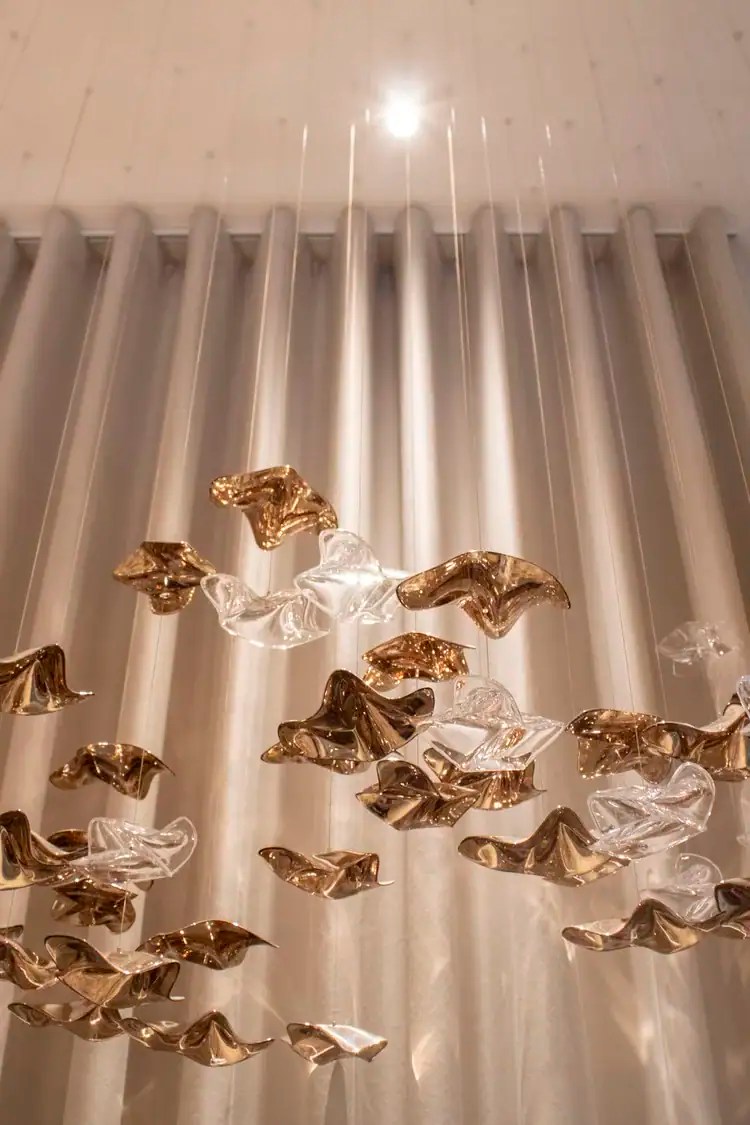
Lasvit showed Wadi, a lighting installation by Martin Gallo taking the desert as its subject, alongside the Miles collection by Yabu Pushelberg. Preciosa brought Crystal Beat, an immersive installation by creative directors Michael Vasku and Andreas Klug built from 144 hand-cut crystal cubes with programmable LED. Both are superbly made, and both are Bohemian glass houses with centuries of technique behind them interpreting a region from outside it.
Preciosa
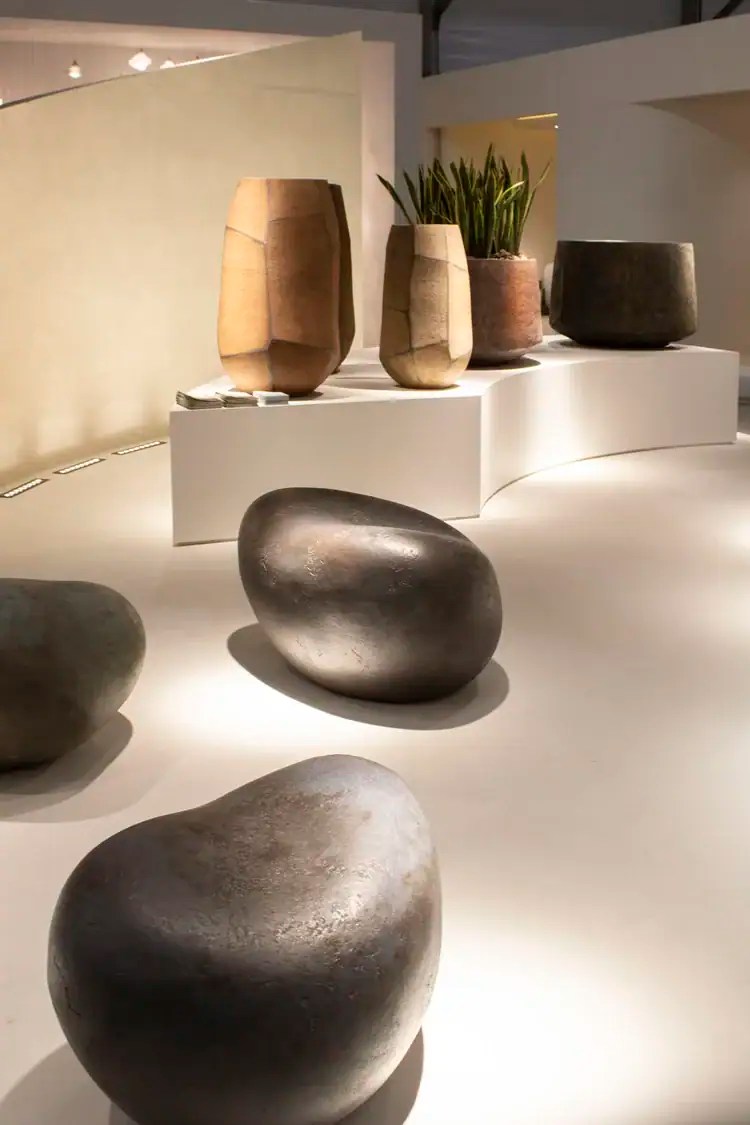
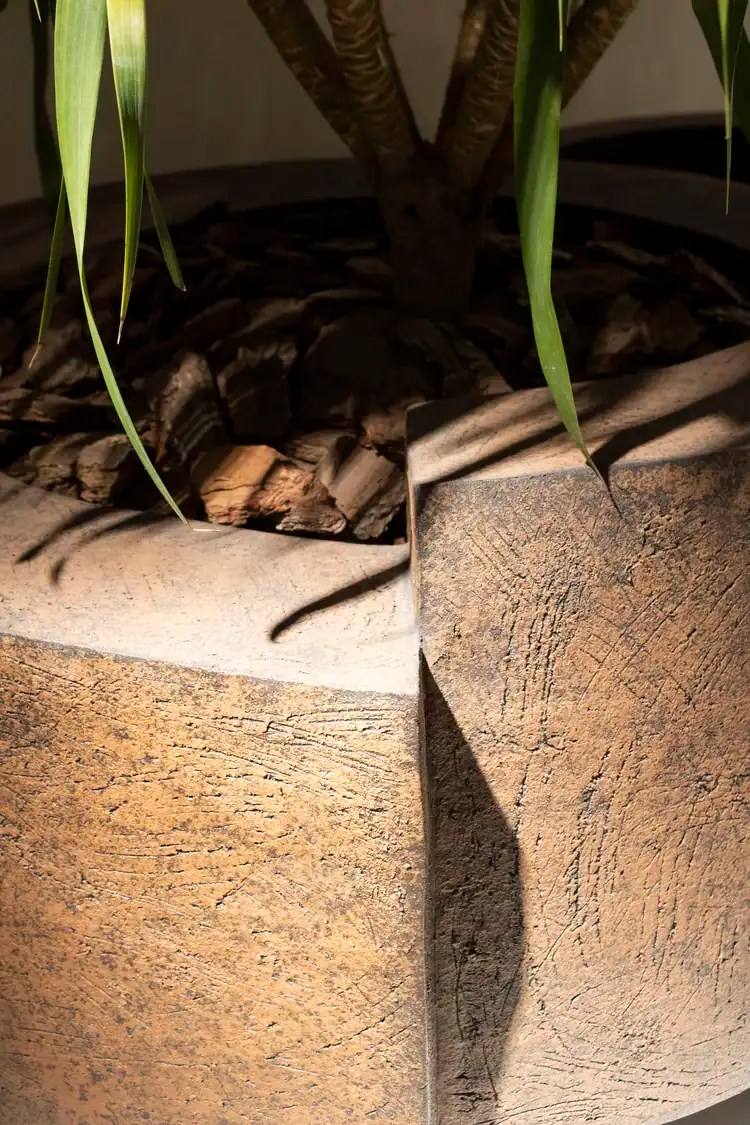
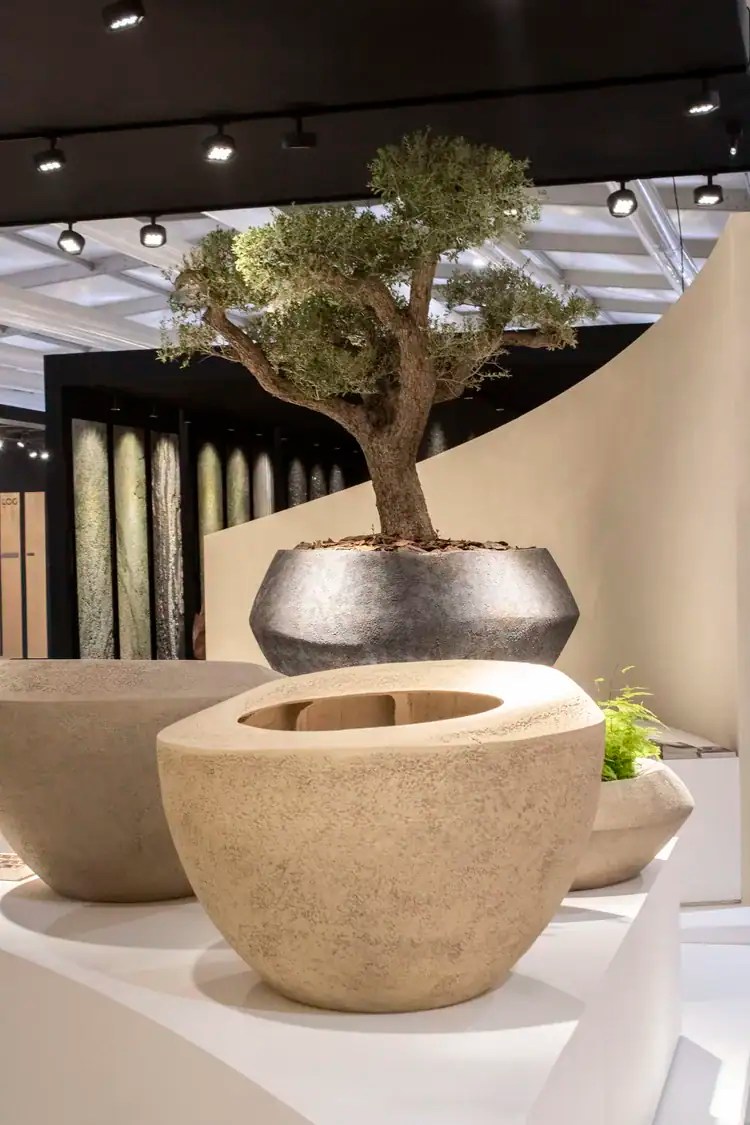
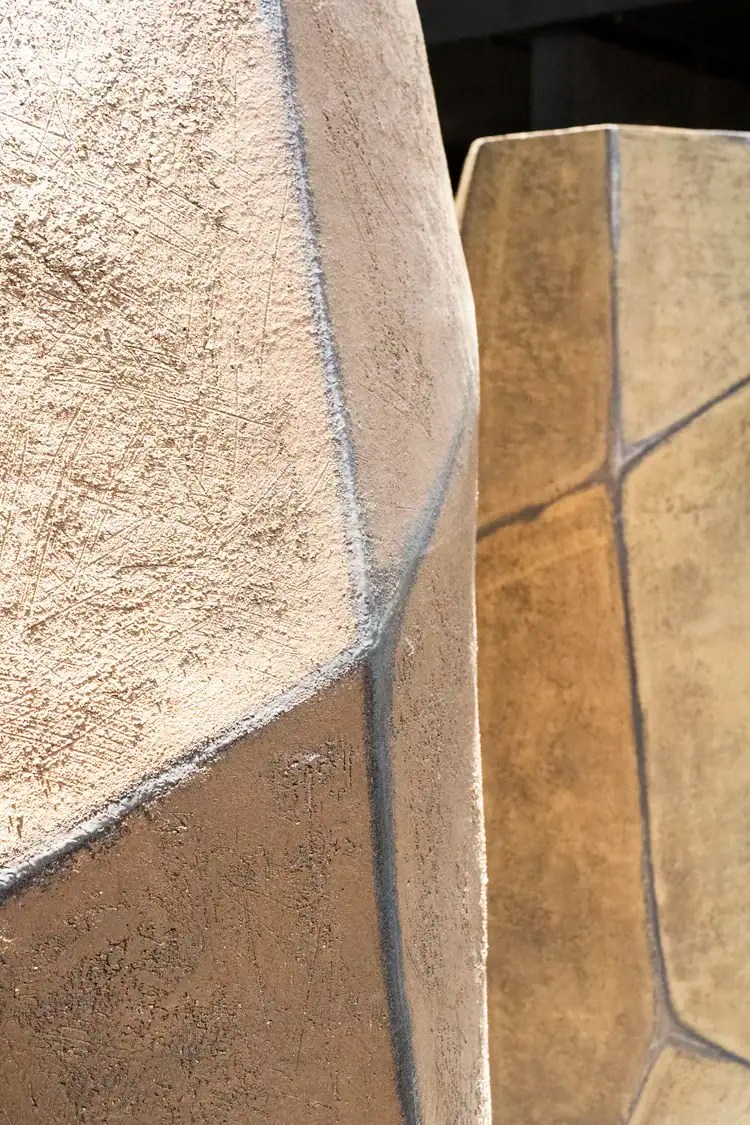
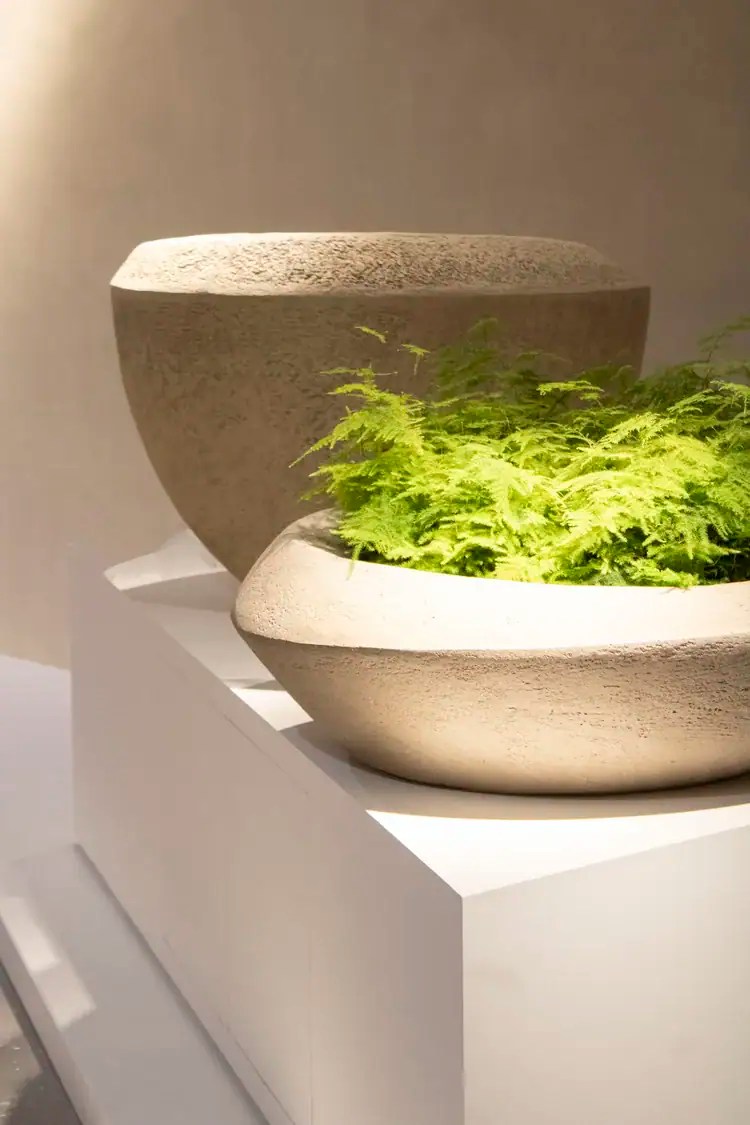
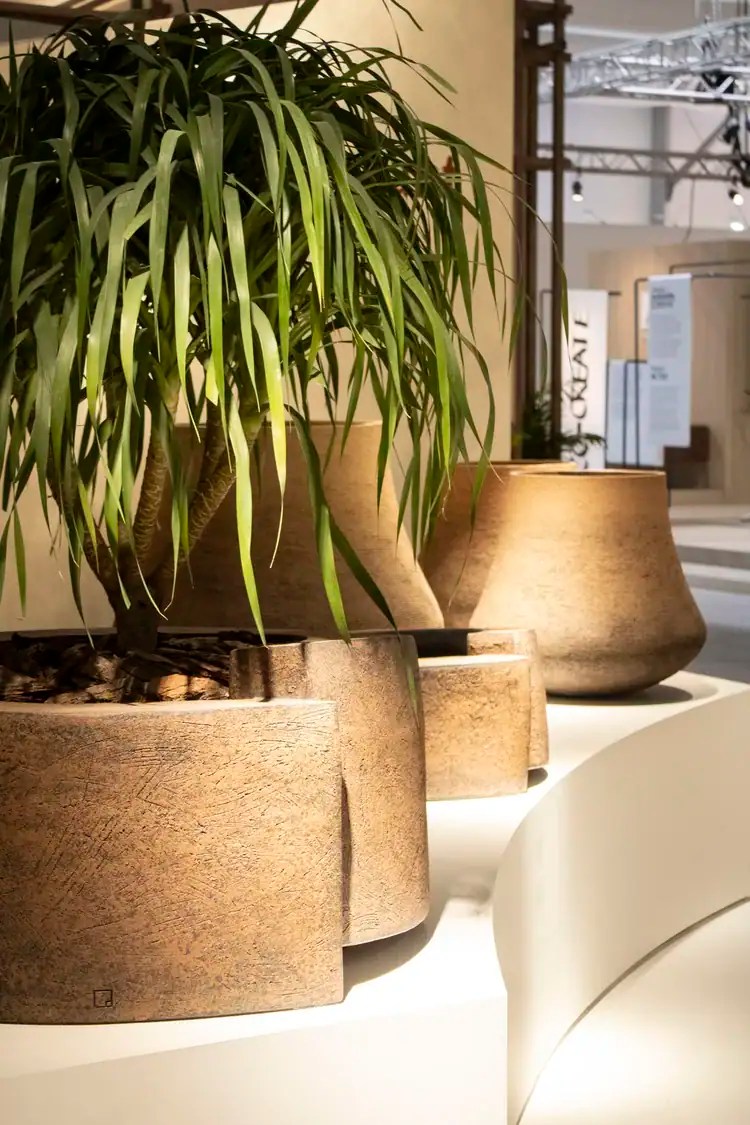
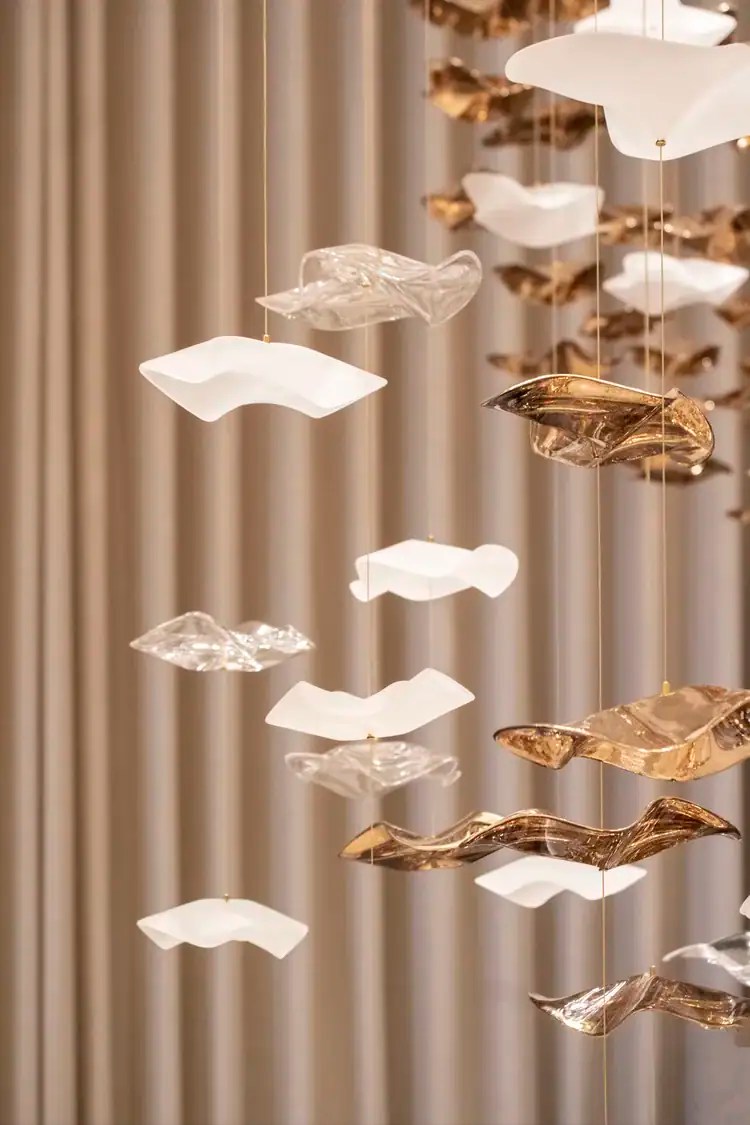
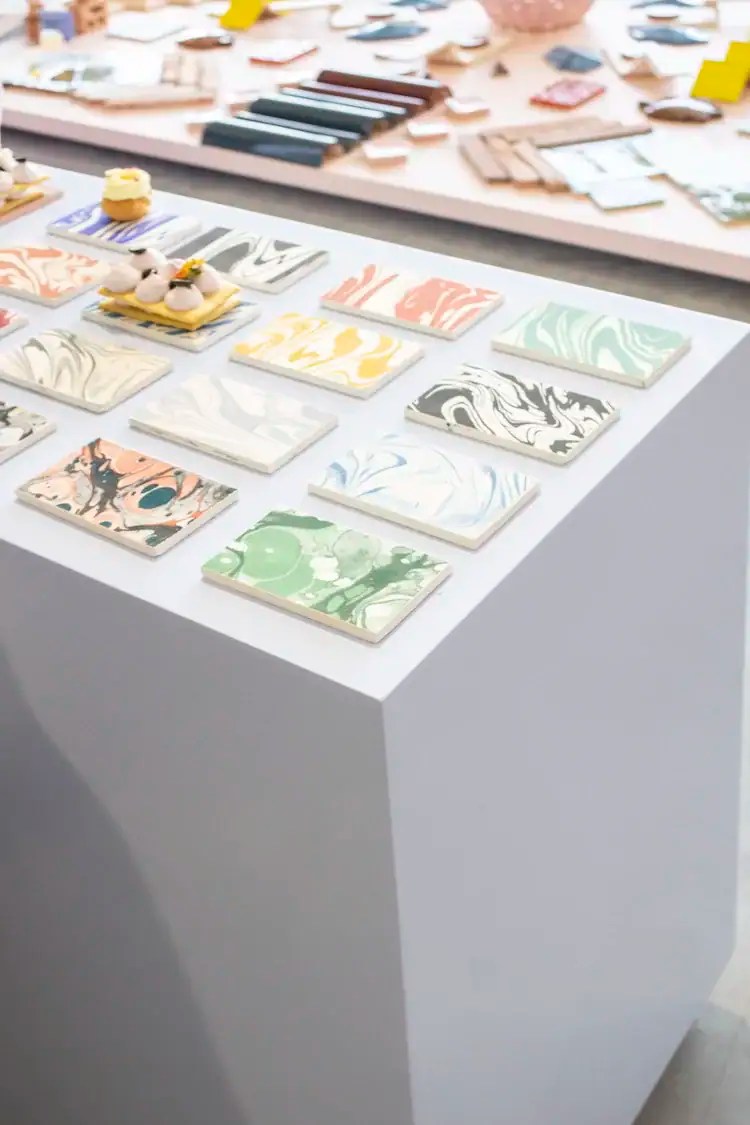
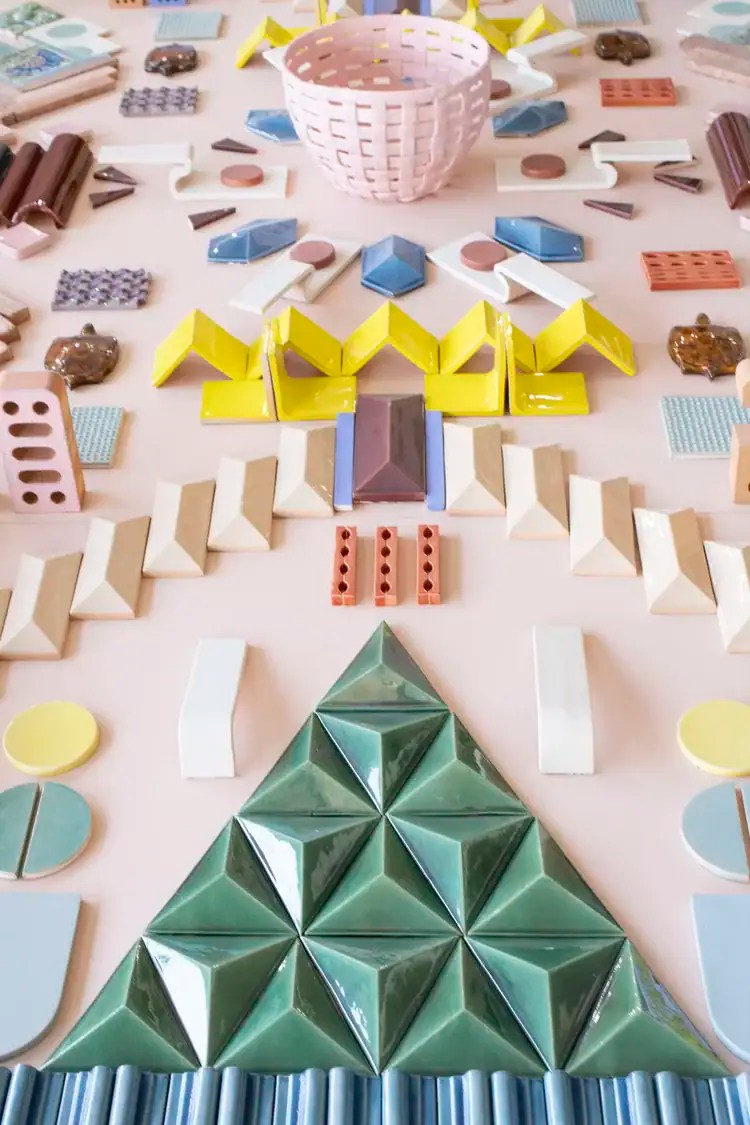
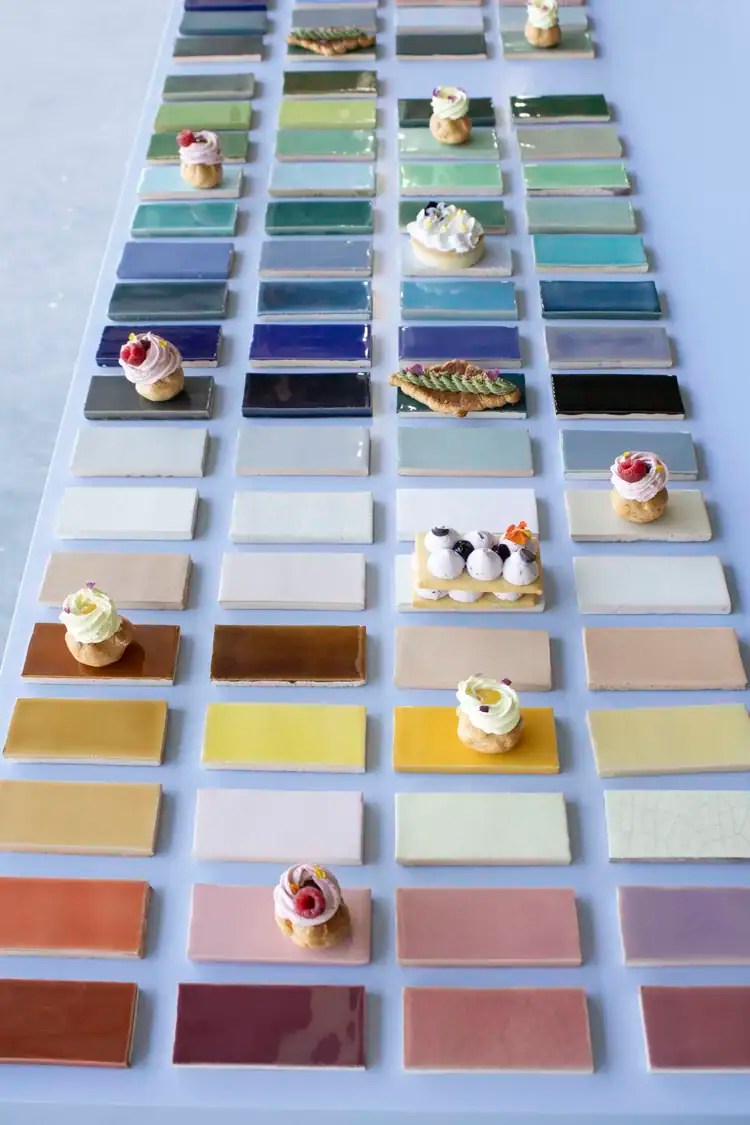
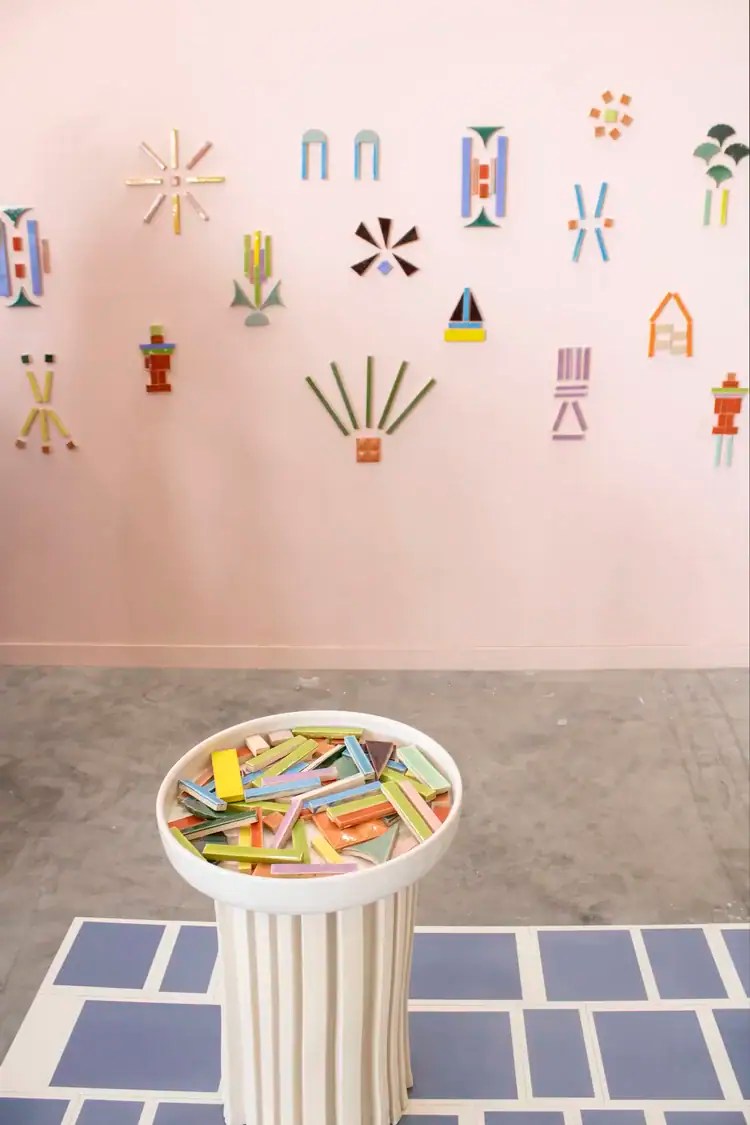
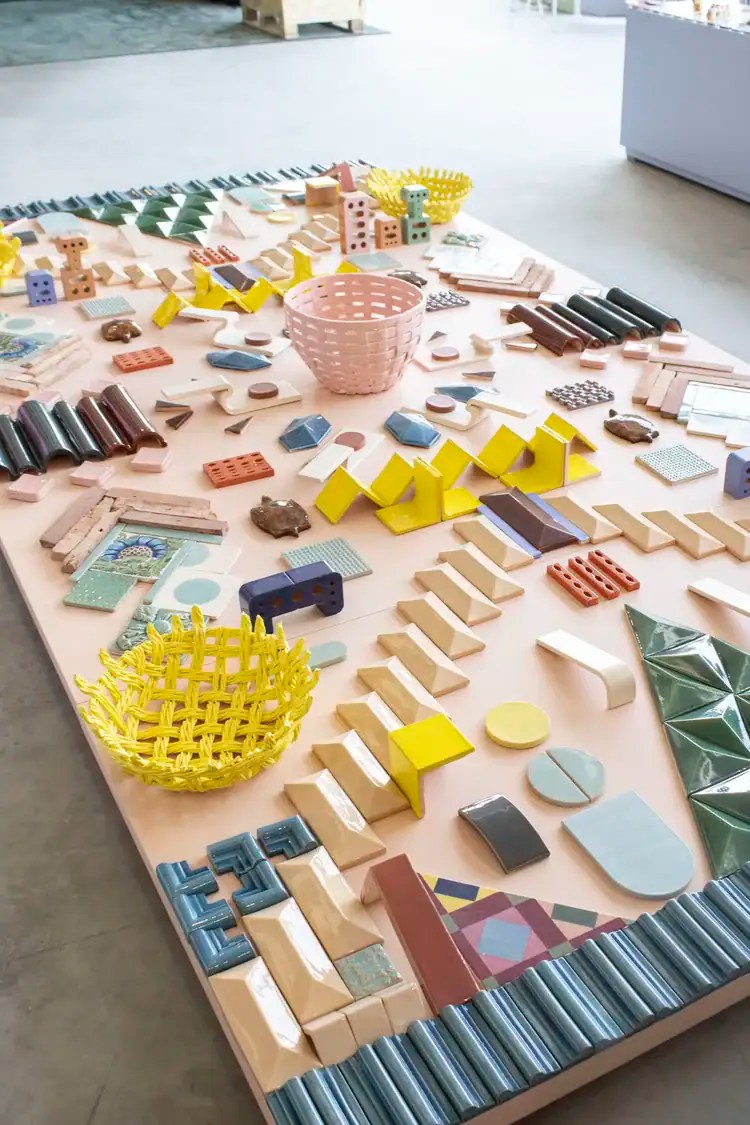
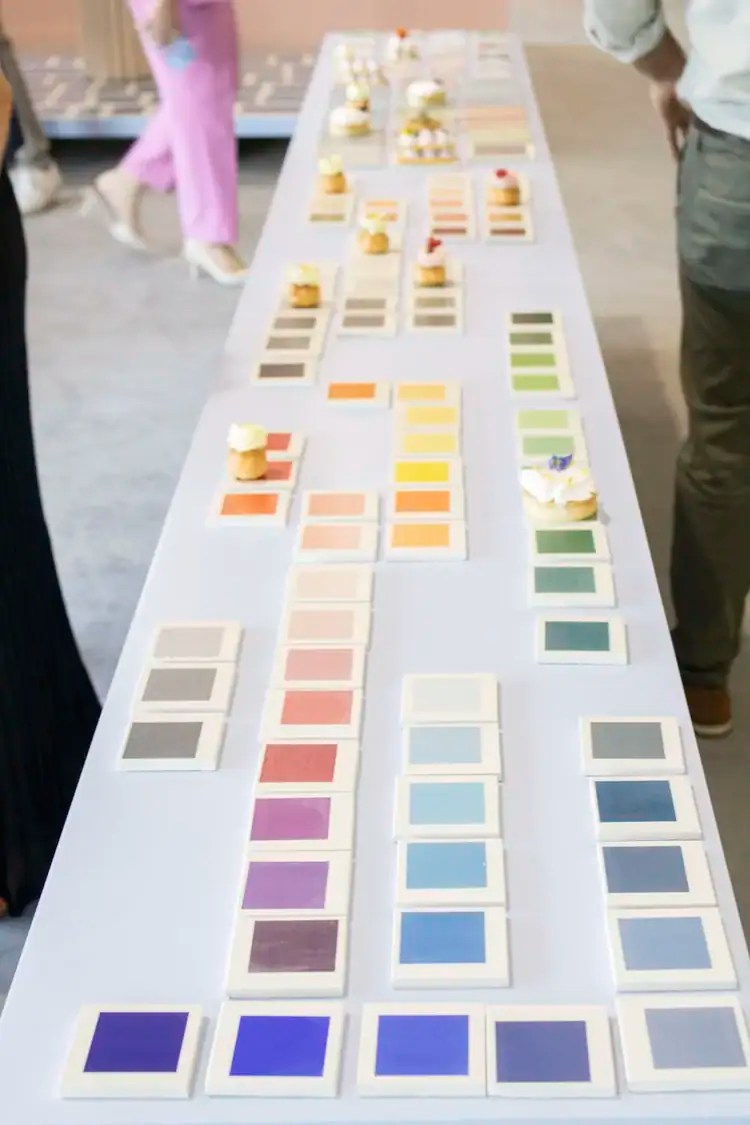
Haberdashery showed Sand & Sea, sculptural forms worked with light projection. Atelier Vierkant brought its hand-built ceramics, including the TAALO, MIRA and TORSA pieces and new finishes for Model O and Anthos, where the appeal is that each vessel carries the evidence of being formed by hand at a scale most studios cannot manage. New Terracotta showed Portuguese tile across 220 formats and 230 catalogue colours, which is a number worth pausing on, because that range is what allows an architect to specify something genuinely bespoke from an existing catalogue.
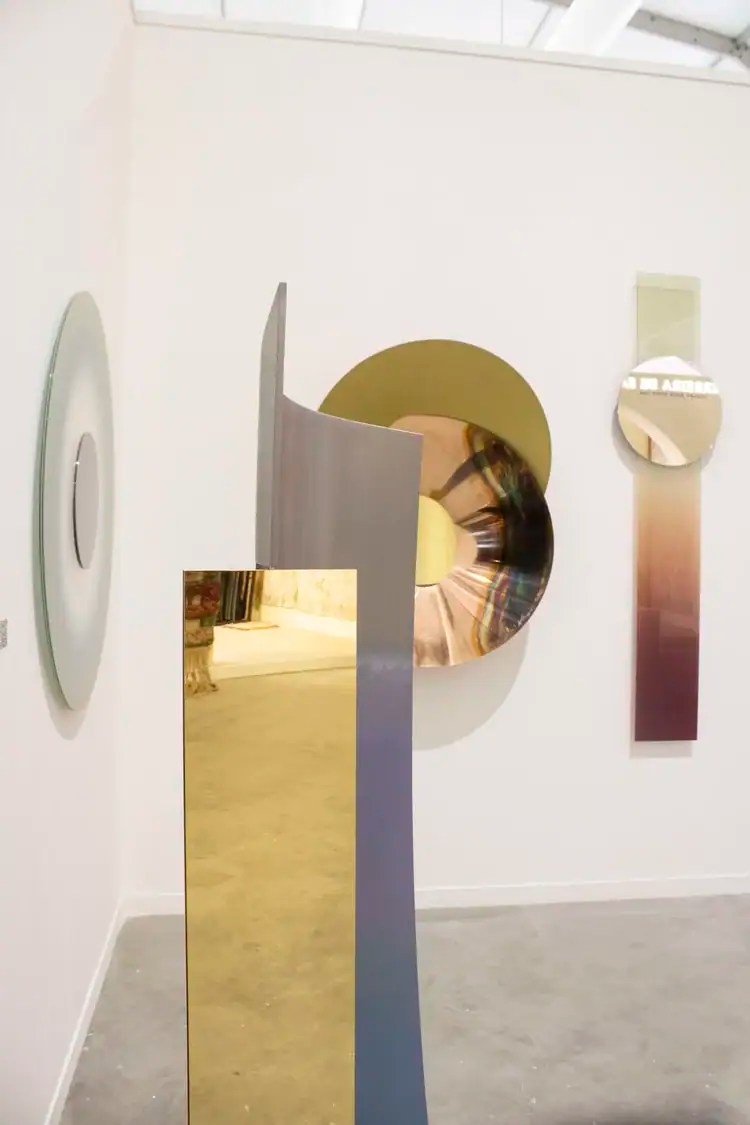
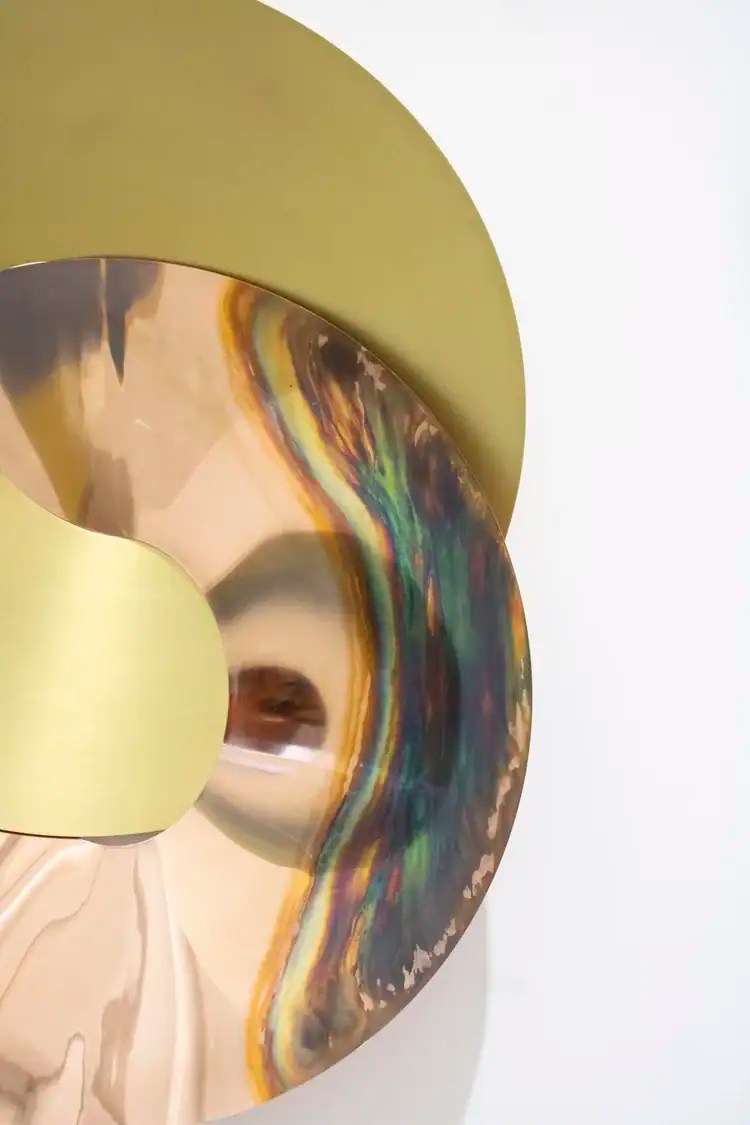
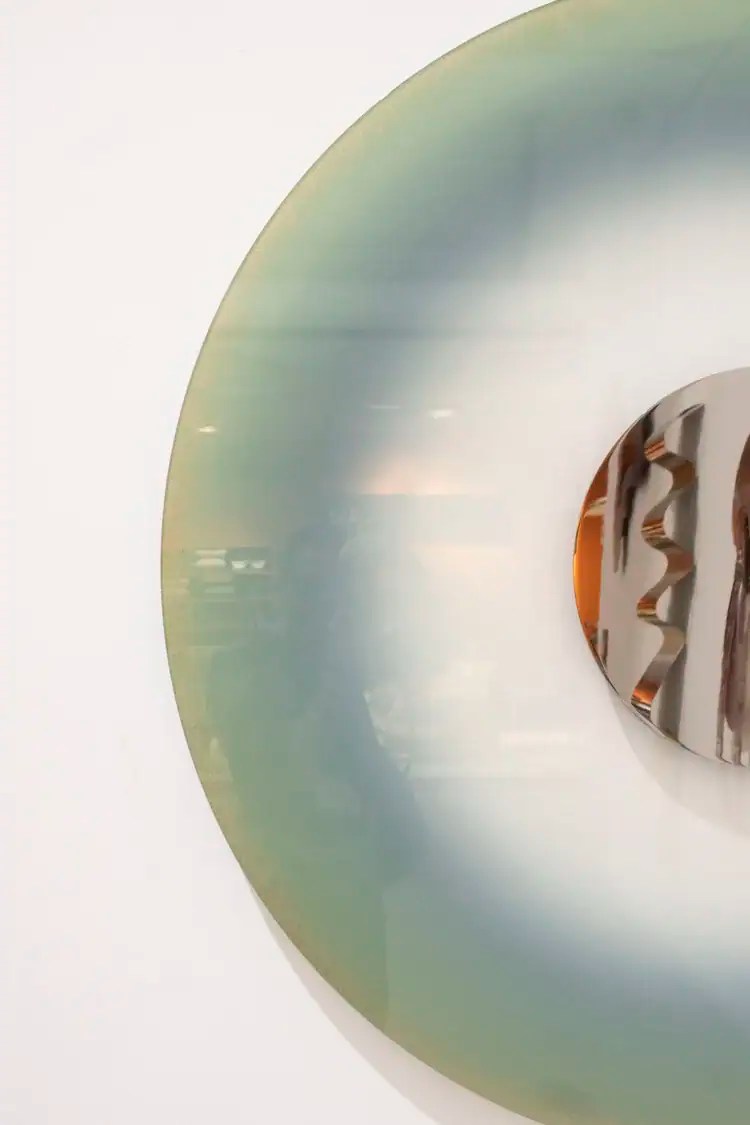
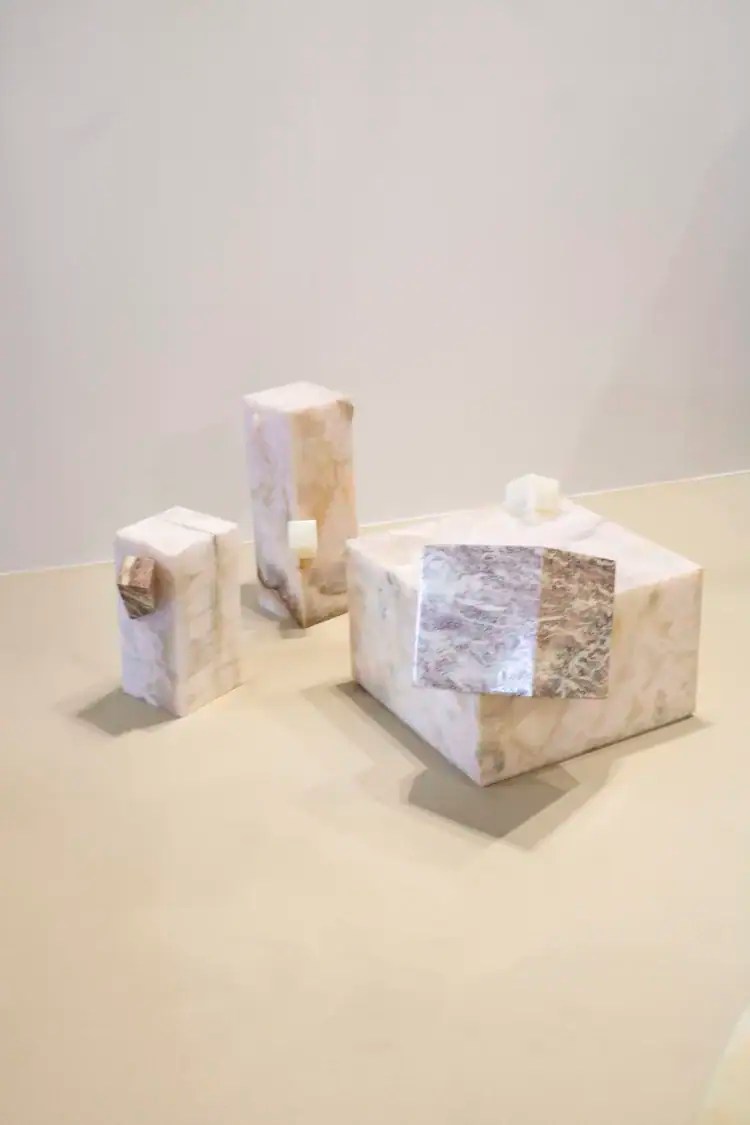
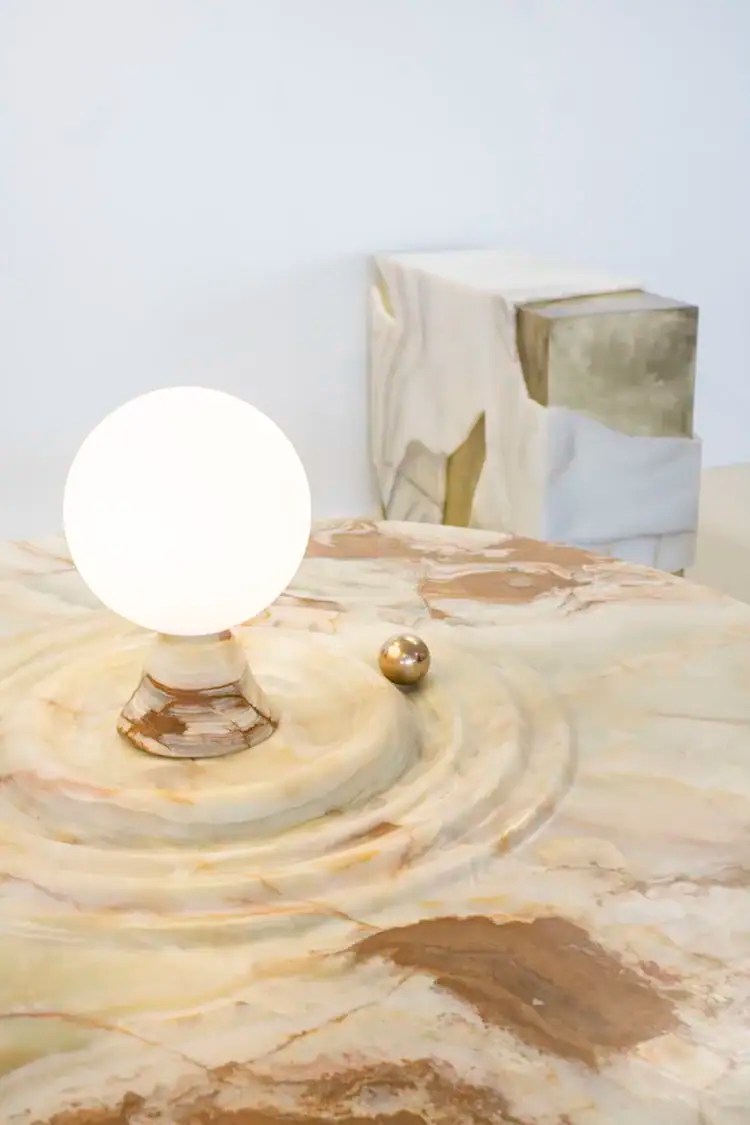
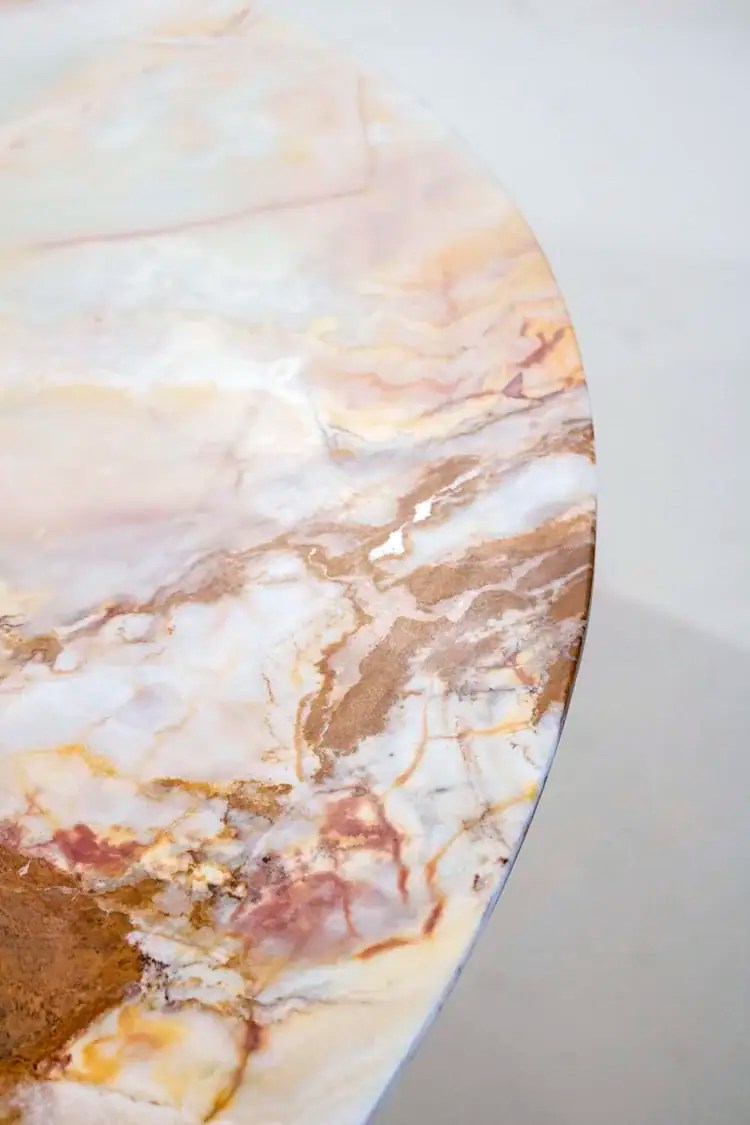
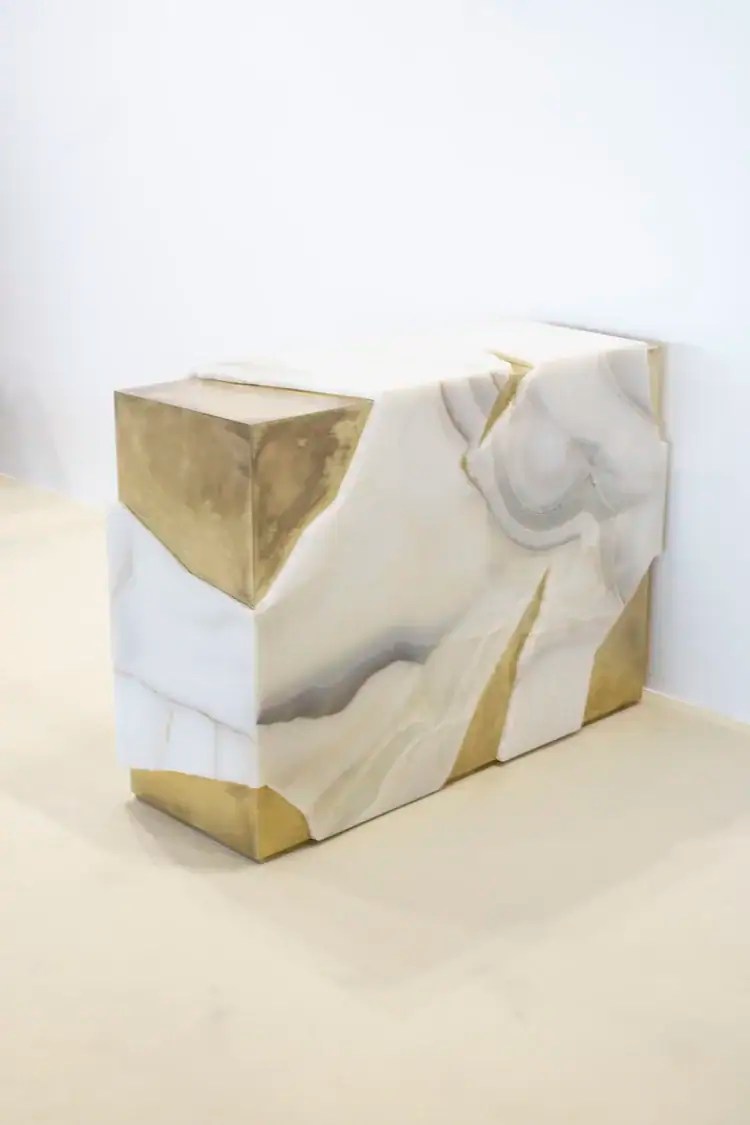
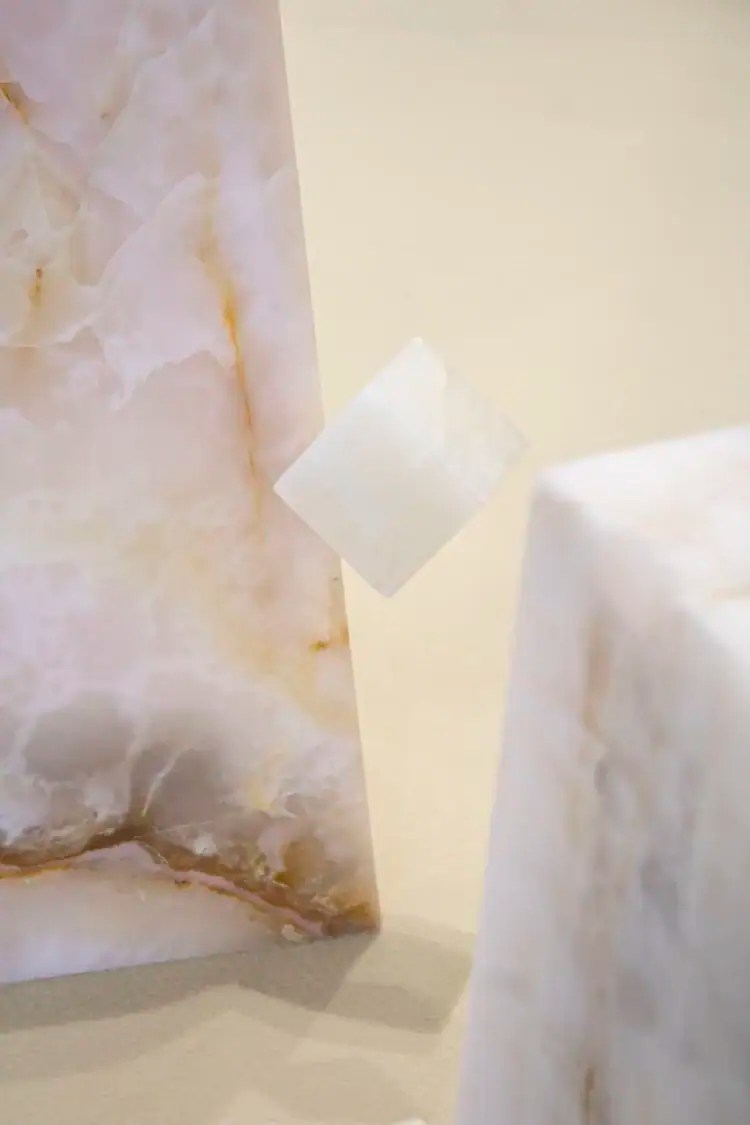
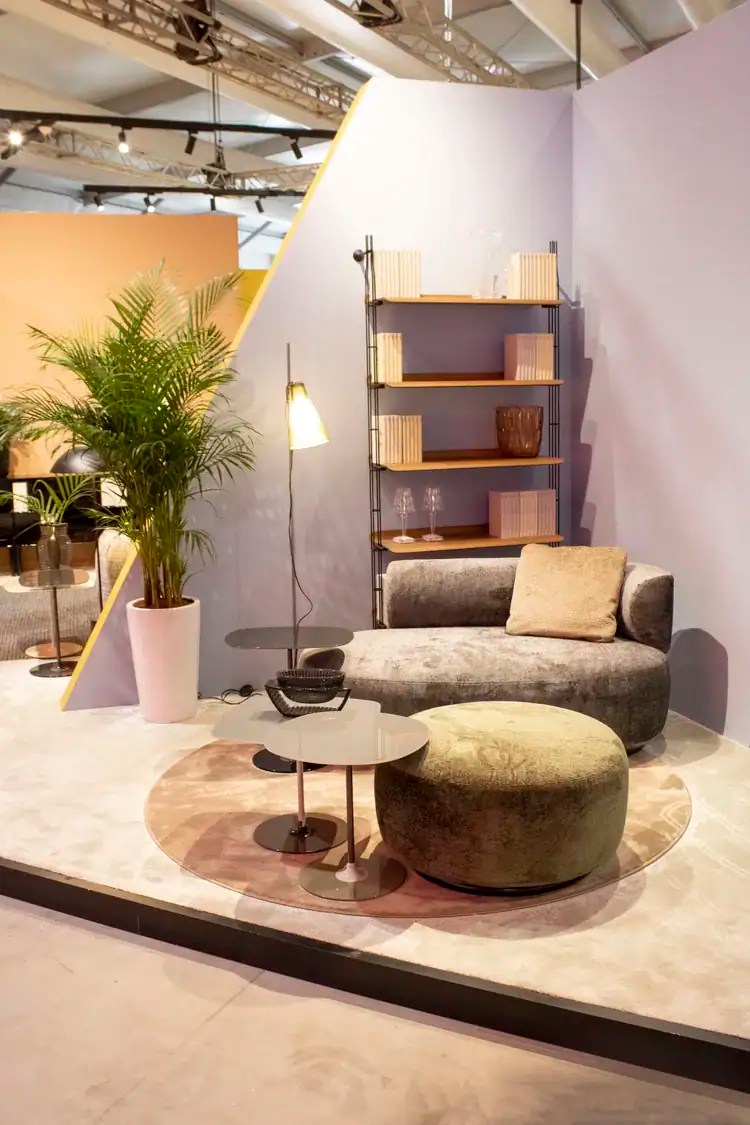
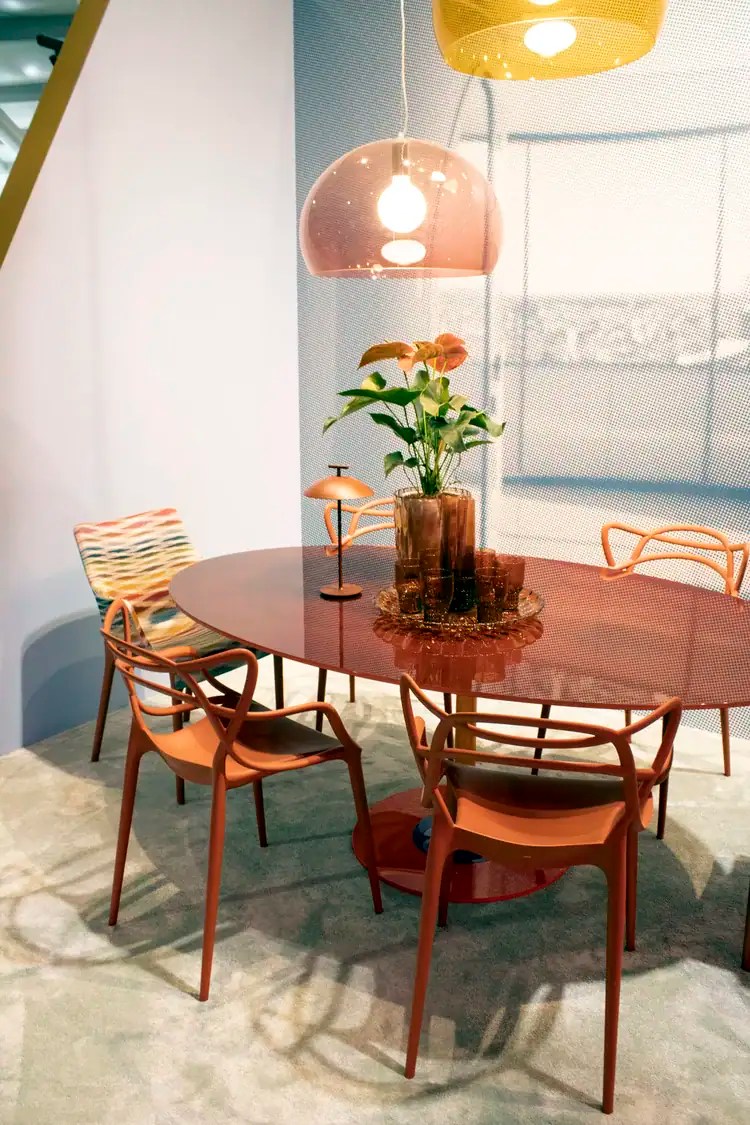
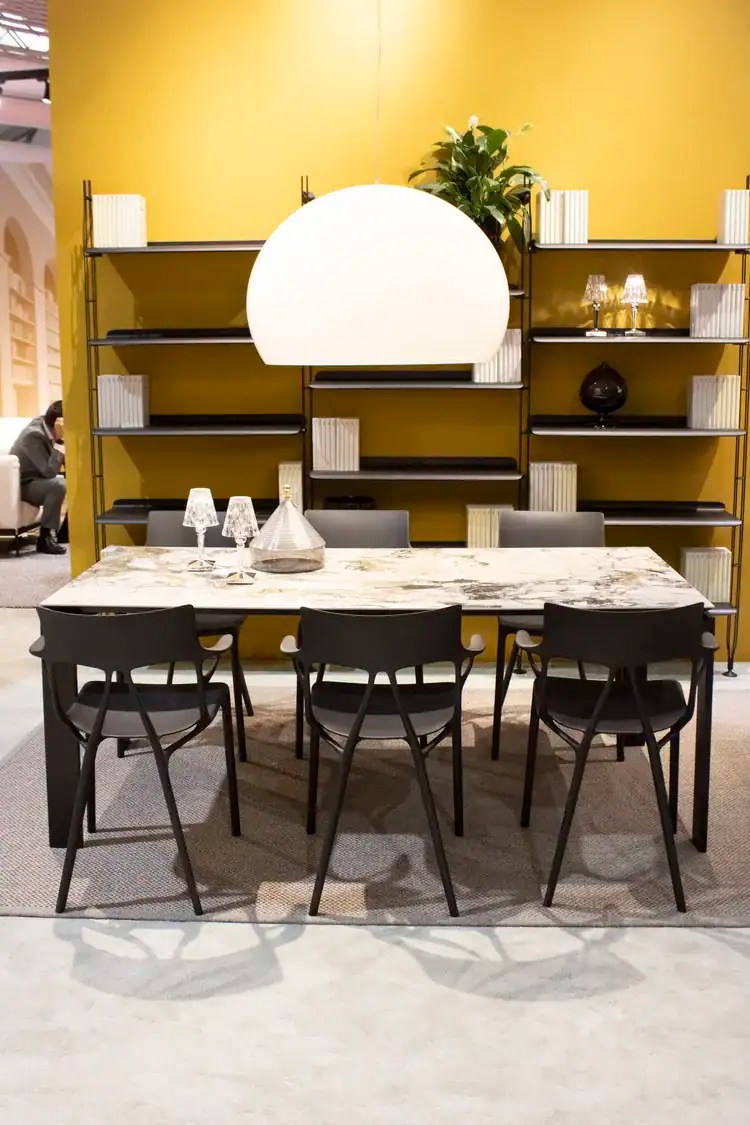
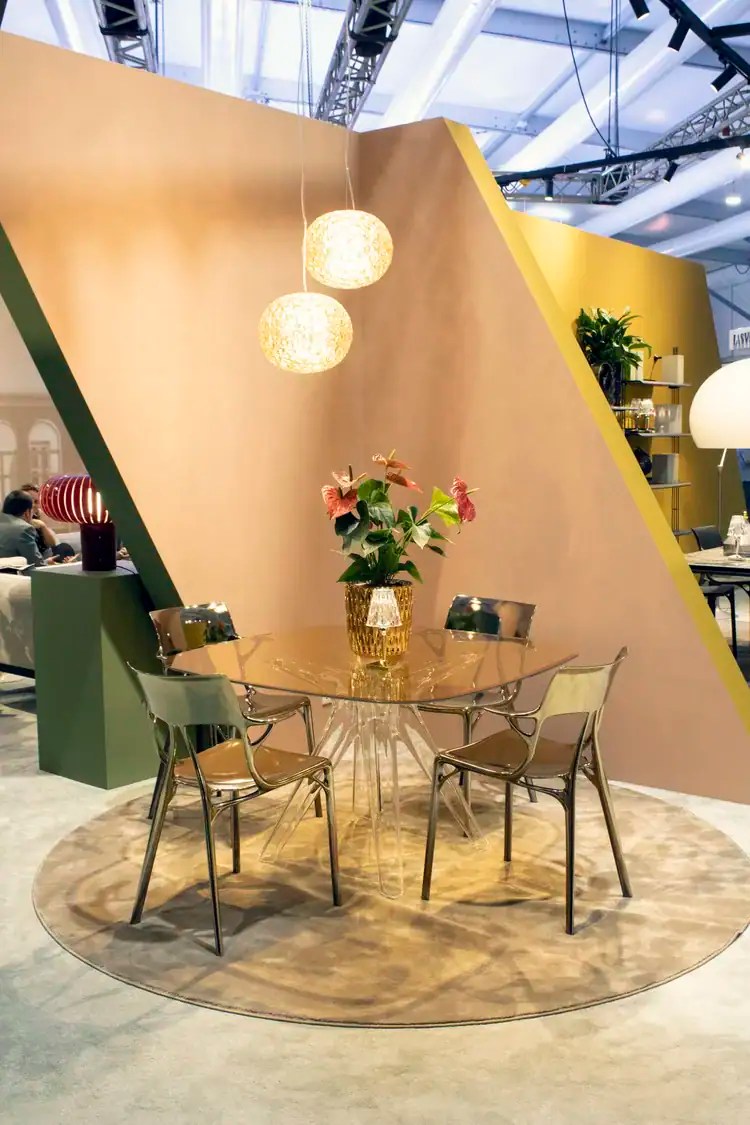
Serafini brought Italian marble furnishings, Kartell its seven decades of injection-moulded Italian design, and FEMM Amsterdam glass and metal works from its Exclusive Collection.

Preciosa
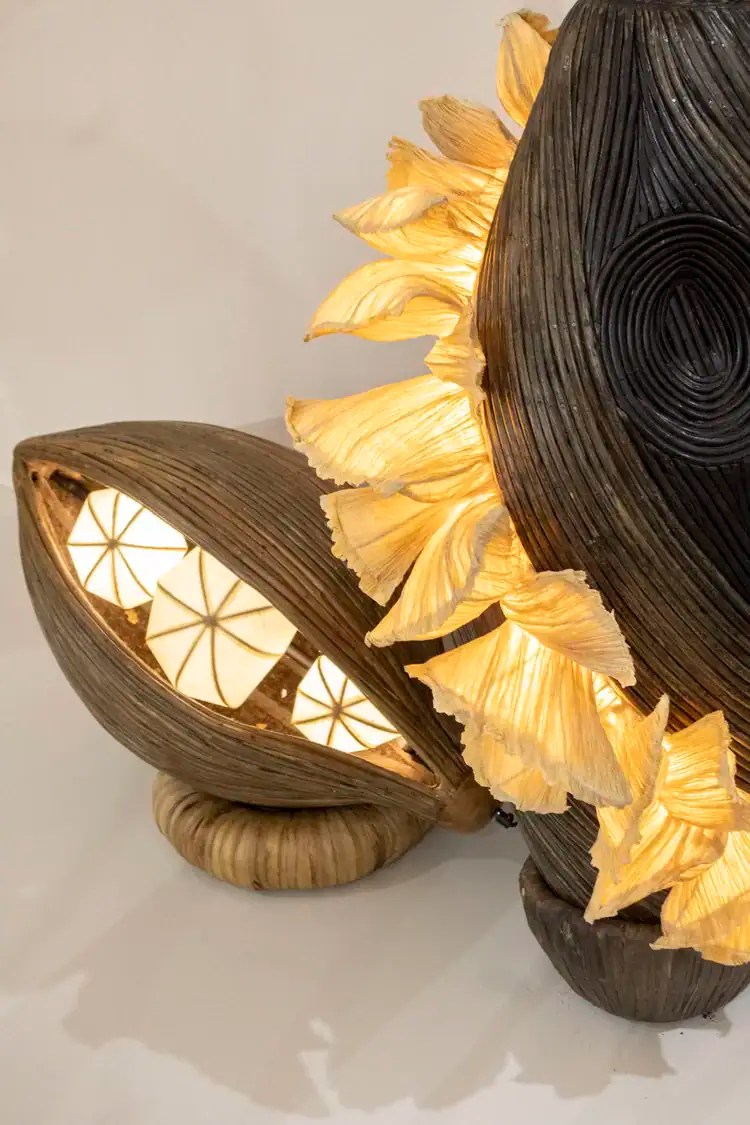
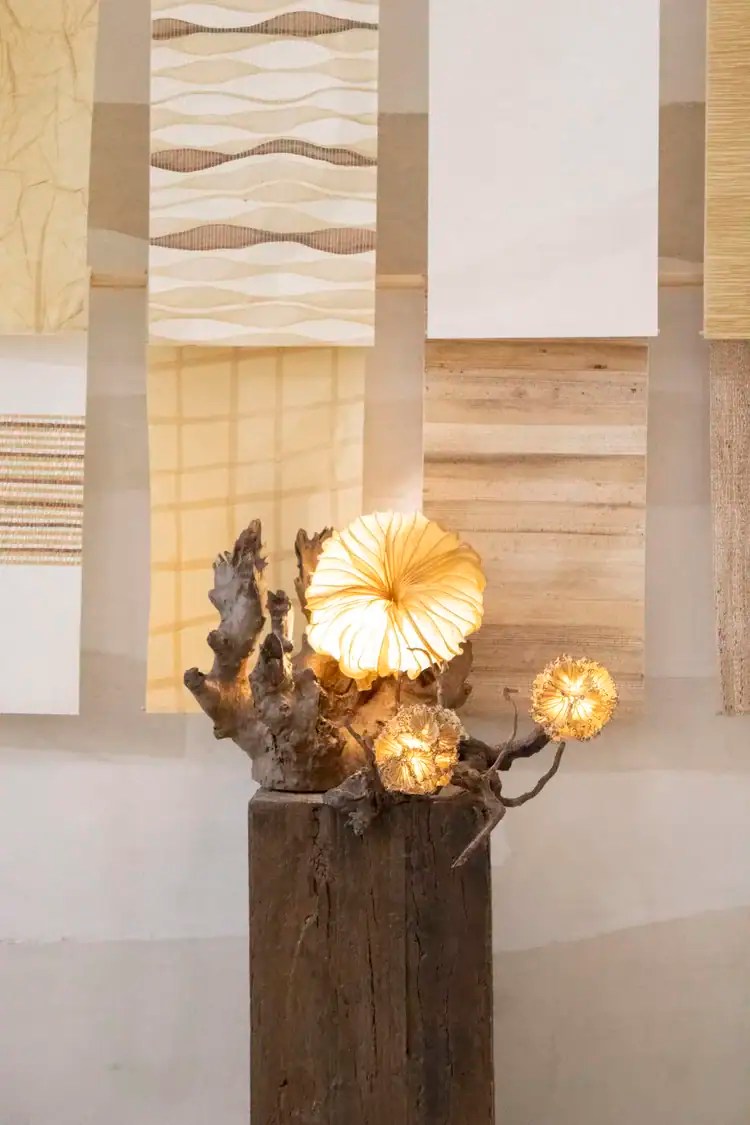
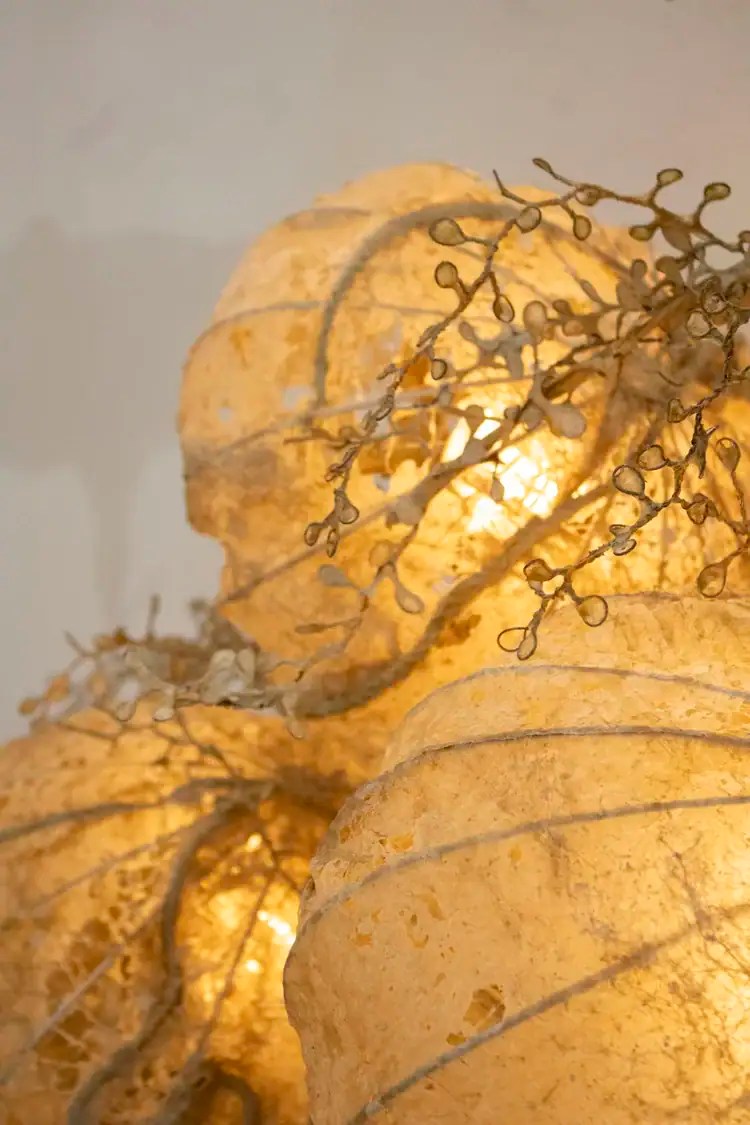
The most interesting outlier was Oorjaa, making sculptural lamps by hand from repurposed banana fibre and salvaged fishing nets. That is the same logic as Tanween arriving from a different direction, and it points at where this fair’s centre of gravity is heading.
The distinction is not imported versus local, and it is not quality. Lasvit and Preciosa bring centuries of technique to the floor. It is that the European stands interpret the region, while the Tanween pieces are built out of it. A fair that only did the first would be a showroom. Doing both is what makes it a design fair.
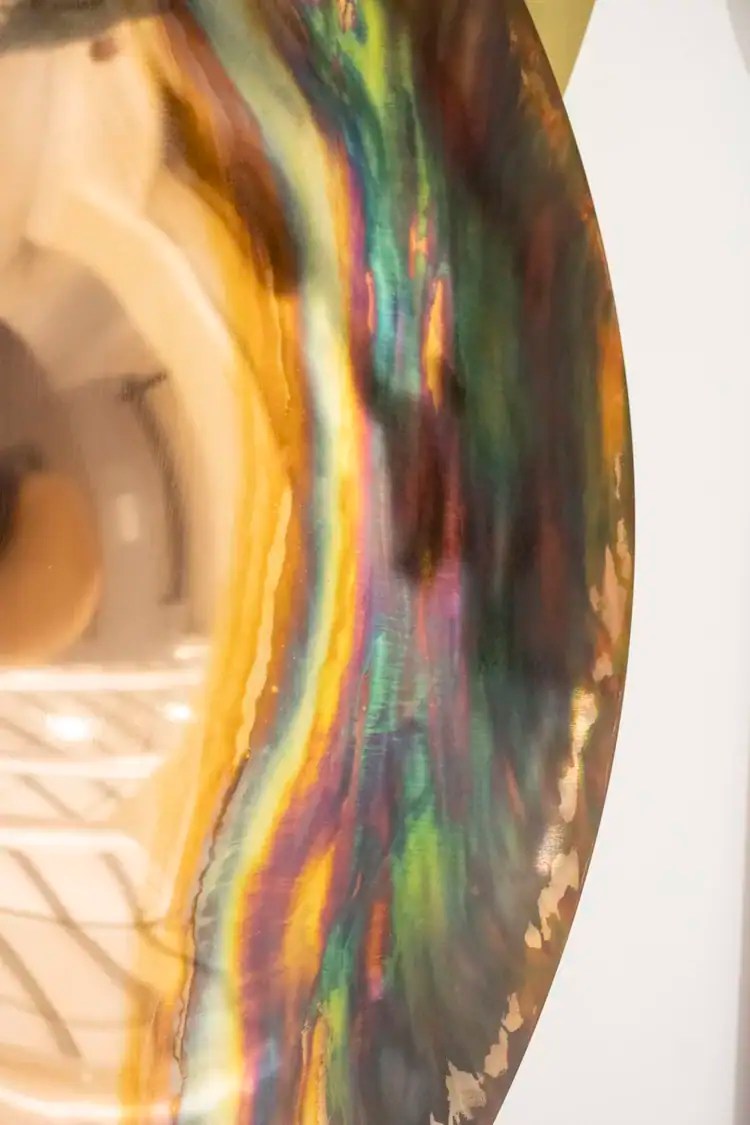
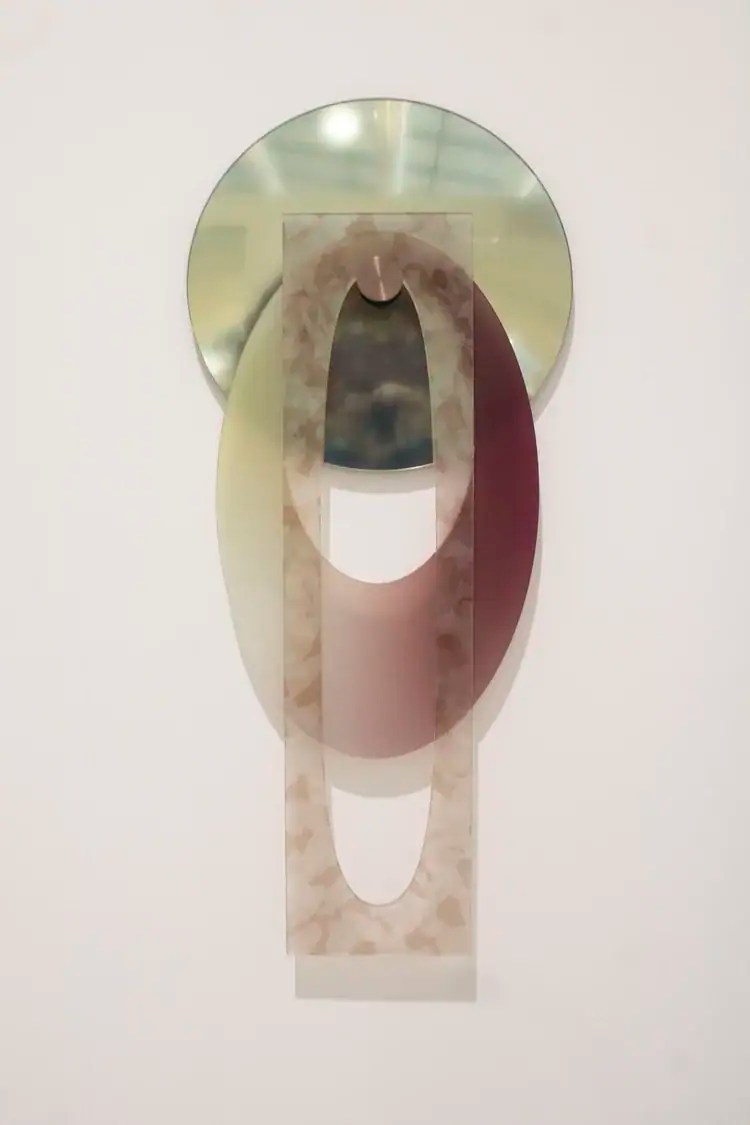
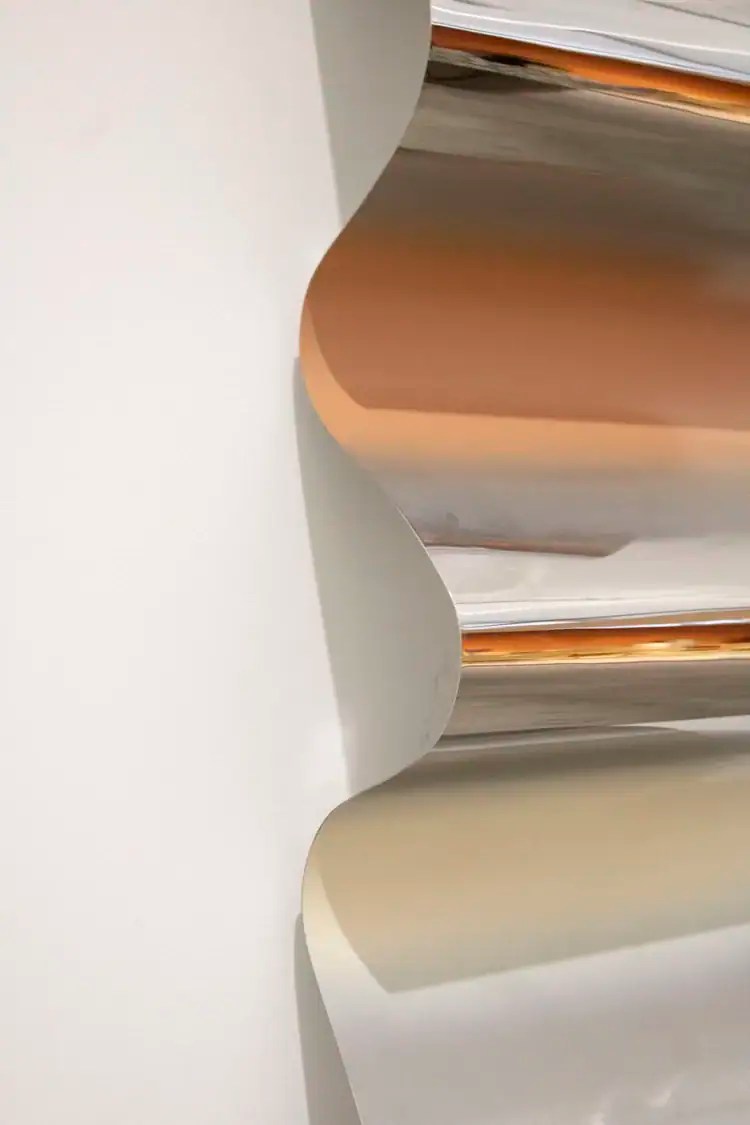
femm
The rest of the building
Downtown Design 2024 was not only the main hall.
Editions launched that year as the region’s first fair dedicated to limited-edition art and design, with more than 50 galleries, studios and collectives. The UAE Designer Exhibition ran to its fifth edition with 30 designers. The Forum carried the talks programme, including India Mahdavi on multicultural design, which was well-chosen for a city where multicultural is the baseline condition rather than a theme.
femm
National pavilions did a lot of the work: the Italian Trade Agency with more than 40 brands, the Saudi Ministry of Culture with nine studios, ten brands from Spain and seven designers from the Netherlands. Linda Nieuwstad built a large-scale floral installation from recycled materials, and an earthen pavilion explored building with soil.
Mette Degn-Christensen, the fair’s director, described it as producing “a dynamic environment where design meets opportunity”, which is precisely the thing that matters here: this is where the orders get placed.
Haberdashery
The pipeline behind the pieces
What gives the local work here its weight is that there is now a route rather than a moment.
Tashkeel runs Tanween as an eleven-month programme, so a designer arrives with an idea in January and leaves in November with a resolved object that a manufacturer in the UAE has actually built. The UAE Designer Exhibition, in its fifth edition with thirty designers, sits alongside it as the wider showcase. Downtown Design provides the commercial floor, which means the people who could place an order are standing in front of the work rather than reading about it afterwards.
Haberdashery
Prototype, production partner, buyer, in one building, once a year. That is the structure a design industry needs, and very few cities of Dubai’s age have assembled it at all.
The next chapter is volume. A programme producing six beautifully considered pieces a year is a strong programme. An industry is what grows when those designers are supplying a hotel fit-out, and palm leaf marquetry becomes a commercial material once somebody orders four hundred metres of it. The pieces prove the material works. Building the manufacturing base behind them is the opportunity this fair now opens up, and it is the one worth following.
Oorjaa
The work itself is the strongest local showing the fair has had. It has the shape of a turning point rather than simply a good year, and the order books that follow are where that momentum shows.

Oorjaa
Frequently asked questions
What is Downtown Design?
The Middle East’s leading contemporary design and furniture fair, held annually at Dubai Design District as the commercial anchor of Dubai Design Week.
When was the 2024 edition?
From 6 to 9 November 2024 at Dubai Design District, alongside Dubai Design Week.
Where is it held?
At Dubai Design District, running alongside Dubai Design Week each November. The 2024 edition also included Editions, the UAE Designer Exhibition and The Forum talks programme.
What is Tanween?
Tashkeel’s design programme, founded in 2013, which pairs UAE-based designers with engineers, scientists and local manufacturers over roughly eleven months to produce furniture and objects made in the UAE. The results are unveiled at Downtown Design each November.
Who were the 2024 Tanween designers?
Majid Al Bastaki, Khadija Al Mazimi, Rimsha Kidwai, Osama Rashad, Samara & The Poet Studio, and One Third Studio, the collective of Amna Bin Bishr, Duna Ajlan and Dania Ajlan.
How is Downtown Design different from Editions?
Downtown Design is the contemporary design and furniture trade fair, aimed largely at specifiers. Editions, which launched in 2024, is dedicated to limited-edition and collectible art and design at a wider range of price points. They run alongside each other at d3.
Which countries exhibited in 2024?
National presentations included the Italian Trade Agency with more than 40 brands, the Saudi Ministry of Culture with nine studios, ten brands from Spain and seven designers from the Netherlands, alongside regional and international exhibitors.
Are the Tanween pieces available to buy?
They are produced in the UAE with local manufacturers as part of the programme. Availability varies by designer, so enquiries go through Tashkeel or the individual studios.
New Terracotta
New Terracotta
Serafini

Serafini
Final thoughts
The conventional way to write up a design fair is to walk the aisles and list the best stands, which makes for good reading in November. The story that lasts is what the fair has chosen to put in front of buyers.
Kartell
What the 2024 edition of Downtown Design actually showed is a fair at a hinge point. For a decade its function was to bring the world’s design to a city that was building at speed and needed something to put inside the buildings. That job has largely been done. The specifiers know the brands, the supply chains work, and the region’s interiors are as well-furnished as anywhere.
The next job is harder and more interesting, which is producing design here, from what is here. A cabinet veneered in palm leaf, a table assembled from stone off-cuts, a light diffused through palm fibre. These are small objects making a large argument: that the Gulf has materials of its own and does not need to import an aesthetic to go with its furniture.
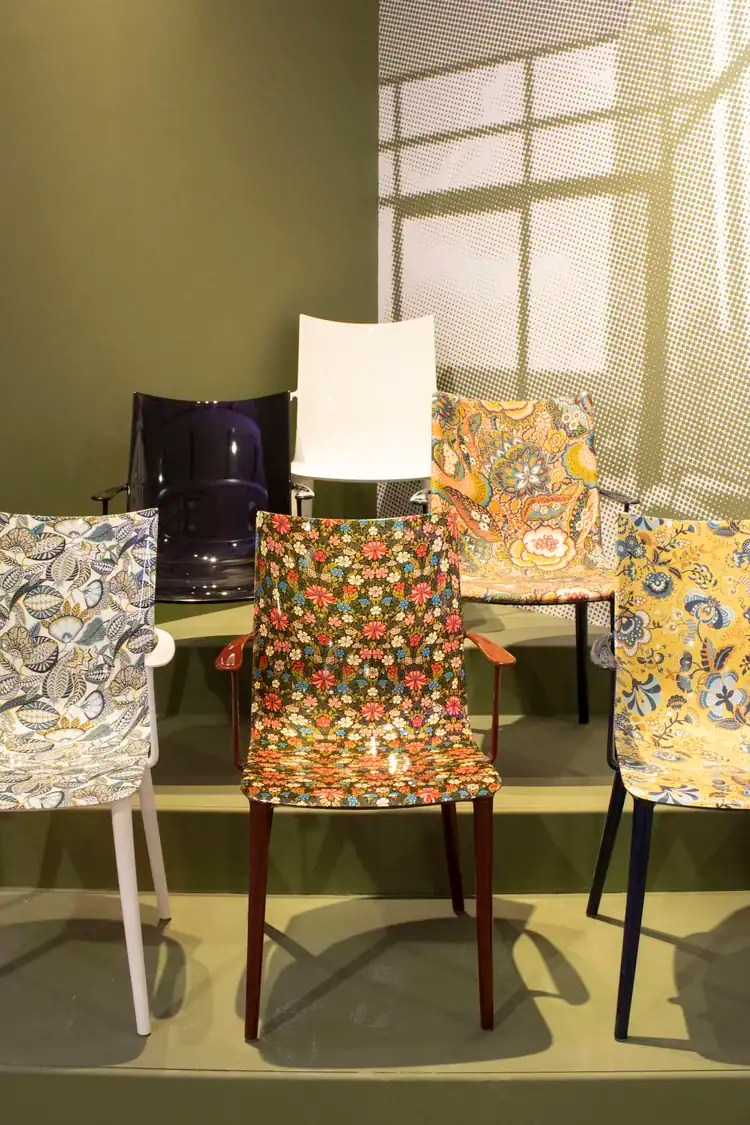
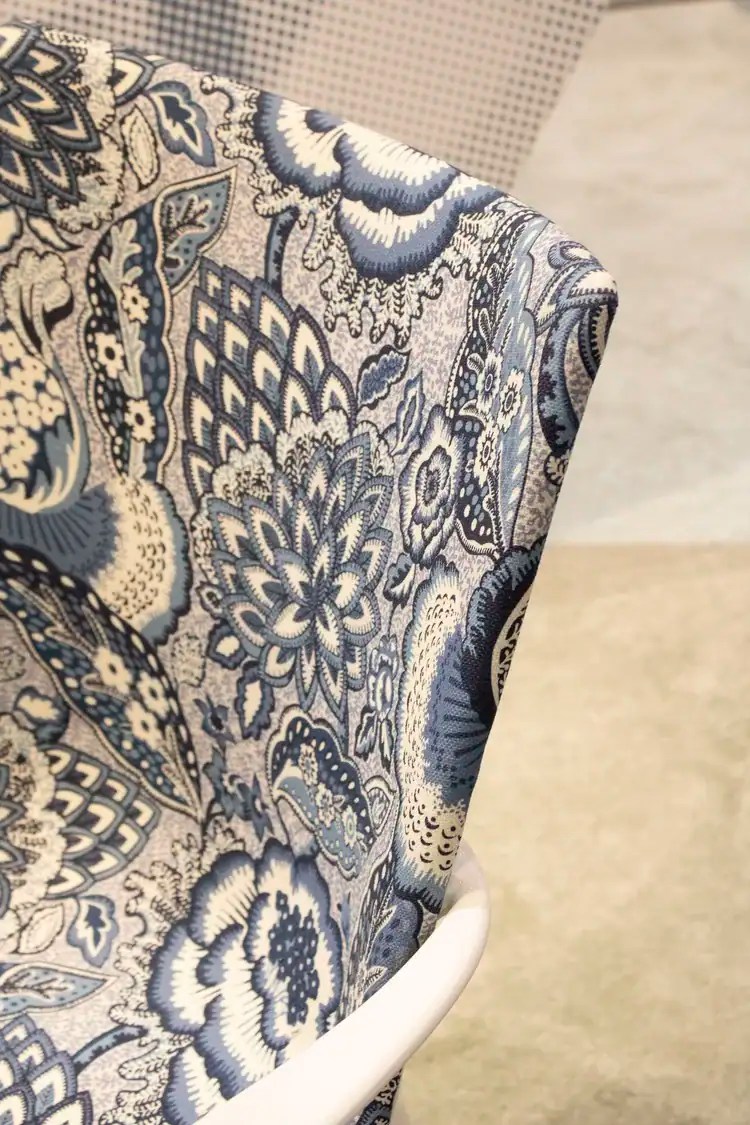
Kartell
A decade of this fair taught the region what good design looks like. This edition was the first where a meaningful part of the answer was made here, out of what is here. That is a slower and more valuable thing than a strong year of stands, and it is worth judging the next few editions by.

Leave a Reply