

Design Travel · Shoreditch
Reading Time: 7 minutes
Goddard Littlefair built Mondrian Shoreditch’s design story around an old London nursery rhyme and a nod to the brand’s Californian roots, and both are genuinely well handled. The street outside carries an older, more specific story that neither concept touches. Curtain Road takes its name from the Curtain Theatre, the Elizabethan playhouse where Shakespeare’s own company performed for two years before the Globe existed, and where his most famous stage direction may actually have first been spoken.
Introduction
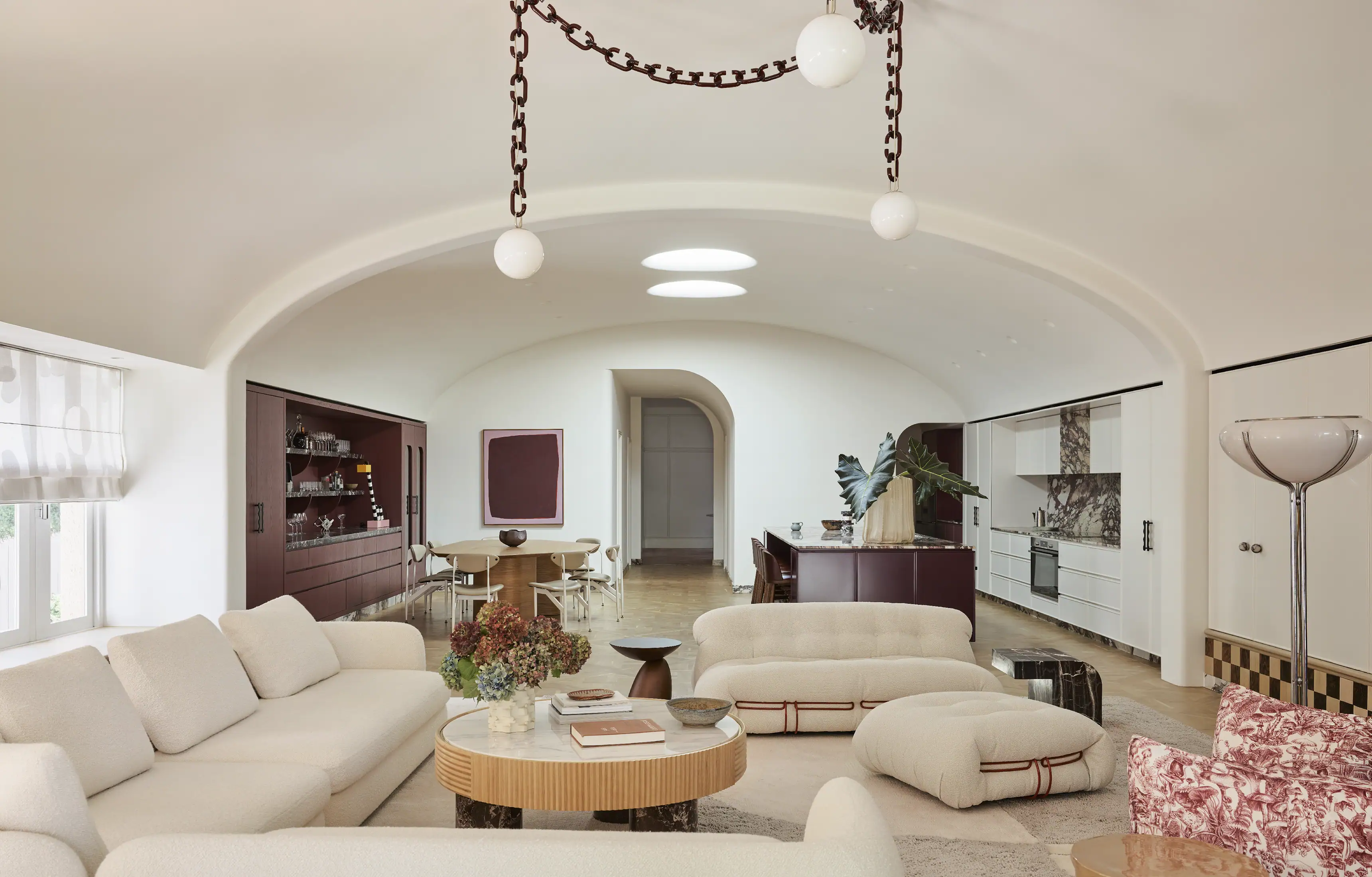
Mondrian Shoreditch opened in July 2021 inside a mixed-use building called The Curtain at 45 Curtain Road, owned by the Reuben Brothers and operated under Ennismore and Accor’s Mondrian brand. Interiors are by Goddard Littlefair, the London studio founded by Martin Goddard and Jo Littlefair, with the project’s interior design team led by associate Lucy Robinson. The hotel has 120 guestrooms alongside Christina’s Shoreditch, a ground floor bar, Altitude, a rooftop restaurant, and BiBo, a lower ground floor restaurant by the chef Dani García.
Most coverage of the hotel repeats its own stated design references, a London nursery rhyme and a wink to Mondrian’s Los Angeles origins, both of which are accurate and worth taking seriously. What that coverage leaves out entirely is the building’s actual address. Curtain Road is not a generic Shoreditch street name. It is named after a specific, historically significant Elizabethan theatre that stood a short walk from where the hotel now operates, and that history predates every other reference in the building’s design by roughly three and a half centuries.


A street named for Shakespeare’s own playhouse
The Curtain Theatre opened in 1577, the second purpose-built playhouse in London after The Theatre, which had opened the previous year nearby, together founding England’s first purpose-built theatre district more than two decades before the Globe existed on Bankside. It took its name from Curtain Close, the plot of land it stood on. Between 1597 and 1599, while the Globe was still under construction, the Curtain became the main London venue for the Lord Chamberlain’s Men, the company William Shakespeare wrote for and held a share in. Romeo and Juliet is understood to have been performed there, and Henry V had its premiere at the Curtain in 1599, months before the Globe opened.
That premiere date matters more than it first appears. Henry V’s prologue famously asks whether “this cockpit” can “hold the vasty fields of France,” and whether the audience should “cram within this wooden O the very casques that did affright the air at Agincourt,” a line generations of readers have assumed describes the Globe, since that is the theatre most associated with Shakespeare. But the Globe had not yet opened when Henry V was first staged. The “wooden O” the prologue describes was very likely the Curtain itself, which makes Curtain Road, not the Globe’s rebuilt site across the river, the more direct claimant to one of the most quoted lines Shakespeare ever wrote about his own stage. The theatre disappears from the historical record by 1622, and its exact site was lost for centuries until archaeologists from MOLA excavated well-preserved remains of its walls, gallery and yard nearby between 2011 and 2016, one of the best-preserved Elizabethan playhouses found anywhere in Britain.

The Curtain’s own rise is tied to a second Shoreditch playhouse that explains why the company needed it in the first place. James Burbage, an actor and the father of Shakespeare’s colleague Richard Burbage, had built The Theatre nearby in 1576, a year before the Curtain opened, widely credited as the second permanent playhouse built in England since Roman times and the venue where Shakespeare effectively began his career with the Lord Chamberlain’s Men. When a dispute over the ground lease closed The Theatre in 1597, the company did not scatter. It moved a short distance to the Curtain, which is precisely why the Curtain became Shakespeare’s main stage for those two specific years, while the Burbages dismantled The Theatre’s own timber frame and carried it across the Thames to build the Globe, completed in 1599. Shoreditch’s original theatre district did not simply precede the Globe. Its actual building material became it.
None of that history appears in Mondrian Shoreditch’s own design concept. The hotel’s name and address carry it regardless, which is simply a fact about the site rather than a gap in the design brief; Goddard Littlefair built the interiors around a different, equally legitimate London story instead.

Goddard Littlefair chose a different London story
The studio’s actual reference point was Oranges and Lemons, the seventeenth century London nursery rhyme that names the bells of the city’s churches, chosen because several of the churches it names sit within reach of the hotel. Jo Littlefair has described the approach directly: “when it came to designing the Mondrian, we delved deep into the history of the area to represent the colourful social fabric of Shoreditch throughout the hotel.” That research produced the reception’s gas lantern fittings, modern reinterpretations of historic London street lighting made by the specialist maker Hoad & More, alongside reflective finishes and gilded glass panelling.

Set against that London-first material language is a deliberate acknowledgement of where the Mondrian brand itself began. The original Mondrian opened in Los Angeles in 1984 as Le Mondrian, converted from a 1959 apartment building and named after the painter Piet Mondrian, with a commissioned facade artwork by Yaacov Agam. Ian Schrager’s Morgans Hotel Group relaunched it as the Mondrian Hotel Los Angeles in 1996, giving the brand the glamorous, California-coded identity it has carried into every city it has opened in since, including Shoreditch. Littlefair has described the hotel’s gilded glass sun installation in the lobby as “a ray of Californian sunshine arriving in Shoreditch,” and Robinson created an oversized rooftop mural directly inspired by Californian street art, a deliberate, openly stated import rather than a borrowed mood.

Rooms built around white brick, and three distinct venues below
The hotel’s 120 guestrooms are finished in white brick walls with globe-shaped pendant lighting, a material choice that reads as a considered nod to Shoreditch’s warehouse architecture rather than a generic industrial-chic finish, since white brick specifically softens the reference rather than repeating the exposed red brick used throughout the neighbourhood’s converted buildings. Planting throughout the hotel was curated by Conservatory Archives, a specialist supplier rather than a generic contract planting scheme.
Downstairs, Christina’s Shoreditch is built around a curved copper counter with colour-changing lighting, set beneath a hand-painted mural by the artist Fred Coppin. On the roof, Altitude uses striped shade structures and oversized rattan pendants to give the space a distinctly daytime, informal register rather than the glass-box seriousness typical of central London rooftop bars. BiBo, on the lower ground floor, is chef Dani García’s design for what the hotel describes as a theatrical, urban space, a register that suits its underground setting rather than fighting it.


Goddard Littlefair’s own East London connection
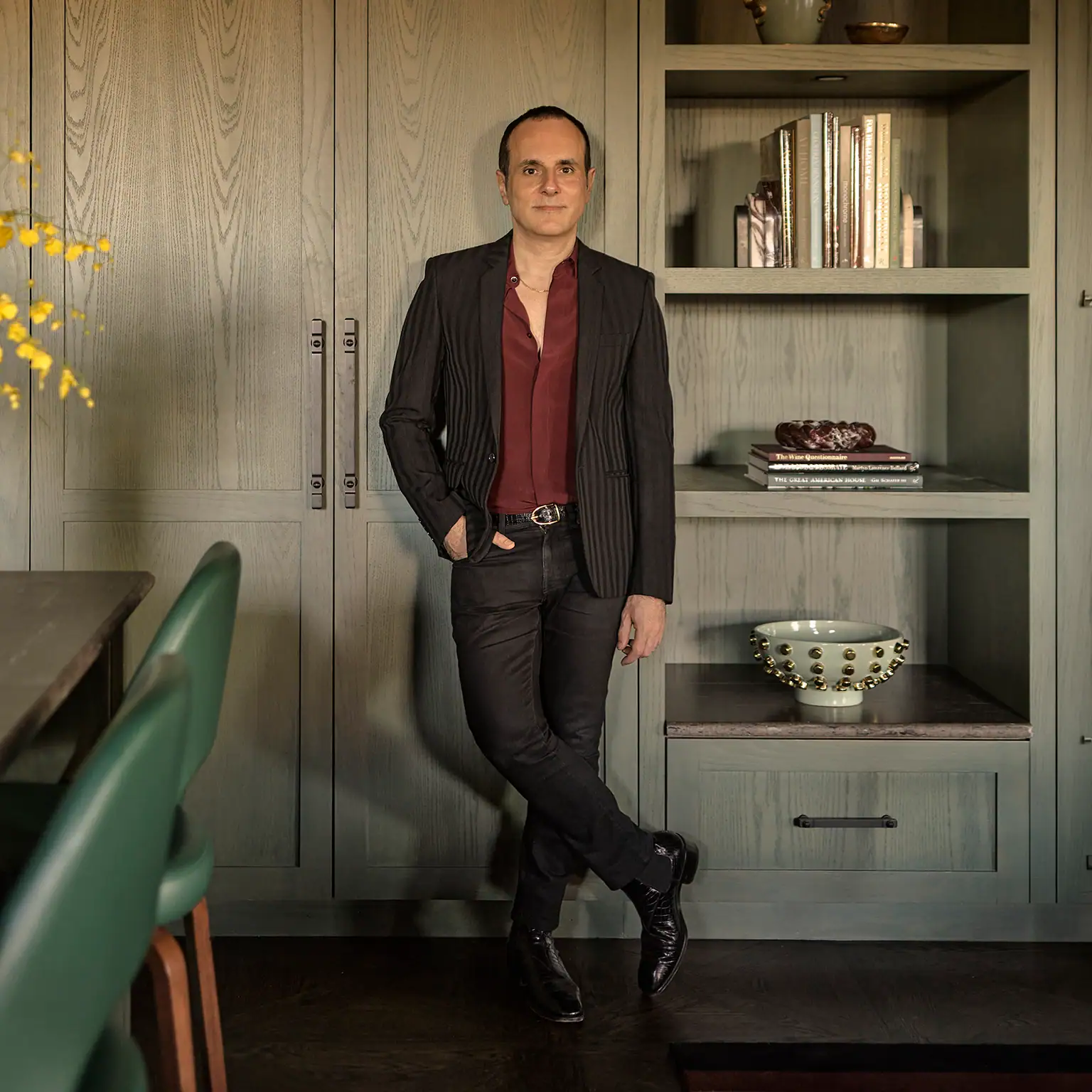
Martin Goddard grew up in East London himself, before completing an Art Foundation and a degree at Middlesex University, and building his early career at Richmond International, where he worked on the Four Seasons Gresham Palace in Budapest, and later at GA Design, where he worked on the conversion of the Corinthia Hotel London. Jo Littlefair trained formally in textile design and built her expertise as an FF&E specialist, a background in furniture, fixtures and equipment that shapes the studio’s material-first approach to a room. The pair founded Goddard Littlefair in 2012 and now run studios in both London and Porto, and the practice has since worked on projects including the Four Seasons at Sultanahmet in Istanbul, Raffles London at the OWO, the Imperial Riding School in Vienna, the Hyatt Place London East, and, closer to home, The Harvey, a penthouse at Lansdowne Place in Dublin, a spread of work that runs from grand heritage conversions to a single private residence. Martin Goddard designing a Shoreditch hotel is not an outside studio interpreting a neighbourhood it does not know. It is closer to a home match.

Frequently asked questions
Where is Mondrian Shoreditch?
Mondrian Shoreditch occupies a mixed-use building called The Curtain at 45 Curtain Road in East London, owned by the Reuben Brothers and operated under Ennismore and Accor’s Mondrian brand.
Who designed Mondrian Shoreditch?
Goddard Littlefair, the London studio founded in 2012 by Martin Goddard and Jo Littlefair, designed the interiors, with the project team led by associate Lucy Robinson.
Why is the street called Curtain Road?
Curtain Road is named after the Curtain Theatre, an Elizabethan playhouse that opened in 1577 and became the main London venue for Shakespeare’s own company, the Lord Chamberlain’s Men, between 1597 and 1599, before the Globe existed.
What restaurants and bars does Mondrian Shoreditch have?
Christina’s Shoreditch is the ground floor bar, Altitude is the rooftop restaurant, and BiBo, on the lower ground floor, is designed by the chef Dani García.
When did Mondrian Shoreditch open?
The hotel opened in July 2021.
What was the design concept behind Mondrian Shoreditch?
Goddard Littlefair built the interiors around the London nursery rhyme Oranges and Lemons and its references to local churches, alongside a deliberate nod to the Mondrian brand’s origins in 1980s Los Angeles.


Final thoughts
Mondrian Shoreditch tells two design stories well: a London nursery rhyme rendered in gas lanterns and gilded glass, and a California-born hotel brand acknowledging its own Sunset Strip origins on a rooftop mural. Both are specific, researched and genuinely present in the finished building, which is more than most hotel concepts manage.
Curtain Road carries a third story that belongs to the address rather than to any design brief. It is named for the playhouse where Shakespeare’s own company staged Romeo and Juliet and premiered Henry V two years before the Globe opened, and where the “wooden O” of English literature’s most quoted description of a theatre may well have first been spoken aloud. That history sits underneath the hotel regardless of which concept a designer chooses to build on top of it, and knowing it changes very little about checking in, except that a guest walking out to Shoreditch High Street is, whether the building says so or not, walking down London’s original theatre row.


Leave a Reply