
ART & CULTURE · MIAMI
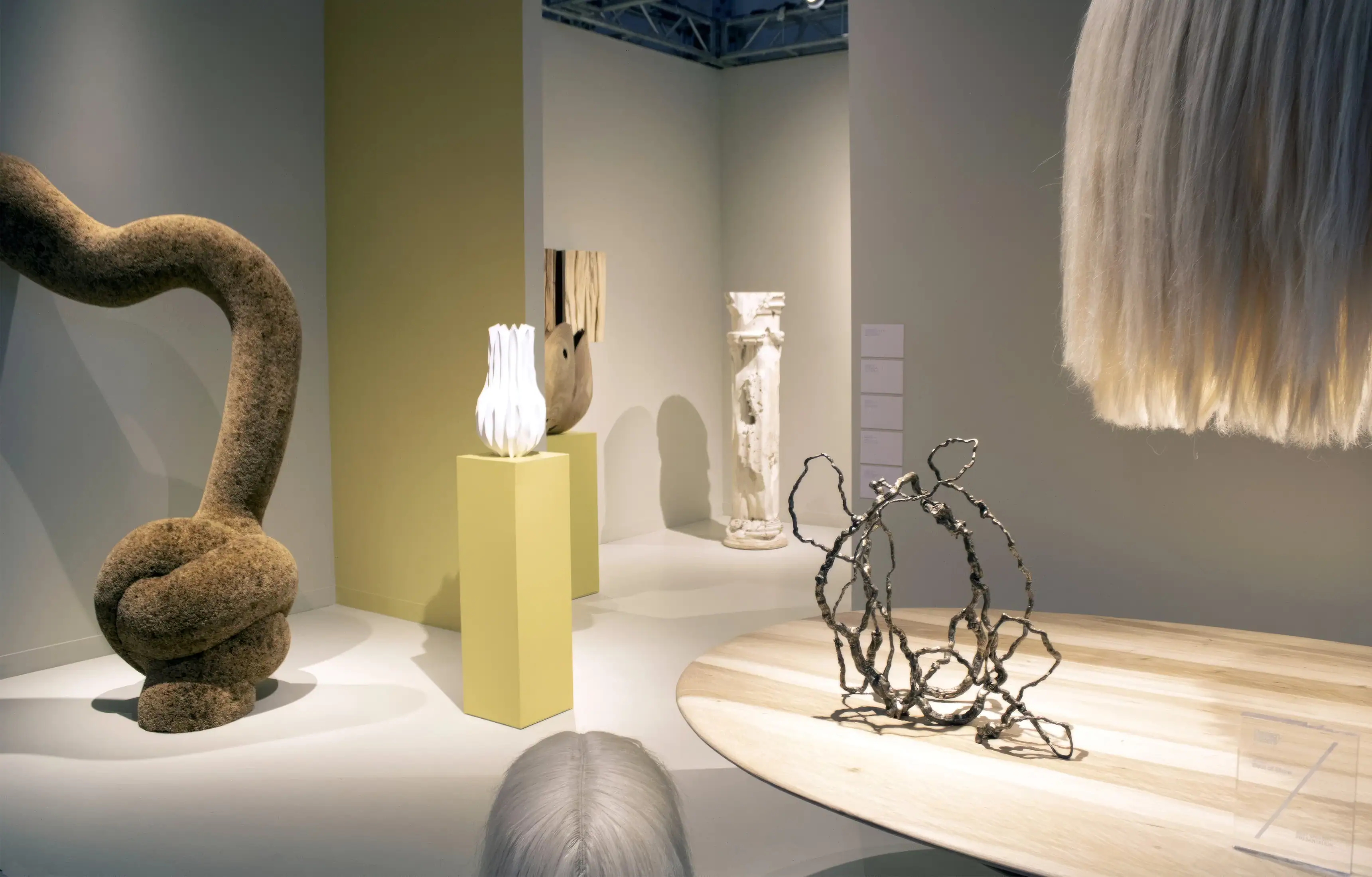
Reading time: 10 minMaria Cristina Didero’s first Miami edition as curatorial director asked exhibitors to imagine a golden age of their own making. Across the fair’s tent on Pride Park, the answer arrived as henequen fibre pulled from Yucatán fields, beechwood cut into seventy five thousand hand fitted rods, and clay fired in a Guadalajara workshop that has spent three decades teaching artists what it can do. The precious material this year was skill, and it turned up in booth after booth.
Design Miami returned to South Beach for its eighteenth edition from 30 November to 4 December 2022, with preview days on 29 and 30 November, in the fair’s tent at Pride Park on Convention Center Drive and 19th Street, next to the Miami Beach Convention Center. It ran, as it has since 2010, alongside Art Basel Miami Beach during the city’s design week, and brought together around fifty galleries and Curio exhibitors under a single curatorial theme. Three years earlier, the fair’s fifteenth edition set a different brief, Elements: Water, answered that year in dissolving resin and grown fibre rather than gilt or polish.

MONIOMI Design
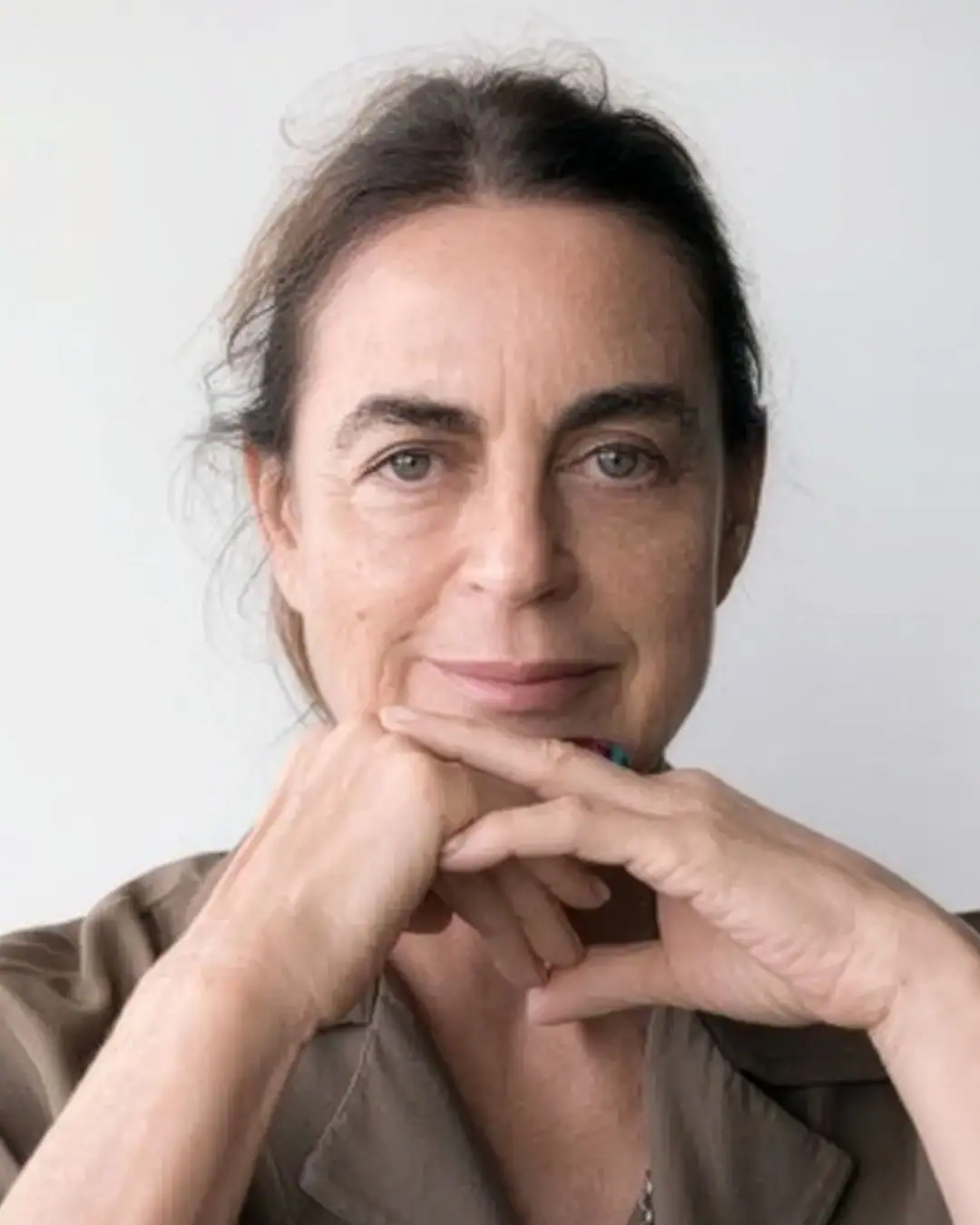
That theme was set by Maria Cristina Didero, appointed the fair’s first Italian curatorial director earlier the same year. Didero trained in literature and philosophy at the University of Bologna, spent sixteen years at the Vitra Design Museum under Alexander von Vegesack, ran Fondazione Bisazza, and built a reputation as one of the sharpest readers of Italian Radical design of the 1960s and 70s. For 2022 she gave the fair’s three editions a shared title, The Golden Age, and split it across a calendar: Basel looked to the past with historic pieces by Ponti, Le Corbusier, Sottsass and Perriand, Paris to the present, and Miami, closing the year, to the future. The full line read The Golden Age: Looking to the Future, celebrating a tomorrow of our own creation.

Mindy Solomon Gallery
The programme reached beyond the gallery booths too. Beside the exhibitor tent, Design Miami paired its main galleries with a run of partner presentations, including installations from Bottega Veneta and Kohler, the latter working with designer Nada Debs, that treated the theme as a brief for established houses as much as independent studios. The centre of the fair, though, stayed with the roughly fifty galleries and Curio exhibitors who had to answer the theme in a single booth, which is where the sharpest arguments were made.


Mindy Solomon Gallery
What that meant in the tent was not gilt or polish. It meant natural fibre, hand tooled wood, glazed clay and dyed silk, deployed by makers who could explain exactly how each material got its final form. The fair’s own jury agreed with the reading before the week was out, giving its Best Gallery Presentation award jointly to Sarah Myerscough Gallery and Magen H Gallery for booths built on, in the words of juror Lee Mindel, “natural forms and materials, the mark of hand, and references to tropical locales.” What follows moves booth by booth through that argument, and ends with a connection between three galleries that a straightforward list of the fair would miss entirely.

AGO Projects
Sarah Myerscough’s material shores, and a fibre once called green gold
Sarah Myerscough Gallery built its presentation, Material Shores, around a light, fresh palette that let two pieces carry the argument. A natural fibre chandelier by Angela Damman hung beside the Skipping Stone dining table by Christopher Kurtz, and the pairing was the point: one maker working in plant fibre, the other in solid wood, both refusing to disguise how their material behaves.


Sarah Myerscough Gallery
Damman moved from the United States to Yucatán in 2011 and has built her practice within a fifty mile radius of her home ever since, growing, cutting, drying, dyeing, spinning and weaving the fibre herself with a small team. Her main material is henequen, an agave the Maya used for string, hammocks and textiles long before Spanish colonists turned it into a plantation crop so lucrative it was known across the peninsula as oro verde, green gold. Damman’s largest chandeliers use raw, sun whitened henequen and hand spun sansevieria fibre by the tens of thousands of metres, a literal green gold read against a fair theme called The Golden Age.

Sarah Myerscough Gallery
Kurtz arrived at furniture through sculpture. He won the Louis Comfort Tiffany Award in 2005, held a New York Foundation for the Arts fellowship in 2007, and was shortlisted for the Loewe Craft Prize in 2018, all before Skipping Stone became his best known series. He has described wood as his medium of choice because it is “structural, but also malleable and alive,” and the table’s shape comes from a private ritual: hand carved discs of black walnut, ash, cherry and white oak, stacked and balanced the way he and his partner search for the perfect flat stone to skim at the end of a day. His Blonde Drinks Cabinet, in tulipwood, poplar, pine and brass, drew attention at the booth for how convincingly its curved carcass reads as liquid caught mid pour. The booth’s wider roster, which also included British maker Peter Marigold, gave the jury the range of hand based practice it later cited when the gallery took the fair’s top award.


Sarah Myerscough Gallery
Room 57’s red booth, and an alphabet built to speak to angels
Room 57 Gallery painted its booth red and filled it with ceramic works by Roxanne Jackson alongside hand carved furniture by Brecht Wright Gander, under the collection title Knowledge of All Dark Things. Gander works by what he calls excavation rather than design: he starts with a large blocky mass of curly maple and carves until, in his own words, he can “see where the form wants to go.”

Room 57 Gallery
The results are drippy, almost molten looking cabinets and tables, including a blue cabinet whose form sits somewhere between furniture and sculpture without settling on either. For the inlay work he brings in luthiers, the specialists who build musical instruments, who cut stone and shell with CNC guided lasers into symbols from a twenty two character alphabet devised in the sixteenth century by Heinrich Cornelius Agrippa, drawn from Hebrew names and intended to let its user communicate with angels. It is a strange, specific reference for a furniture collection, and Gander’s carving gives it a body to live in.


Room 57 Gallery
Galerie BSL: an anemone built from 75,000 rods, and lava caught in bronze
Galerie BSL, founded and still run by Béatrice Saint-Laurent, whose initials give the gallery its name, showed nature inspired sculpture and furniture across the booth. Pia Maria Raeder’s Sea Anemone pieces, in earthy hues that suited the theme’s turn toward the natural world, are built from thousands of beechwood rods that Raeder, working largely self taught from her studio in Munich, cuts and hand arranges one at a time.


Galerie BSL
Her largest commissions have used as many as 75,000 individual rods and taken eighteen weeks to complete. Saint-Laurent discovered the work in 2016 and gave it its debut at PAD London, where it sold out. Alongside it, Taher Chemirik’s White Lava lamps caught the same organic logic in a harder material, their surfaces reading as molten metal frozen at the point of greatest movement.


Galerie BSL
The Haas brothers, their protégé, and the workshop that connects three booths
This is the connection a straightforward gallery list would miss. Gallery ALL gave the Haas Brothers a purple backed booth for a presentation carrying the fair’s own title, The Golden Age: Looking to the Future, including two new furniture pieces, Grippy Ghost and Zoidberg, and the twin brothers’ first ever tapestries.

Gallery ALL
A few tents away, AGO Projects showed sofas and side tables by Ryan Belli, a designer who spent six years as an assistant in the Haas Brothers’ studio, hired three days into what was meant to be an internship, before launching his own practice. Belli trained at Vassar and Art Center College of Design, and his furniture keeps the whittled, faintly anthropomorphic quality of the studio that shaped him, reworked into his own language of rough hewn wood and lollipop shaped textile forms.


Gallery ALL
AGO Projects also showed a ceramic kitten artwork by the Haas Brothers themselves, produced by Cerámica Suro, the Guadalajara workshop run by José Noé Suro, who took over his father’s dinnerware factory in 1993 and rebuilt it into Mexico’s most sought after fabrication studio for artists, working since with David Adjaye, Jorge Pardo and Sarah Crowner among others. AGO Projects’ other headline maker at the fair, Fabien Cappello, built the booth’s tilework installation, a piece that doubled as construction and artwork, along with mosaic coffee tables and sculptural lamps made using the micromosaico technique. Cappello relocated his own studio to Guadalajara in 2020, into the same city, and largely the same network of ceramic and metal ateliers, that trained Suro’s collaborators. Three booths, one Guadalajara workshop and one six year mentorship connect them, and none of it needed a shared wall to be true.


Gallery ALL
Two rooms of colour: lakes in silk, and marble on the court
Aqua Creations devoted its booth to The Lakes, a collection by Albi Serfaty built from hand dyed silk shades mounted on brass framed structures, each piece named for a real freshwater lake, Lake Chad, Lake Victoria, the Sea of Galilee among them, and each capable of a different light intensity depending on how the silk is layered. The naming is not decoration. FreshwGallery ALLater lakes are among the most closely watched indicators of environmental change, and Serfaty’s collection turns that concern into functional light rather than illustration of it.

Aqua Creations
MONIOMI Design took the fair’s theme back to its oldest source. Altis Ornamentum, the studio’s installation, drew its name from the Altis at Olympia, the sacred grove where ancient Greek athletes were said to attain god like status, and applied luxury materials, marble chief among them, to sporting equipment: basketball hoops, table tennis tables, bespoke furniture and accessories that treat a gym as seriously as a drawing room.


Aqua Creations
Twenty First Gallery and Mindy Solomon: bodies, scales and small monuments
Twenty First Gallery, the New York collectible design specialist, dressed its booth in powder pink and filled it with pieces working in classical and organic form. Nathalie Ziegler Pasqua’s Snake Mirror used individually set glass scales to build a reflective surface with real texture, while François Corbeau’s Silver Mirror, in mirror polished silver bronze and grey tinted glass, an edition of twenty five, took the same idea of reflection somewhere quieter and more architectural. Yellow amphoras rounded out the booth, a classical form revisited rather than reproduced.


Twenty First Gallery
Mindy Solomon Gallery showed ceramic work by two artists working from very different starting points. Linda Lopez, who trained at California State University, Chico and holds an MFA in ceramics from the University of Colorado Boulder, makes pigmented porcelain sculptures known informally as Dust Furries, forms that give household detritus, the lint and pebbles and accumulated dust of a lived in room, a kind of animate presence. Virginia Leonard, based in Aotearoa New Zealand and trained at Whitecliffe College of Arts and Design, moved from painting into ceramics in 2013 and works at a large scale on abstracted self portraiture, using clay, lustre and resin to give physical form to the body’s own history.


Twenty First Gallery
Final thoughts
It would be easy to describe Design Miami 2022 as a fair full of beautiful objects, and leave it there. That is the version any listing gives you. The more useful reading is that Maria Cristina Didero’s theme worked because the galleries treated it as a material brief rather than a slogan: prove that a golden age can be built rather than mined, and show your working.


MONIOMI Design
That is what makes the connection between Gallery ALL, AGO Projects and Cerámica Suro worth naming. A mentor, a protégé and a fabrication workshop, spread across three booths that most visitors walked between without knowing they were linked, told the same story the fair’s own jury rewarded in Sarah Myerscough Gallery’s booth: that the strongest work at Design Miami in 2022 came from people who could account for every stage of what they had made.


AGO Projects
The fair has kept returning to that argument every December since, most recently marking its twentieth year in Miami with a fresh set of galleries and a new theme of its own. The through line holds regardless of the year on the tent: name the maker, ask what the material is doing, and the rest of the fair tends to explain itself.

AGO Projects
What was Design Miami 2022?
Design Miami 2022 was the eighteenth edition of the international collectible design fair, held in a tent on Pride Park in Miami Beach alongside Art Basel Miami Beach.
When did Design Miami 2022 take place?
The public fair ran from 30 November to 4 December 2022, with preview days on 29 and 30 November.
Who curated Design Miami 2022?
Maria Cristina Didero, the fair’s first Italian curatorial director, set the theme across all three of the year’s editions in Basel, Paris and Miami.
What did the Golden Age theme mean at the Miami edition?
Miami’s chapter of The Golden Age looked to the future, and in practice that meant galleries built their presentations around natural materials, visible craft and hand tooled process rather than precious metal or polish.
Which gallery won Best Gallery Presentation at Design Miami 2022?
The award was shared between Sarah Myerscough Gallery and Magen H Gallery, both recognised for booths built on natural materials and visible handwork.
What is Cerámica Suro, and why did it matter to this edition?
Cerámica Suro is a ceramics workshop in Guadalajara run by José Noé Suro, whose collaborators include the Haas Brothers, David Adjaye and Jorge Pardo. Its work connected several booths at the 2022 fair, including a ceramic piece made for AGO Projects.
Is Design Miami an annual fair?
Yes. Design Miami returns to Miami Beach every December during the city’s art and design week, alongside sister editions that have run in Basel and Paris and expanded further since.


Aqua Creations

Leave a Reply