
Exhibitions · Miami
Reading time: 7 minA wooden hotel from 1908, on the Miami River, in a city that rebuilds itself faster than almost anywhere else. Inside it: aluminium dyed with plants, furniture grown from fungus, a swimming pool holding the exact volume of water it took to grow 1,033 tangerines. Alcova‘s second Miami edition was a fair about turning the overlooked into the precious, and it chose the right building to do it in.
Miami is a city of constant reinvention. It builds, it sells, it rebuilds, and the result is a skyline that is always writing its next chapter.
Which is why Alcova’s choice of venue for its second Miami edition was the first and best decision it made. The fair took over the Miami River Inn: a wooden, clapboard hotel dating from 1908, and the oldest in the city, sitting quietly by the river on the edge of Little Havana.


Studio LoopLoop – ‘Dye dye my Darling’
This is Alcova’s method, and it has been since Valentina Ciuffi and Joseph Grima founded the platform in 2018. In Milan it has occupied a former panettone factory, a military hospital, an abandoned modernist villa, a slaughterhouse — always a building with a life before this one, never a neutral container. The building is not the backdrop. It is the first exhibit.
And in Miami, that decision paid off in a way it could not have anywhere else. Because the theme that emerged, across almost every studio in the programme, was transformation: waste into worth, scrap into surface, fungus into furniture. Alcova put a fair about the alchemy of materials inside a building carrying more than a century of the city’s history in its timbers.


SoMad – ‘Mother Tree’
The alchemists
The strongest through-line at Alcova Miami 2024 was a group of studios doing the same thing by different means: taking something cheap, discarded or overlooked, and demonstrating — physically, in an object you could touch — that its value was a matter of attention rather than substance.
Studio LoopLoop, founded in Rotterdam in 2022 by Odin Visser and Charles Gateau, brought Dye Dye My Darling: vases, a coffee table and mirrors in plant-dyed anodised aluminium, its colours and patterns drawn out by the studio’s own experimental processes. They also installed a live mini-laboratory in the exhibition, running experiments with local plant material in front of visitors. LoopLoop describe what they build as para-industrial systems — production tools they invent themselves — and showing the lab alongside the objects was the honest move. The process is the work.


Studio Victor Miklos Andersen x Studio Villiam Miklos Andersen / ‘Zealand’
crafting plastics! studio, from Bratislava, founded in 2016 by Vlasta Kubušová and Miroslav Král, did something quietly beautiful. They took scrap wood, coaxed out its grain with surface treatments, and then imprinted that grain onto recycled aluminium, so that a piece of industrial metal carries the fingerprint of a piece of waste timber. One discarded material lending its beauty to another. It is one precise idea, executed beautifully, and it says everything about value that needs saying.
RA Workshop — the sculptor and furniture designer Richard Aybar — showed Rubberworks: a rocking chair, lamps, vases and a love-seat table, all cast in rubber, glowing amber. Aybar is explicit that this is not “postmodern alchemy” but something more elemental — objects that look gilded and turn out to be made of primordial ooze. Rubber is a material with a long and not entirely comfortable history; casting it into forms that read as precious is a pointed act.


arrived aliens – ‘Traces’
Studio TOOJ, the Stockholm practice of Johan Wilén and Ashley Chong, brought work in Reishi™ by MycoWorks — a material grown entirely from mycelium, the root structure of fungi — alongside a 3D-printed sand console carried over from Alcova Milano. Furniture grown rather than manufactured, and a table printed from sand: two different answers to the same question about what a material is allowed to be.
Sheyang Li’s Elemental Patchwork cast different metals together at high temperature into compositions that look chaotic and are anything but. And Konqrit, the Buenos Aires brand founded by Cecilia García Galofre in 2023 — and shown at Salone and Maison&Objet in 2024 — presented Fusión, in which her concrete bathtubs meet 3D projection, turning the most private daily ritual into something you are invited to look at.


Something Last – ‘Something Last’
The living things
The second group brought things that were still alive, or had been recently.
The most striking work at the entire fair, for my money, was AnanasAnanas’s 1,033 Tangerines.
The culinary art studio of Verónica González and Elena Petrossian filled the hotel’s swimming pool with water, and displayed 1,033 tangerines — about 200 pounds — on rotating stainless steel vessels, for guests to eat over the course of the fair.
The water in the pool was 17,572.84 gallons. That is precisely the volume it takes to grow the tangerines.


Kevin Quale – ‘Nice Cock…’
That is one of the cleanest pieces of design thinking I have seen at any fair. There is no wall text required, no diagram, no interpretive panel. You look at the pool. You eat a tangerine. You do the arithmetic yourself, in your body, and you do not forget it. And because the fruit was eaten, the work was consumed rather than displayed — the opposite of waste, in a piece about waste.


Theo Galliakis – ‘Amphora’ / Sheyang Li – ‘Elemental Patchwork’
Make_Good_ — a studio working across Los Angeles and New York on what they call sustainable planetary design — collaborated with the Center for Subtropical Affairs on Outside/In: modular self-watering planters, rare and ancient plant life, and generative audio powered by the plants themselves. The installation supported the Miami Tropical Botanic Garden in Little Haiti, which occupies some of the last three contiguous acres of green space in Miami’s urban core, and which is actively seeking support to stay open.


crafting plastics! studio – ‘Feel the Matter’
That figure, three acres, should stop you. Alongside a fair full of work drawn from nature, here was a living piece of it a few miles away, and a real chance to help keep it there.
Arrived Aliens, the studio founded in Miami in 2022 by Katerina Oleinikova and Denis Gomes, showed Traces, drawing on Florida’s subtropical landscape, with work by Apollo Plants, Kristina Aksentova and Joyce Billet alongside the vintage gallery Nine Fourteen. And David Aliperti, born in Rio de Janeiro, presented Mother Tree with SoMad, the New York art space led by femme and queer artists: small, dense sculptures in dyed foam clay, made entirely by hand, without tools, over months. Meditative, obsessive objects about resilience — and about who has to be resilient.


RA Workshop – ‘Rubberworks’
Wit, and the body
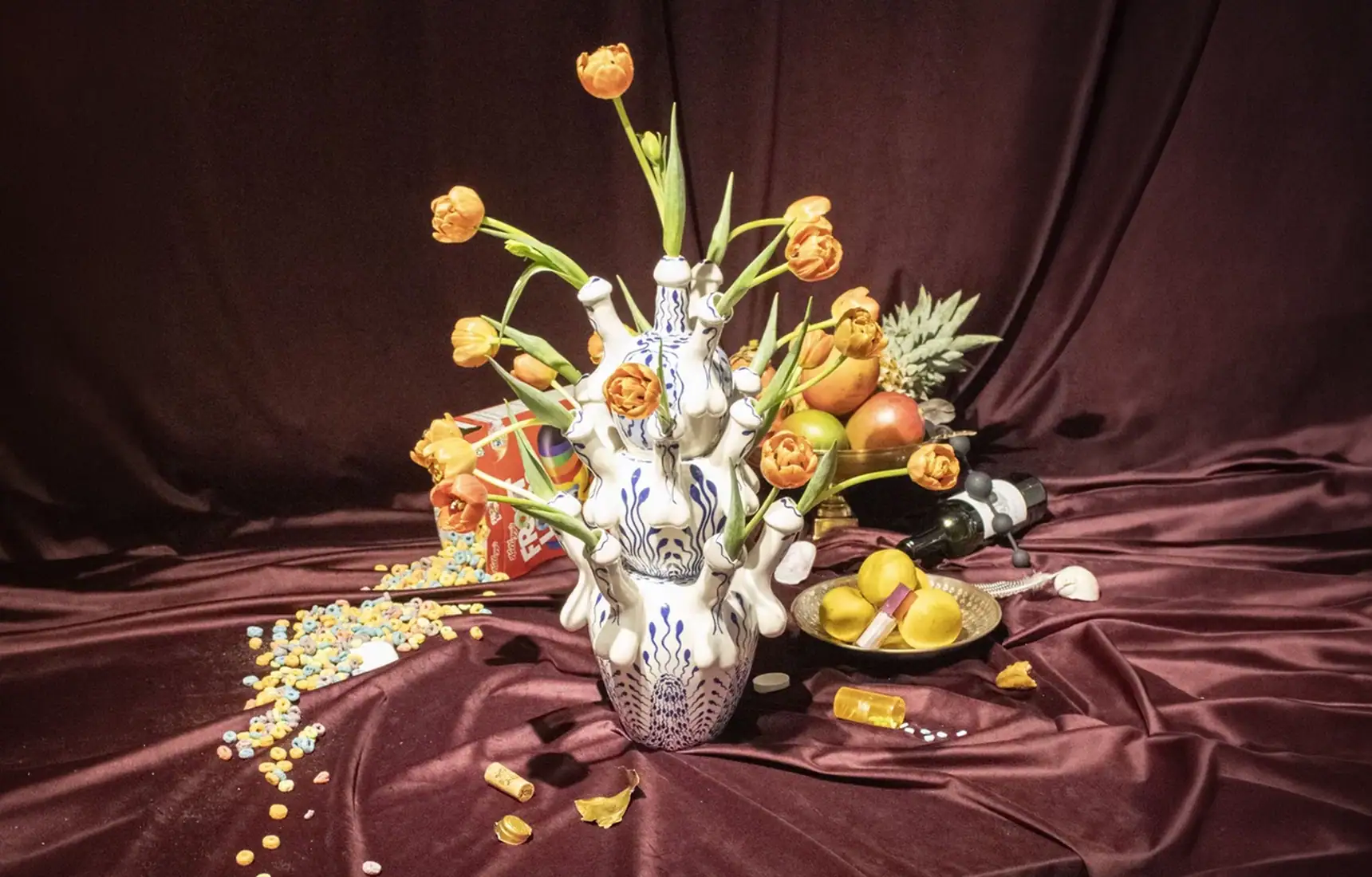
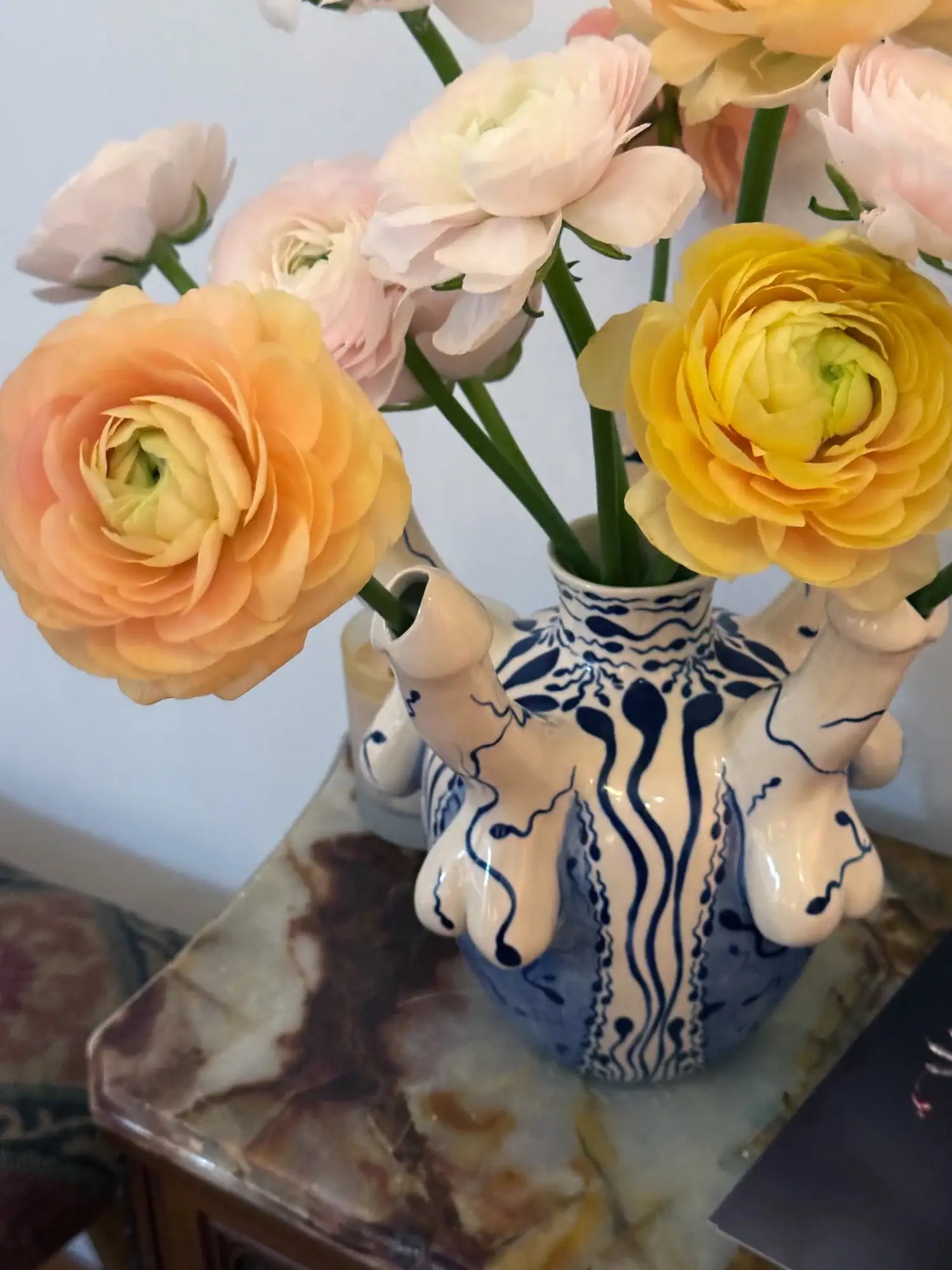
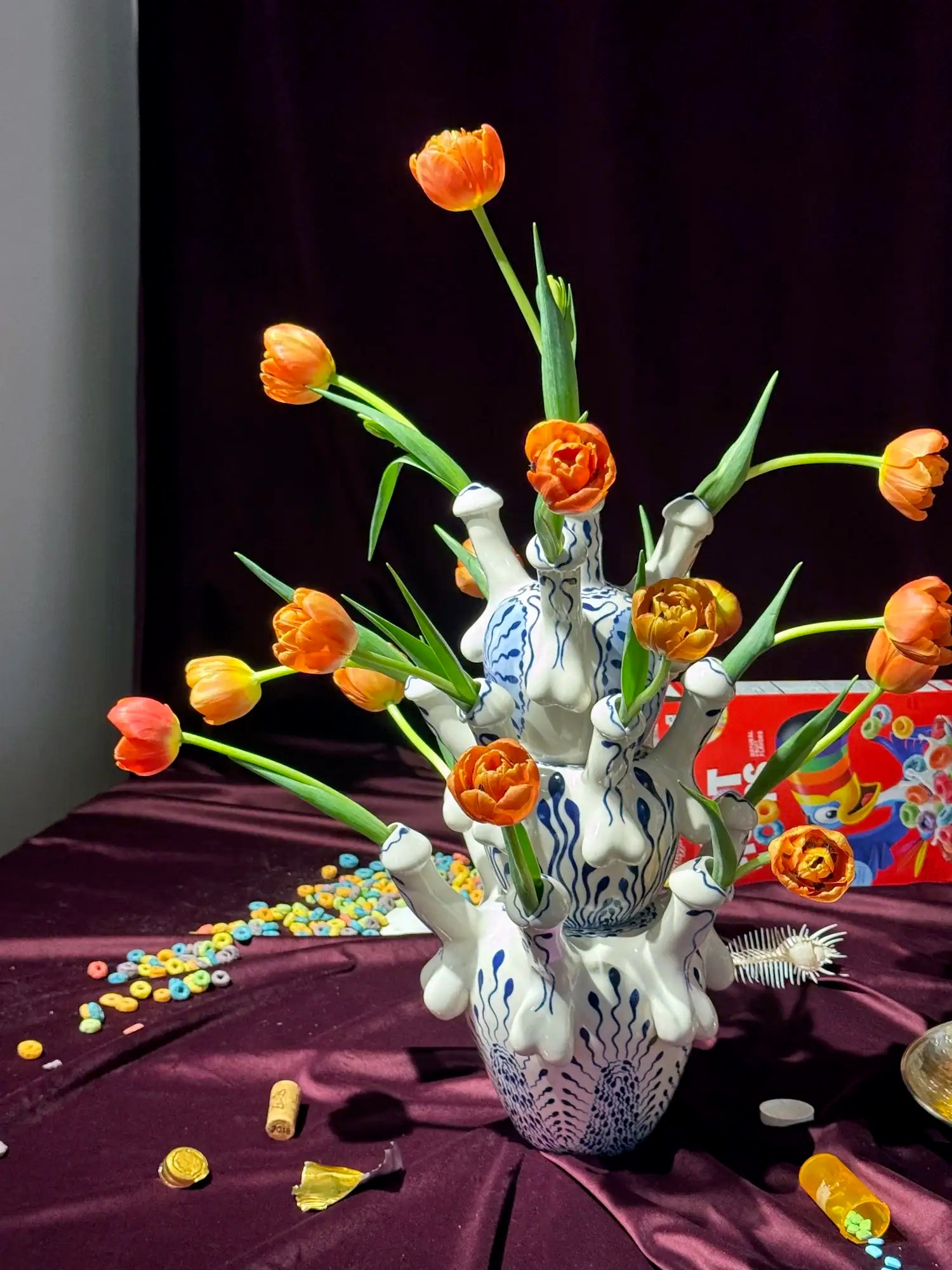
Kevin Quale’s Nice Cock… was the funniest thing at the fair, and also one of the most art-historically literate, a combination it carries off with real assurance.
Quale, a New York ceramicist, reinterprets seventeenth-century Delftware through a queer lens. He builds what is unmistakably a Dutch still life — the tulipieres, the candelabras, the chandeliers — and then substitutes the traditional symbols. Out go the fruit and the lobsters. In come poppers and chicken nuggets. Spouts become phallic. A chandelier climaxes. Hand-painted sperm arranges itself into floral patterns around the vases. The whole tableau reads as the aftermath of a very good gay afterparty in a Miami hotel room.


AnanasAnanas – ‘1,033 Tangerines’
And here is why it is more than a joke: the Dutch still life was always about this. The pronkstilleven was a genre of moral instruction — heaped fruit, dead game, spilled wine, a skull somewhere in the corner: look how sumptuous, and look how briefly. Vanitas. Pleasure passing. Quale has not vandalised the form; he has restored its function using the pleasures of a different century. The afterparty is a memento mori. It always was.
Objects of Common Interest — Eleni Petaloti and Leonidas Trampoukis — built Reflections of Now: an octagonal pavilion of mirrored panels working as a kaleidoscope, in which childhood memories shift and fracture depending on where you stand. Two people looking through the same instrument see entirely different things. That is the piece.


Marco Zelli – ‘NEFERTITI’
Theo Galliakis’s Amphora riffed on the golden amphorae of ancient Greece — gold signifying kingship and the link between people and gods — with faux-gold vessels offered as tributes to what he calls the present-day Pantheon. In a fair full of studios turning base materials into precious ones, a deliberately fake gold amphora is a very sharp joke indeed.


Studio TOOJ – ‘Between Realms: The Known and the Untold’
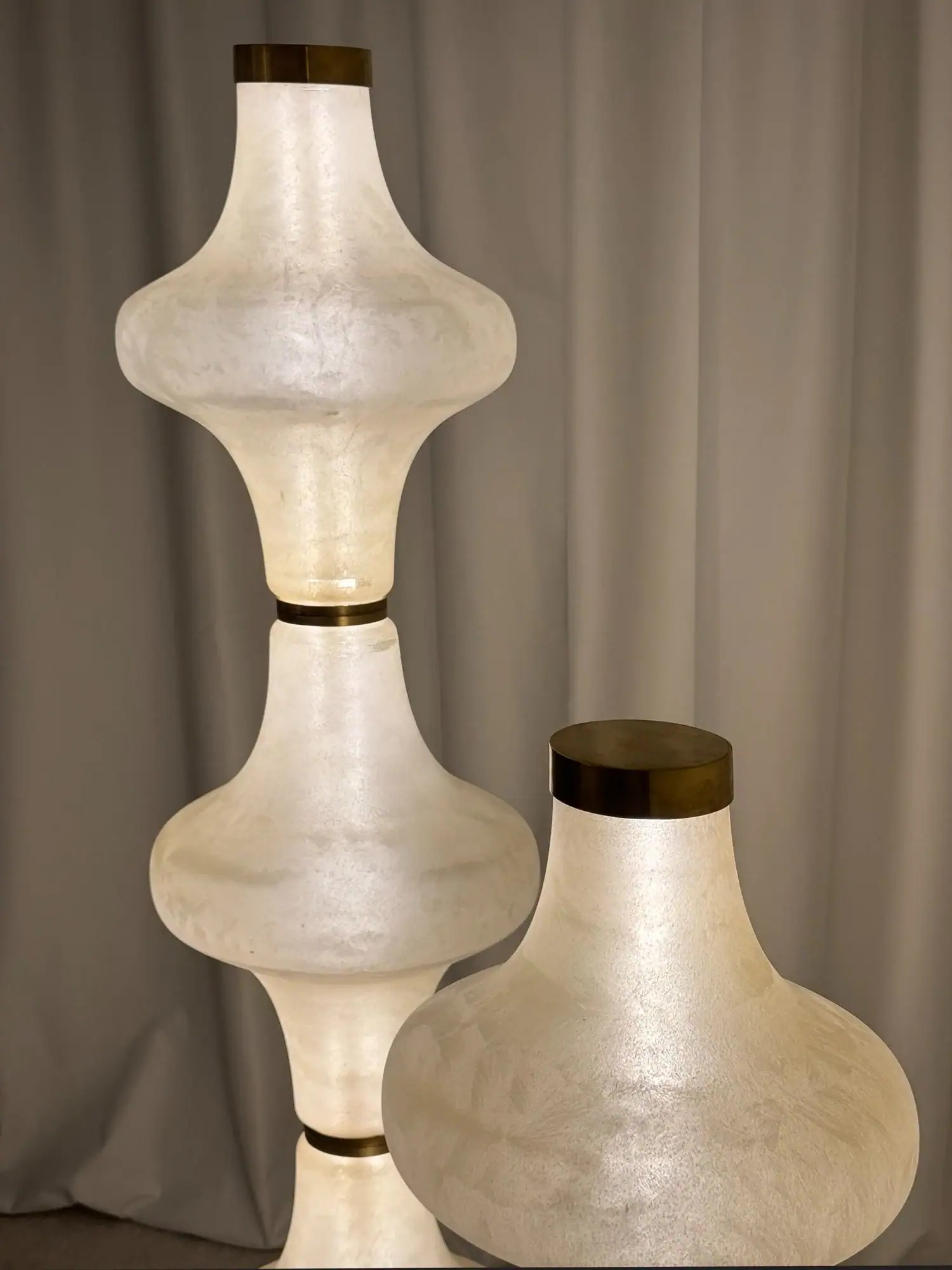
Marco Zelli, the Zurich architect and designer, showed Nefertiti: a modular lighting element in folded, bonded aluminium — configurable as array, totem or shelf, magnetically mounted, with a 45-degree mirrored panel doing quietly interesting things to the light. Strict geometry, playful colour, and light enough to achieve a shape that would otherwise be impossible.



GIOPAGANI – ‘Chase Eternity’
Also on show: GIOPAGANI’s Chase Eternity, in which Giovanni Pagani turned his space into a monochrome landscape so the objects had somewhere quiet to speak; Furn Object, the Ukrainian brand of Anna and Sergii Baierzdorf, with a sensory installation of scent and biomaterials; Studio TOOJ‘s Scandinavian dualities; the Danish brothers Victor and Villiam Miklos Andersen, whose Zealand drew on the rugged headland of Asnæs where they grew up; and Something Last, curated by Studio/JIALUN XIONG, which stripped colour out entirely: shape, dot, line, light, shadow, nothing else, offered as a deliberate counterpoint to Miami’s exuberance. Given where it was standing, that took real conviction.


Make_Good_ & Center for Subtropical Affairs – ‘Outside/In’
The Lexus commission
Lexus in Design presented a 26-piece capsule collection with designers including Germane Barnes, Michael Bennett of Studio Kër, Crafting Plastics, Suchi Reddy and Tara Sakhi of T SAKHI, alongside Liminal Cycles, a sensory-responsive installation at the ICA Miami sculpture garden.


Lexus in Design – ‘Capsule Collection’
A car manufacturer inside an independent design platform is always worth a closer look, and this one repays the attention.
The designers here are genuinely good ones, the objects were properly made, and this kind of backing is the reason a fair like Alcova can offer floor space to a two-person studio from Bratislava at all. Independent design thrives on partners like this, and naming the arrangement openly is part of what makes it work. On the evidence of the pieces themselves, Lexus commissioned with real care.

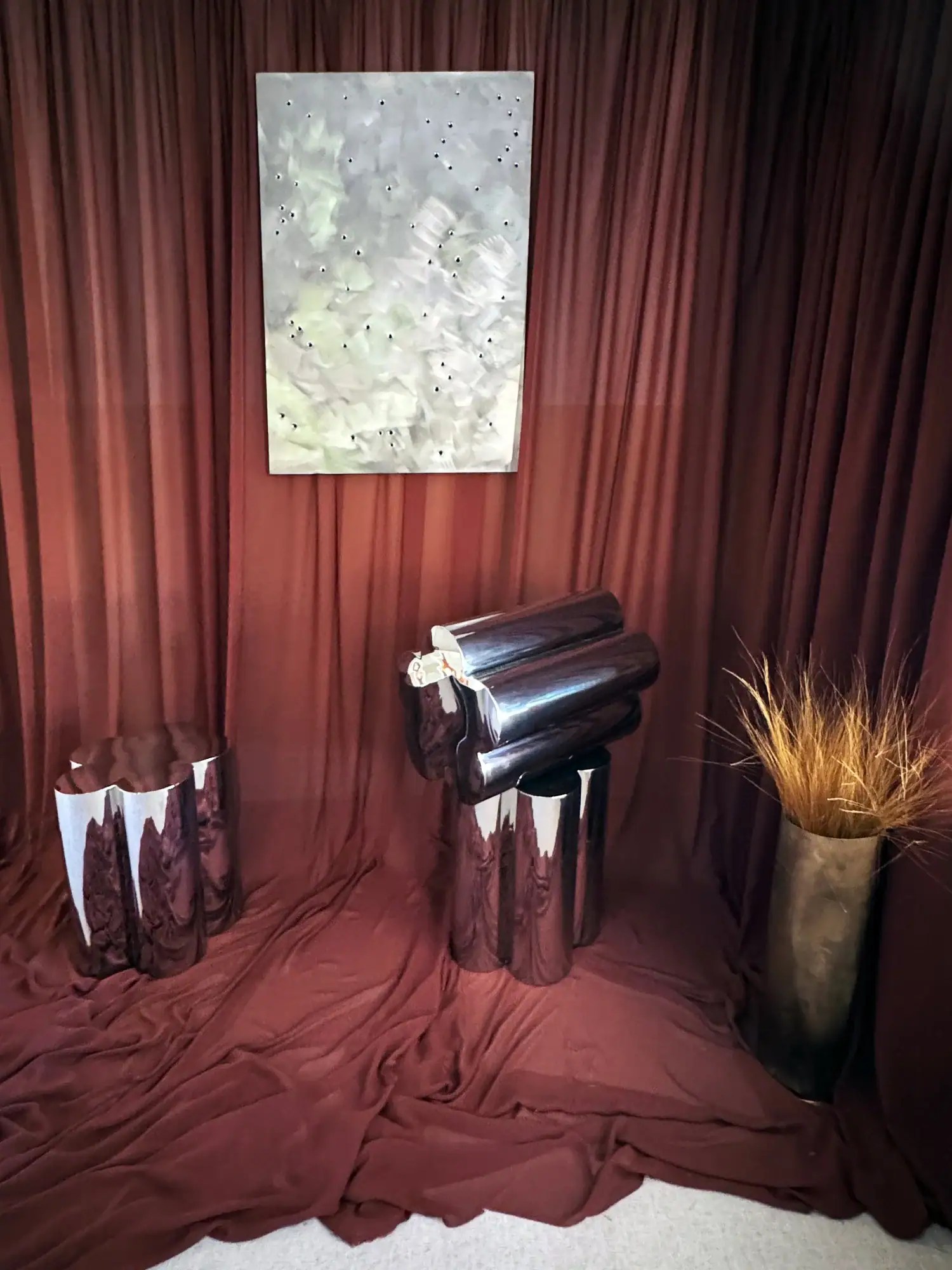
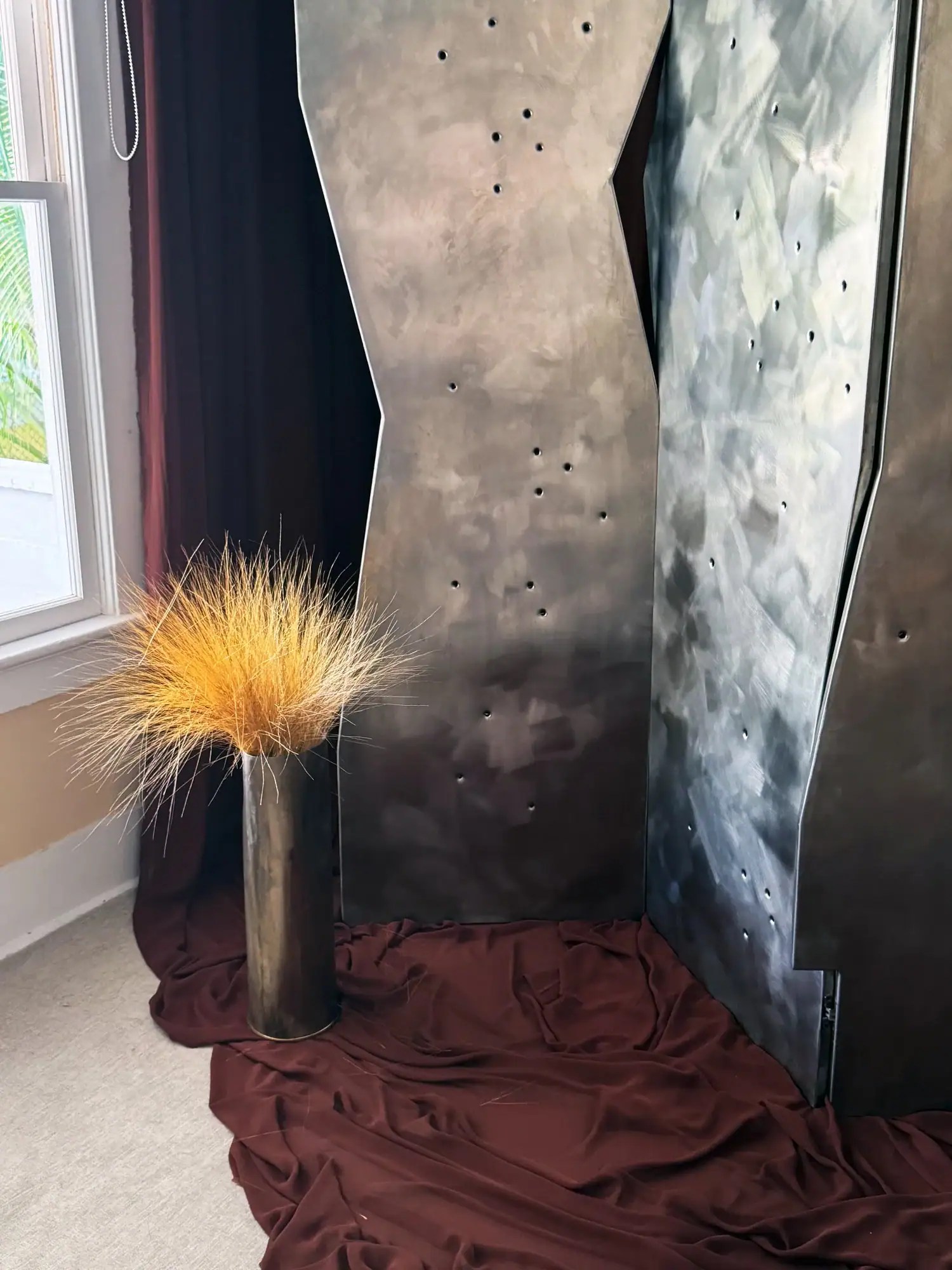
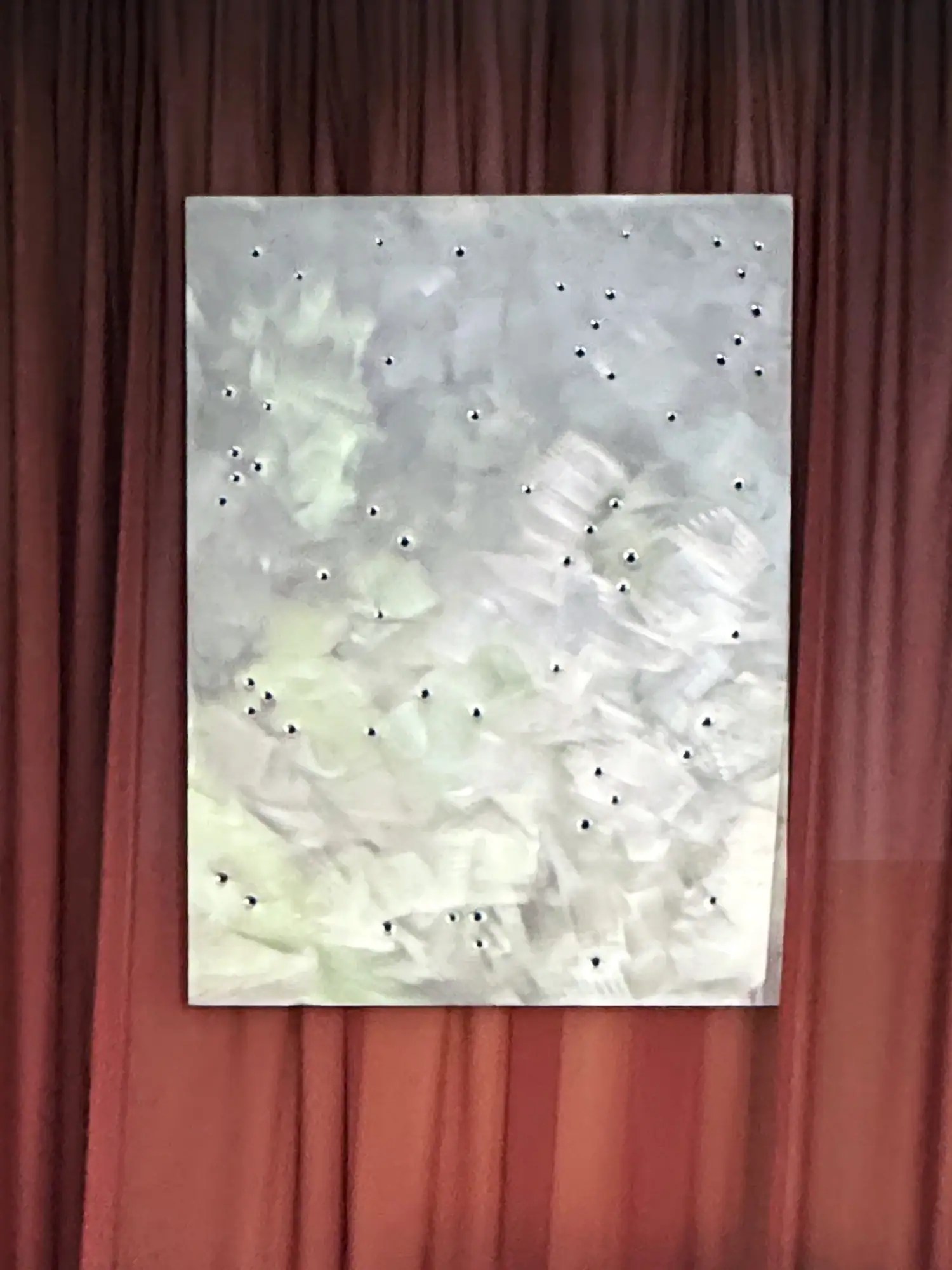
Furn Object – ‘Sanctuary’
Final thoughts
What made Alcova Miami 2024 cohere was not a curatorial statement. It was a shared instinct, which is a much better thing.
Nearly every studio in that hotel was engaged in the same argument: that value is not intrinsic to a material but conferred by attention. Scrap wood lending its grain to recycled aluminium. Fungus grown into furniture. Rubber cast until it glows like amber. A gold amphora that is not gold. And a swimming pool of water, and the fruit it grew, and the visitors eating it.
It was staged in a wooden hotel from 1908 that has watched Miami rebuild itself several times over and is still standing. There is no better room in the city for an argument about what is worth keeping.


Objects of Common Interest – ‘Reflections of Now’


Leave a Reply