
ART & CULTURE · LONDON
Reading time: 10 minIn February 2018, the Crafts Council brought its fourteenth Collect to Saatchi Gallery for what turned out to be one of the fair’s last years on the King’s Road. Six exhibitors, drawn from Belgium, China, Brazil and three corners of England, made the case for porcelain, silver and glass within a few hundred metres of each other. One of them was founded by a man who had spent the previous eight years helping to run the very organisation staging the fair.
Collect opened its fourteenth edition at Saatchi Gallery on 22 February 2018, running through to the Sunday, 25 February. More than forty galleries from four continents filled the Duke of York’s HQ on the King’s Road, sent by the Crafts Council, the charity that has organised the fair since founding it in 2004 and that has advocated for British craft since 1971.

By 2018 Saatchi Gallery had been Collect’s home for the best part of a decade, since the fair outgrew its first five years at the V&A. Two years later it would move again, to Somerset House, where it has run every year since. The 2018 edition sits at the hinge between those two chapters: the last full showing of Collect in the King’s Road galleries that had shaped its middle years.

Six exhibitors from that edition make the case for what the fair does best. Ting-Ying Gallery brought two generations of Dehua porcelain sculptors from Fujian province. Piet Stockmans brought three decades of a Belgian studio built on a single shade of blue. Bishopsland Educational Trust brought the postgraduate silversmiths it had spent a year training in Oxfordshire. jaggedart brought a Brazilian-trained porcelain installation suspended from the gallery ceiling. London Glassblowing brought four decades of the Bermondsey studio that helped make British glass collectible. Between them, they show what Collect was actually for: a working network in which the people who run the institution and the people who make the objects are frequently the same people.
The trustee who became an exhibitor
Ting-Ying Gallery had existed for barely a year by the time Collect 2018 opened. Peter Ting and the writer Ying Jian founded it in 2017, with a single, specific brief: to put contemporary sculptors working in Dehua, the Fujian county that has produced white porcelain since the fourteenth century, in front of a Western audience that mostly still associated the material with export tableware.

Ting was well placed to make that case. Born in Hong Kong in 1959, he trained as a ceramicist and went on to run homeware at Asprey and serve as creative director of the French porcelain house Legle, work that put pieces of his own into the V&A’s permanent collection. Less obviously, from 2009 to 2017 he sat as Maker Trustee on the board of the Crafts Council, the charity that organises Collect. He stepped down in 2017. The gallery he then founded with Ying Jian exhibited at the fair for the first time the following year, at Collect 2018. It is a detail that says something true about how the British craft world actually works: the people setting the standards for a fair like this are drawn from the same small pool as the people exhibiting in it, and Ting-Ying’s presence at Saatchi Gallery in 2018 is a direct illustration of that.
Four generations of Dehua white
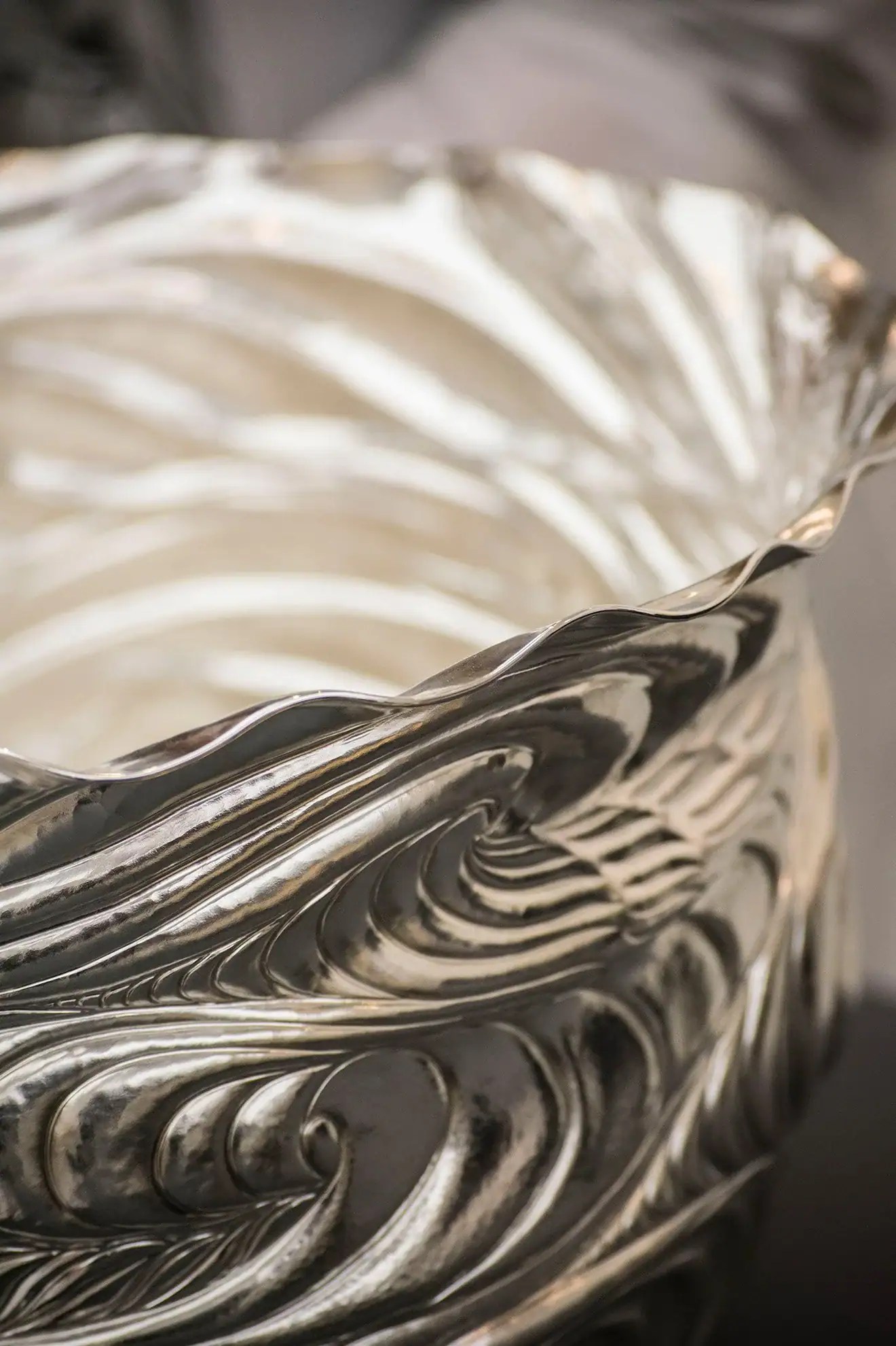
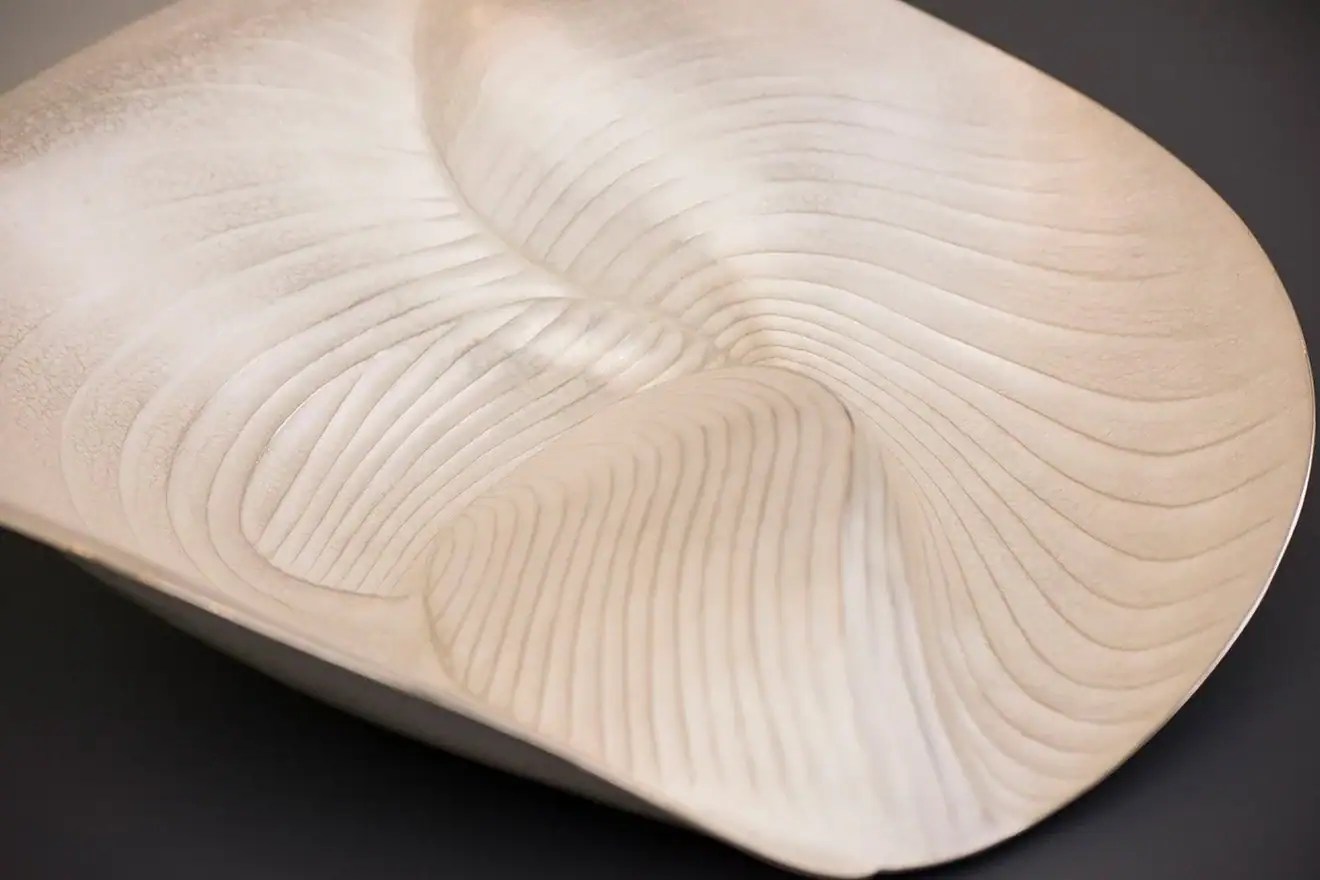
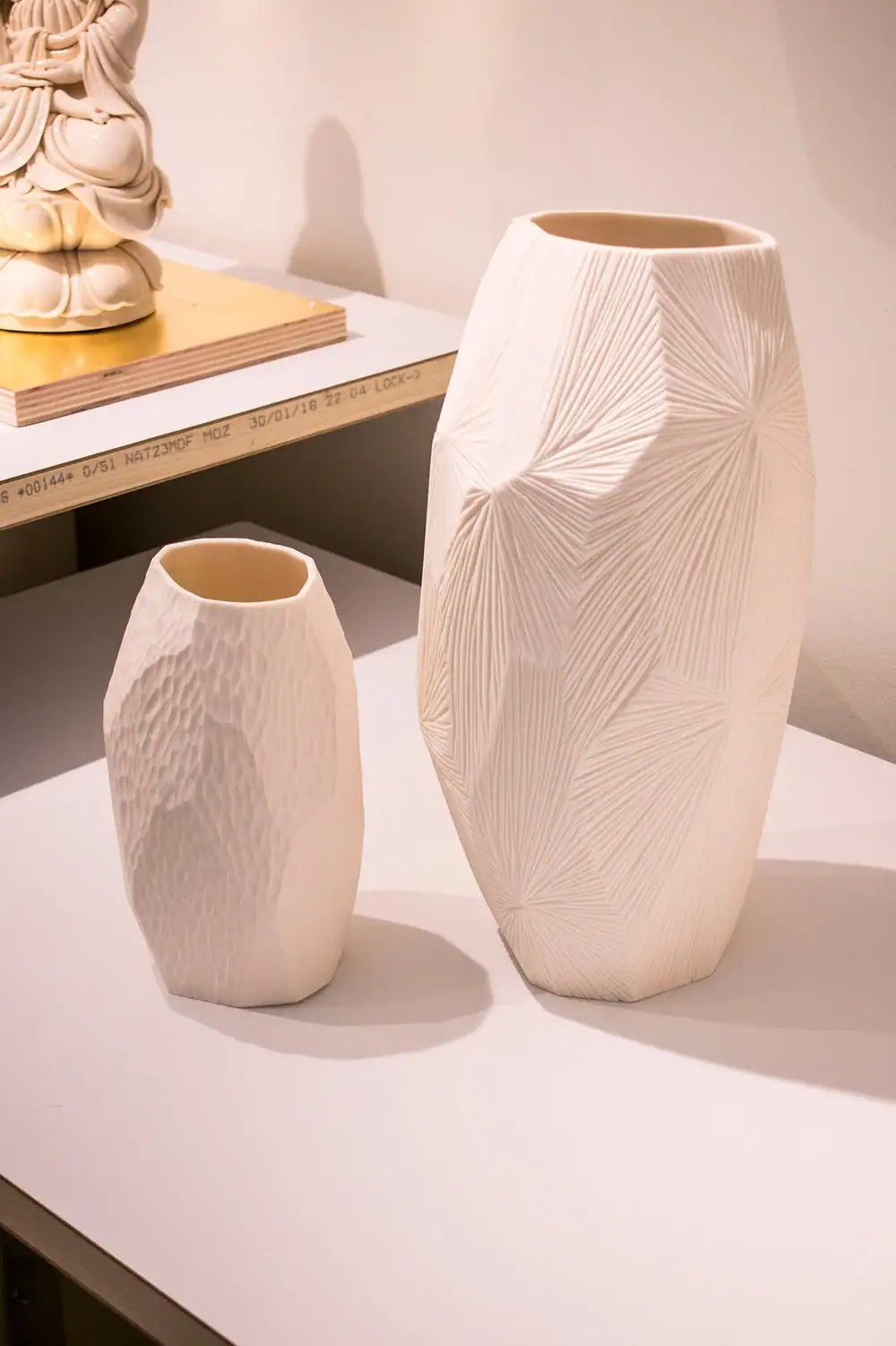
The gallery’s stand centred on two sculptors from that Dehua tradition, working in the unglazed white porcelain known internationally as Blanc de Chine. Su Xianzhong, born in Dehua in 1974, is the fourth generation of a family of potters: his great-grandfather, Su Xuejin, won a gold medal at the 1915 Panama-Pacific International Exposition in San Francisco for a porcelain plum-blossom tree, a prize that still anchors the family’s reputation in the town. Su trained formally at the Jingdezhen Ceramic Institute before returning to the family workshop, and his own practice now moves between the traditional repertoire of teacups, religious figures and decorative vases and freer sculptural work that treats the same porcelain clay as an experimental material rather than a fixed vocabulary. The V&A’s own published research on Blanc de Chine singles him out as one of the tradition’s leading contemporary voices, a rare instance of the museum that hosted Collect’s first five years writing about an artist the fair’s later years brought to Saatchi Gallery.

Alongside him, Lan Quansheng works in the same Dehua tradition, best known for devotional figures such as his 2017 Guanyin Holding Sutra, which sits within the same lineage of religious carving that has defined Dehua porcelain since the Ming dynasty. Together, Su and Lan gave Ting-Ying’s stand a genuine range: the sacred and the domestic, the historical form and the sculptural departure, all worked in the same white clay.
The blue that is mixed in, not painted on
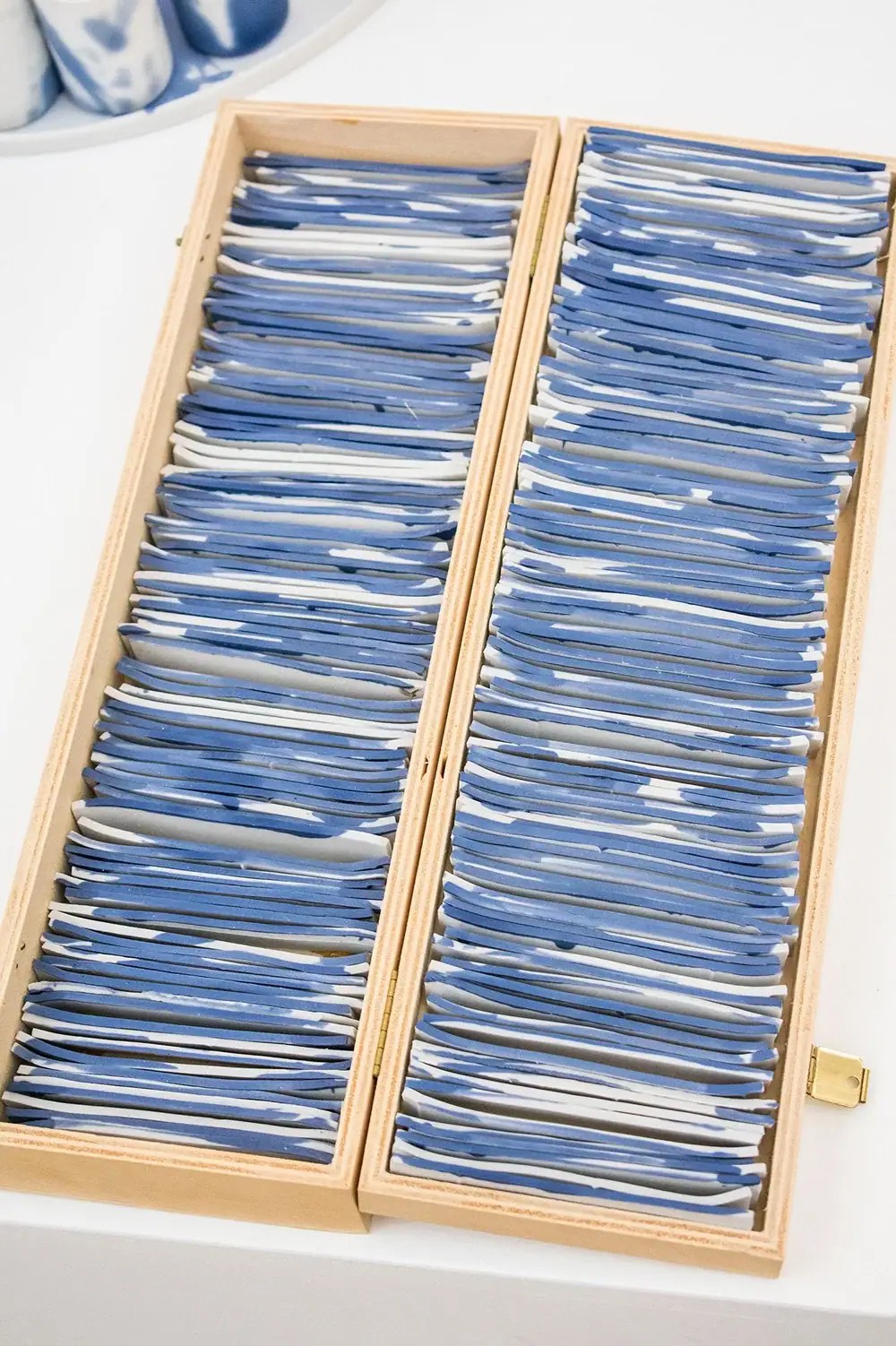
Belgium’s contribution came from Piet Stockmans, shown at Collect 2018 by the Brussels gallery Spazio Nobile in what its founder, Lise Coirier, noted at the time was the thirtieth anniversary year of Stockmans’ own studio. Born in Leopoldsburg in 1940, Stockmans trained in sculpture and ceramics in Hasselt and in Selb, Germany, before spending more than two decades, from 1966 to 1989, as an industrial designer and eventually chief designer at the Royal Mosa porcelain factory in Maastricht, where his tableware, including the Sonja coffee cup, sold more than forty million units. When he left Mosa to set up on his own, he took a single formal idea with him: a specific cobalt blue, mixed directly into the porcelain body before firing rather than painted or glazed onto the surface afterwards, so that the colour is structural rather than decorative. It is the technique behind the tableware, dishes and wall panels for which he has become known, in which bands of porcelain in white and that particular blue extend the object beyond the table and into the wall or the room around it. His daughter, Widukind Stockmans, took over the studio’s daily running in 2007, and by 2018 the pieces at Saatchi Gallery were made by a small team continuing a technique that had, by then, thirty years behind it.

Ten months in Oxfordshire before a workshop of your own
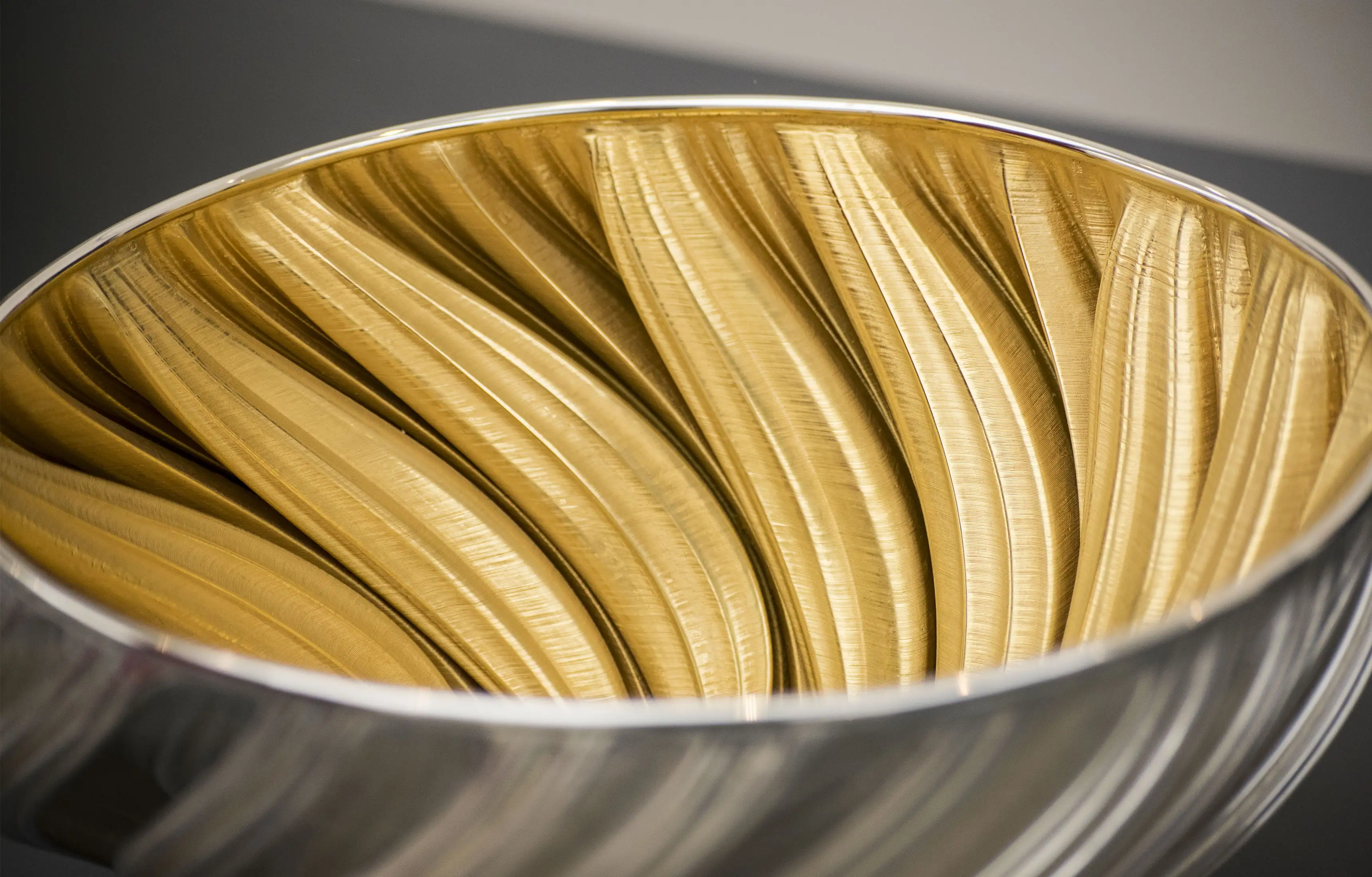
Bishopsland Educational Trust brought a different kind of craft story: not an individual maker’s retrospective, but a year’s worth of new ones. The trust was founded in 1993 by Penelope and Oliver Makower at Bishopsland, a workshop in Dunsden, near Henley-on-Thames in Oxfordshire, to close a specific gap in British craft education. A degree in three-dimensional design leaves a graduate able to design; it does not necessarily leave them able to run a workshop, price a commission or find clients. Bishopsland’s answer is a ten-month, full-time residential course that sits between the two, built around one-to-one tutorials and masterclasses with working silversmiths and jewellers such as Rod Kelly, Bryony Knox and Sheila McDonald. More than two hundred silversmiths and jewellers have gone through the programme since 1993, among them Ndidi Ekubia, who developed her raising and chasing technique at Bishopsland before an MA at the Royal College of Art and a career that has since taken her hammered silver vessels into national collections. At Collect 2018, the trust’s stand was a showcase for whichever cohort happened to be finishing that year’s course, an annual reminder that the fair has always made room for work by makers who are, in the strictest sense, still students.

A rainforest built from porcelain paper clay
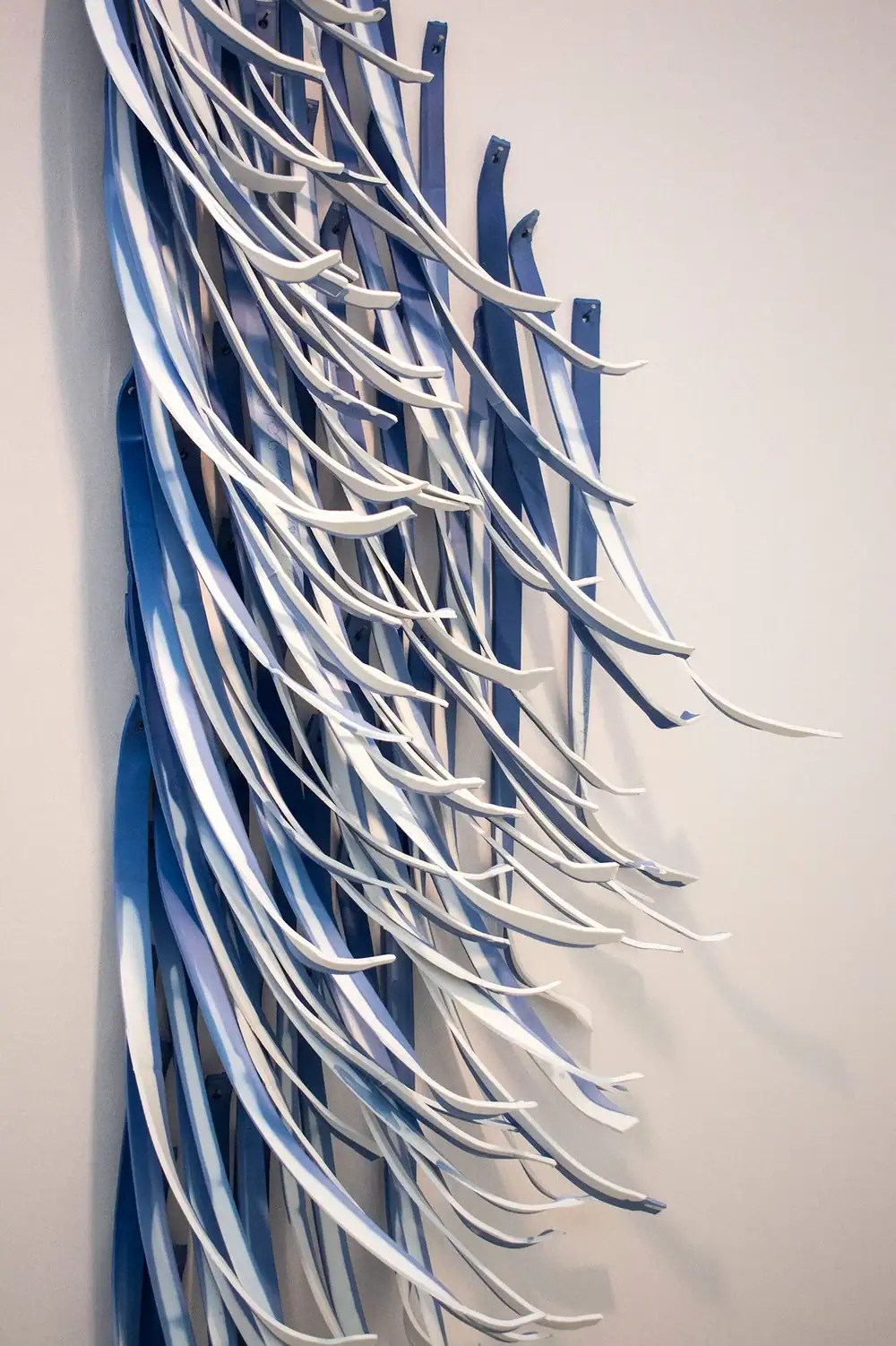
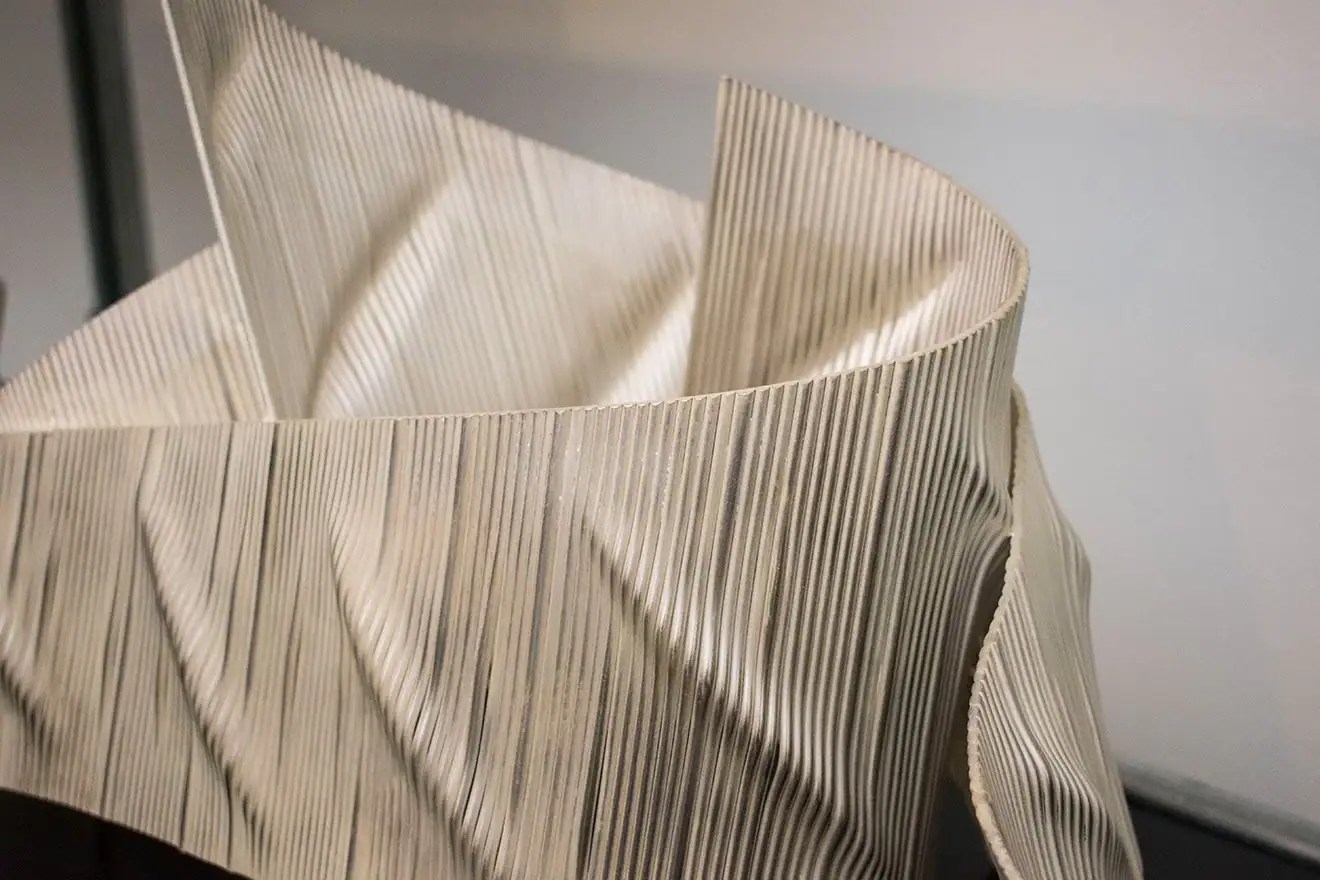
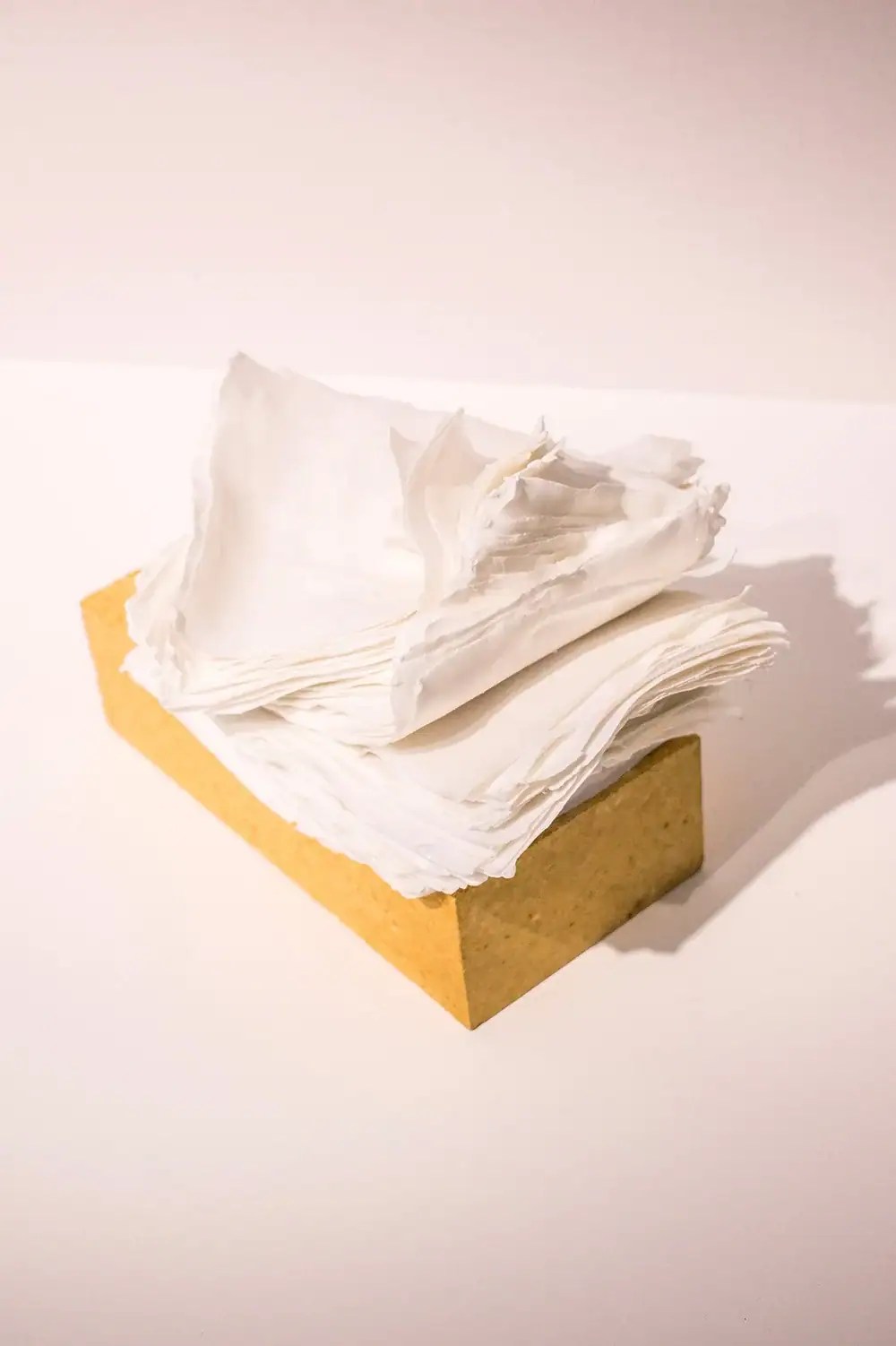
jaggedart, the Marylebone gallery founded in 2002 by Andrea Harari and Janeen Haythornthwaite, used its stand at Collect 2018 to show Rainforest, an installation by the Brazilian-born, London-based artist Valeria Nascimento. Nascimento grew up on a smallholding in Brazil, collecting seed pods, leaves and branches barefoot among mango and guava trees, and trained originally in architecture, a discipline whose habits of technical planning and three-dimensional visualisation still shape how she builds a piece. Working in porcelain paper clay, she hand-shapes hundreds of individual elements, rings, blossoms, petals and pod-like forms, mixing pigment directly into the clay body so that each piece fires to a slightly different gradient of cream, blue, grey or black. No two elements in a cluster are identical, which is the point: assembled together and suspended from ceiling to floor, they read less like discrete sculptures than like a single organism made of hundreds of small, related parts. At Saatchi Gallery, Rainforest filled its section of the stand as a canopy, the porcelain doing in an interior what leaf cover does outdoors.
The workshop that made glass collectible
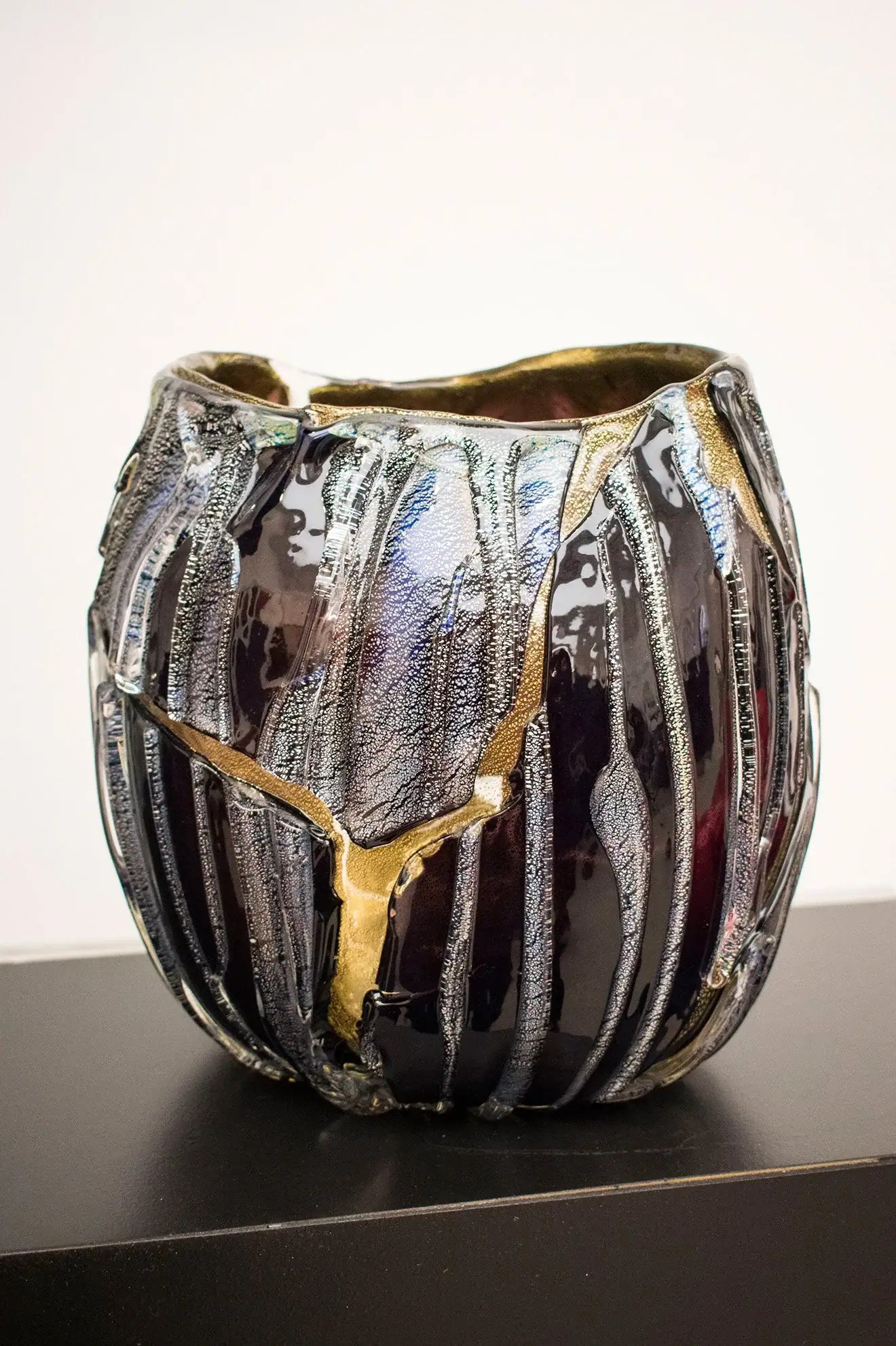
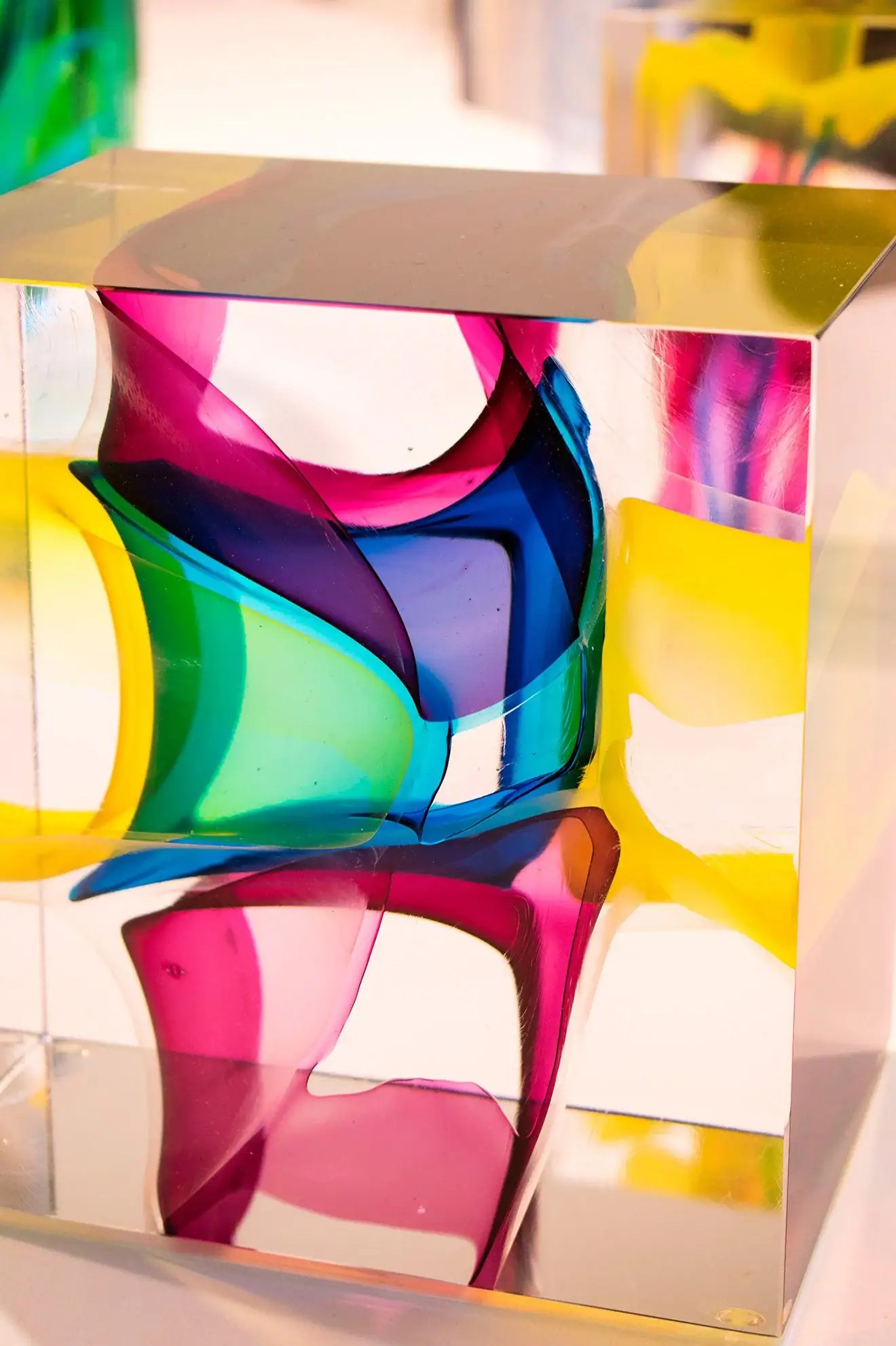
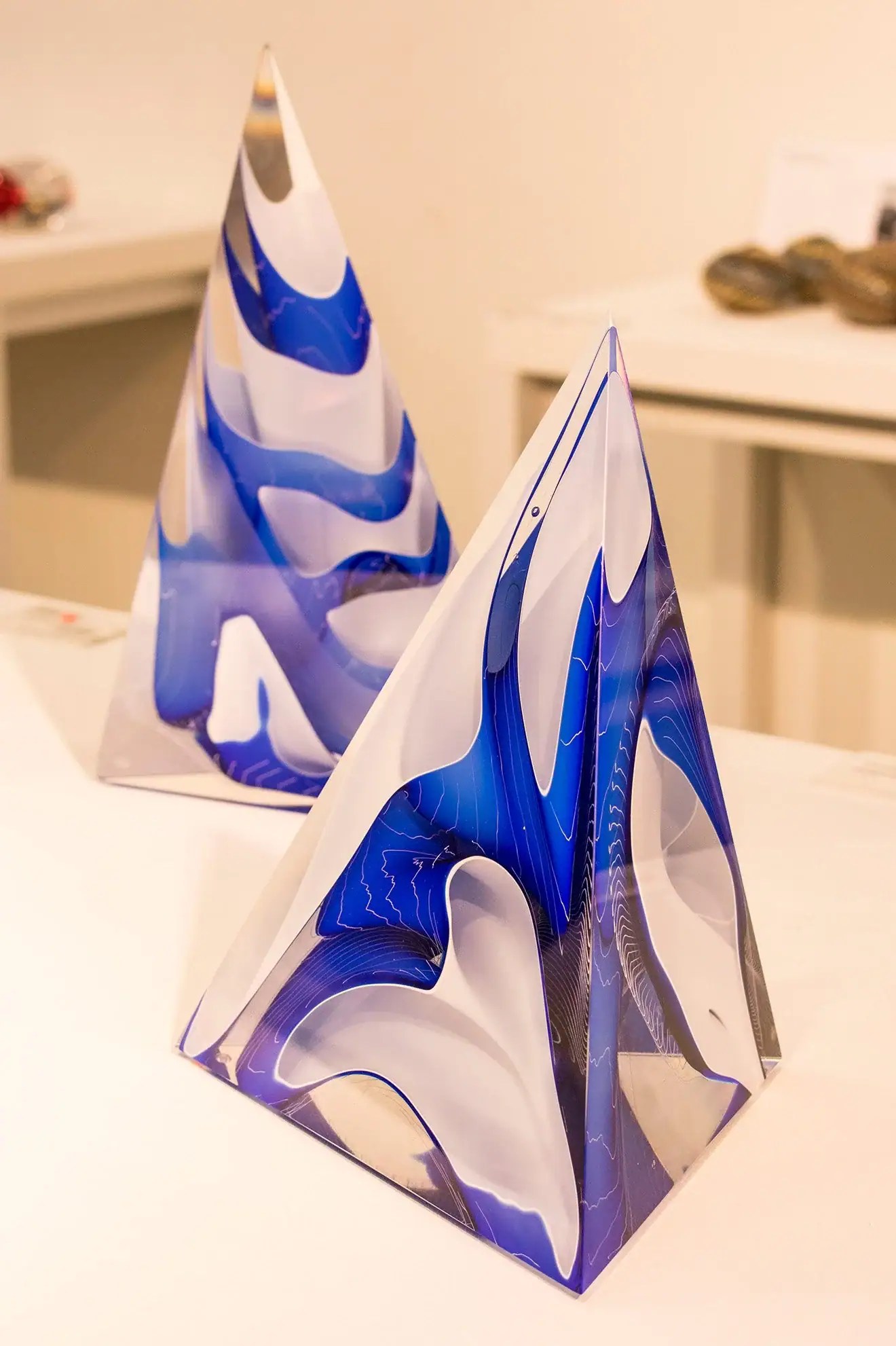
London Glassblowing returned to Collect in 2018 with the kind of vivid, hot-worked glassware that its founder, Peter Layton, has spent half a century arguing belongs in the same conversation as ceramics and sculpture. Layton, born in Prague in 1937 and brought to Britain as a child in 1939, trained first in ceramics at Bradford Art College and London’s Central School of Art and Design, and discovered glassblowing almost by accident, while teaching in Iowa in 1965, where he encountered the American studio glass movement led by figures such as Harvey Littleton’s students Marvin Lipofsky and Sam Herman. He brought that model back to Britain and, in 1976, opened a glassblowing workshop in a former towage works at Rotherhithe, on the Thames, working alongside other glassmakers including Charles Ramsay, Norman Stuart Clarke and Siddy Langley in a shared hot shop rather than a solitary studio. Two moves along the south bank later, the studio settled at 62 to 66 Bermondsey Street, where it remains. By 2018, work made there had entered the V&A and the Fitzwilliam Museum in Cambridge, and the studio’s stand at Saatchi Gallery carried the same argument its founder had been making since the 1970s: that blown glass, worked with the same seriousness as any other sculptural material, earns its place at a fair like Collect on equal terms with ceramics and sculpture.
Why porcelain kept winning
Look across the six stands and one material outnumbers every other at Collect 2018: porcelain, worked three entirely different ways by three exhibitors who had almost certainly never discussed each other’s practice. Ting-Ying’s Dehua sculptors worked from a fourteenth-century Chinese tradition, unglazed and largely white. Stockmans worked from a twentieth-century Belgian industrial background, his blue mixed into the clay body itself. Nascimento worked from an architectural training and a Brazilian childhood, building organic forms from paper clay pigmented in gradients. None of the three exhibitors were copying the others, and none needed to: porcelain simply keeps being the material that lets a maker say something structural about colour, form or repetition without the finish getting in the way. That three separate galleries, drawing on three separate continents’ worth of training, arrived at the same material in the same February at the same gallery is less a coincidence than a fair working exactly as intended: put enough serious makers in one room and the material that rewards the most serious thinking tends to turn up more than once.

What the fair gave a visitor in 2018
None of this required specialist knowledge to enjoy. A visitor walking from the Ting-Ying stand to Stockmans’ blue and white tableware, past Bishopsland’s newly qualified silversmiths, under Nascimento’s suspended porcelain canopy and on to London Glassblowing’s colour, covered four continents and three very different reasons to work with heat and clay without leaving one floor of the Duke of York’s HQ. That was always Collect’s particular value over a single-gallery show: the comparison a visitor draws for themselves, stand to stand, between a fourteenth-century Chinese tradition and a Belgian industrial one, or between a fifty-year-old British glass studio and a gallery not yet two years old.
Saatchi Gallery hosted Collect for roughly a decade before the fair moved to Somerset House in 2020, where it has continued every year since, most recently profiled on this site in Collect 2026: The Editor Who Now Chooses the Objects Instead of the Words. The 2018 edition belongs to the fair’s earlier chapter: smaller in footprint than the Somerset House years that followed, but no less serious about the argument that craft belongs in the same conversation as fine art and design.
Final thoughts
The easy version of this story treats Collect 2018 as a straightforward listing: six galleries, a King’s Road venue, four days in February. What the six stands actually demonstrate is closer to a working principle. A fair like this only holds together when the people who make its standards and the people who meet them keep changing places, when a Crafts Council trustee can step down from the board one year and open a gallery exhibiting at the fair the next, when a fifty-year-old glass studio and a year-old porcelain gallery share the same footprint of floor.
Porcelain’s dominance across three of the six stands was not planned by anyone, and that is exactly why it is worth noticing. Ting-Ying, Stockmans and Nascimento arrived at the same material from Fujian, Flanders and Brazil respectively, each for their own reasons, and each proved something different about what it can do. Bishopsland’s silversmiths and London Glassblowing’s hot shop supplied the counterweight: proof that the fair’s range ran wider than any single material, however persuasive.
Collect has since grown larger and moved twice, first from the V&A and then, two years after this edition, from Saatchi Gallery to Somerset House. What has not changed is the format that made the 2018 edition worth walking through slowly: put genuinely serious makers, at every stage of their career, in the same rooms, and let the visitor draw the connections a catalogue never quite manages to state outright.

What was Collect 2018?
Collect 2018 was the fourteenth edition of Collect, the international fair for modern craft and design organised annually by the Crafts Council. It ran from 22 to 25 February 2018 at Saatchi Gallery in London, with more than forty galleries exhibiting from four continents.
Where was Collect 2018 held?
Collect 2018 was held at Saatchi Gallery, Duke of York’s HQ, on the King’s Road in Chelsea, London. Saatchi Gallery hosted the fair for roughly a decade before it moved to Somerset House in 2020.
Who organises Collect?
Collect is organised by the Crafts Council, the UK charity that has championed contemporary craft since 1971 and that launched Collect in 2004 as a market for craft galleries.
What is Ting-Ying Gallery known for?
Ting-Ying Gallery, founded in 2017 by Peter Ting and Ying Jian, represents contemporary sculptors working in Blanc de Chine, the white porcelain tradition of Dehua in Fujian province, China, including Su Xianzhong and Lan Quansheng.
What is Piet Stockmans known for?
Piet Stockmans is a Belgian ceramicist known for porcelain worked in a signature cobalt blue mixed directly into the clay body before firing, rather than painted on afterwards. He previously spent over two decades as chief designer at the Royal Mosa porcelain factory in Maastricht.
What is Bishopsland Educational Trust?
Bishopsland Educational Trust is a charity founded in 1993 by Penelope and Oliver Makower, offering a ten-month postgraduate residential course in silversmithing and jewellery at Dunsden, near Henley-on-Thames in Oxfordshire.
What did jaggedart show at Collect 2018?
The Marylebone gallery jaggedart showed Rainforest, a porcelain paper clay installation by the Brazilian-born artist Valeria Nascimento, suspended from ceiling to floor as part of Collect 2018.
Where is Collect held now?
Collect has been held at Somerset House every year since 2020, having previously spent five years at the V&A and roughly a decade at Saatchi Gallery.

Leave a Reply