
ART & CULTURE · DUBAI
Reading time: 4 minDubai has a deep and varied gallery scene. What AVA Gallery adds to it is a space built to bring new people into collecting. AVA, and the Talaar and FYND platform it launched this spring in Alserkal Avenue, makes contemporary Iranian and regional art and design something you can approach, understand and begin to live with. Having visited, I think it is one of the more quietly significant openings in the district.
A gallery with a point of view
Alserkal Avenue is home to the highest concentration of contemporary art galleries in the region, so a new space there arrives with something to say. AVA Gallery, directed by Ava Ayoubi, does. Its focus is clear and, in Dubai, distinctive: contemporary art from Iran and the wider region, shown with genuine seriousness. The gallery has built its programme around cutting-edge Iranian artists, the kind of practice that sits in international museum collections, and that specificity is its strength. You come to AVA for a point of view, and the programme is built around it.
What makes the gallery worth writing about now, though, is not only what it shows but the new way it has chosen to show it.

Two platforms, one hall
In March, AVA became the home of a new venture with an unusually thoughtful structure. It launched Talaar and FYND, two platforms under one roof, founded by a small group of Iranians based in Dubai: Ava Ayoubi behind Talaar, and Ali Mohammadioun and Hana Jalalian behind FYND. The names tell you the intent. Talaar is a Persian word for a hall, a place to gather. FYND is a place to find. Together they are meant to be a room you enter to gather and to discover.
The clever part is that the two halves pull in deliberately different directions, and the space is designed around that balance. FYND leans toward accessibility: handcrafted objects by Iranian artisans and affordable design aimed at newer collectors, the pieces that let someone buy their first serious object without needing a specialist’s budget or confidence. Talaar leans toward reflection: the slower, curatorial questions of what an object means, how that meaning changes, and why certain forms endure. One lowers the barrier to entry; the other deepens the reason to stay. Many galleries work in a single register. AVA holds both at once, and that is what makes it feel genuinely new.


Why the model matters
It is easy to underestimate how much this structure matters, so it is worth spelling out. The hardest problem in the art and design world is not selling to established collectors; it is bringing new ones in. A great many people are curious about collecting but stall at the threshold, unsure what is good, what is fair, or where to begin. A space that pairs approachable, well-made, fairly priced design with the curatorial depth to explain why it matters is, in effect, a bridge across that threshold. You can arrive as a browser and leave as a beginning collector, with something you understand as well as own.
That ambition also sits neatly within a broader shift. The Gulf’s design economy has matured quickly, with collectible design fairs and platforms arriving in the region and a growing appetite for objects that carry craft and story. AVA’s Talaar and FYND model reads as a homegrown, founder-led answer to that moment: a small independent space, built by people with roots in the culture it represents, choosing to widen the door.


What to expect when you visit
Practically, the space is easy to find and easy to spend time in. AVA Gallery sits in Warehouse 64 on Alserkal Avenue, in the industrial heart of Al Quoz, the same converted-warehouse district I have written about as the ground-up centre of Dubai’s art scene. It keeps regular gallery hours, generally Monday to Saturday, roughly 10am to 6pm, though it is always worth checking before a special opening or during Art Week, when the whole Avenue comes alive.
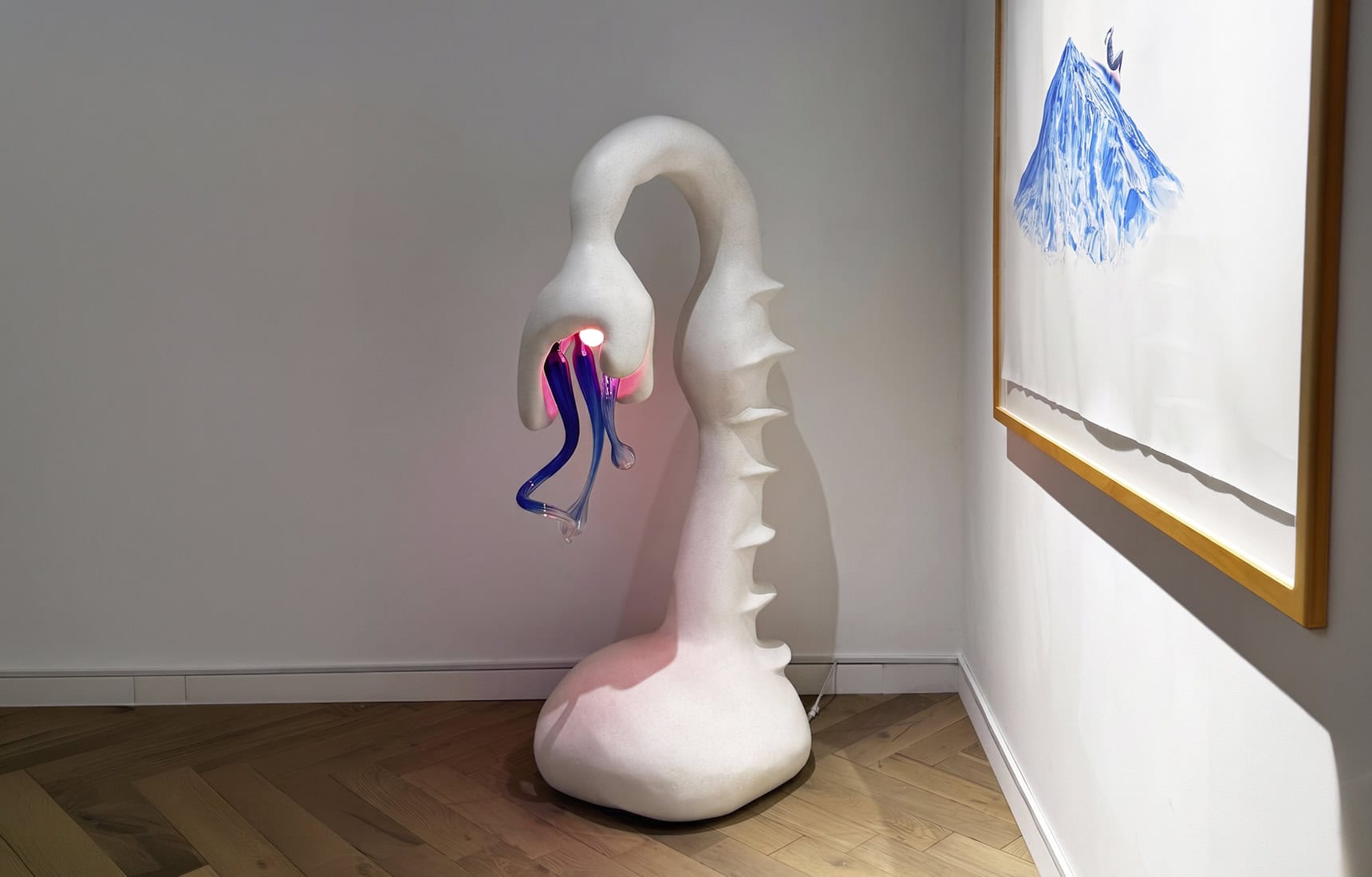
The debut of the Talaar and FYND platform, an exhibition called Inheritance of the Roots, set the tone: contemporary photography and design gathered around the theme of heritage and the Persian imagination, with work by artists including Mehrdad Afsari and Siamak Filizadeh alongside regional designers. If that show is the template, expect programming that treats Iranian and regional culture as a living, contemporary language rather than a heritage exhibit, and expect to be able to take a piece of it home at more than one price point. I have written about that opening exhibition separately, and the two are best read together.

The bigger picture
New galleries open all the time, and the best of them arrive with a clear idea about who they are for. AVA Gallery, through Talaar and FYND, has one: it wants to be the place where contemporary Iranian and regional art and design becomes something you can approach, understand and begin to collect. In a district that has always rewarded conviction, that is a good reason to pay attention, and a good reason to walk into Warehouse 64 and see for yourself.


Leave a Reply