

ART & CULTURE · LONDON
Reading time: 9 minSix makers, one platform, and a single curator who has spent every year since 2014 deciding who belongs on it. Future Heritage at Decorex 2019 put porcelain that mimics bark, jewellery grown by 3D printer, and furniture imagined from lunar mining ore in front of the same trade buyers who fill the rest of Olympia with finished, established brands, and made the case that British craft’s next generation was already working at a professional level.
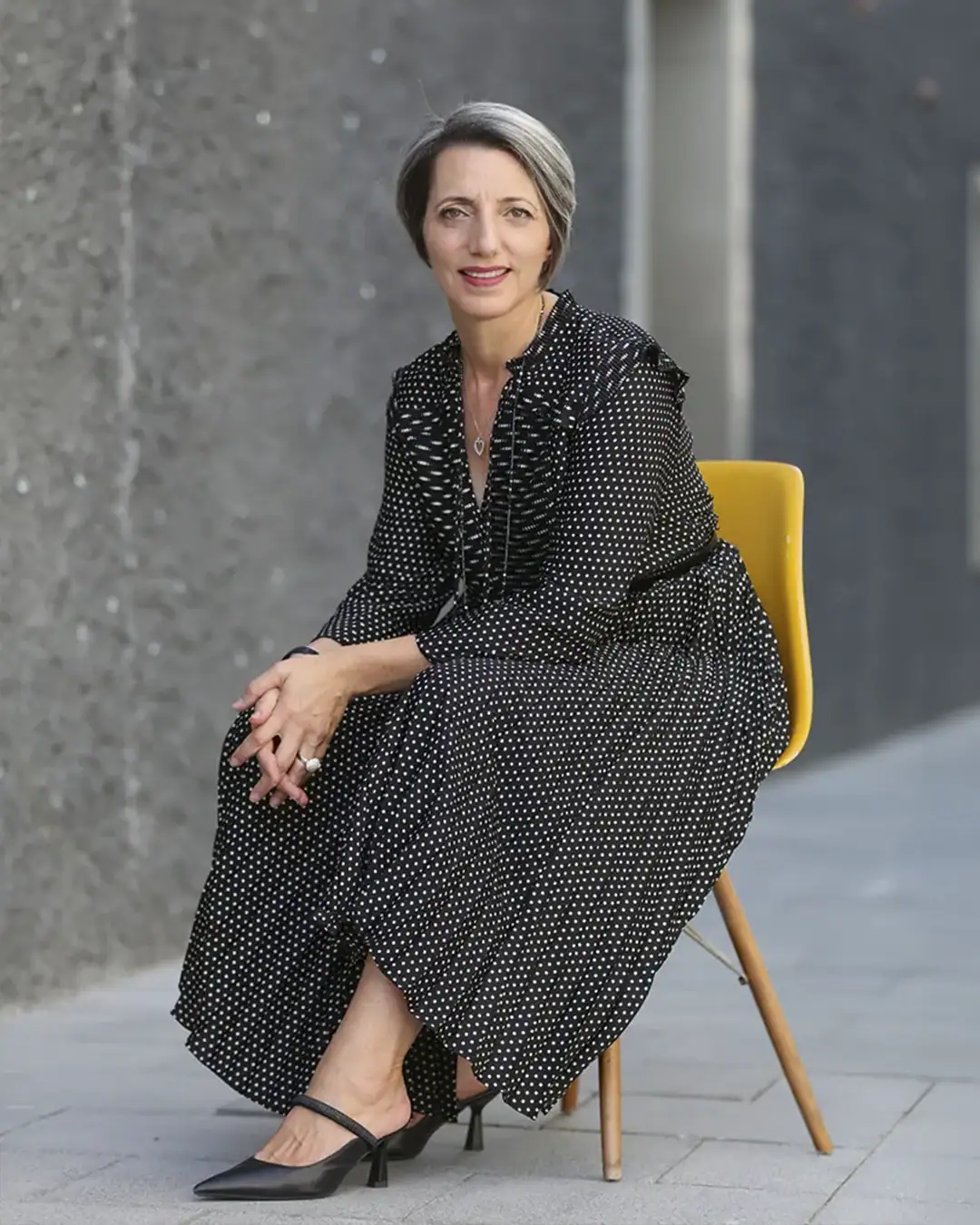
Future Heritage is the platform inside Decorex reserved for makers who have not yet built the kind of production brand the rest of the fair is built from, artists and designer-makers showing new, frequently one-off work rather than a catalogue. At Decorex 2019, held at Olympia, London, from 6 to 9 October, the platform was curated for the sixth consecutive year by Corinne Julius, the applied arts and design critic who has selected every Future Heritage line-up since the platform’s first edition in 2014.
Julius’s own account of the job is direct: she looks hard, asks a great many questions, and tracks what makers across ceramics, metal, textiles, wood and plastics are actually doing, rather than what they say they are doing. That approach shaped a 2019 selection that ranged from hand-built porcelain to jewellery designed with bespoke 3D printing software, six practices that had little in common technically but shared a willingness to treat material as something still worth investigating rather than a solved problem.
What follows looks at that selection in detail: Alice Walton’s textured ceramics, Hazel Thorn’s patinated metalwork, Lynne Maclachlan’s 3D printed jewellery, Studio Furthermore’s speculative lunar furniture, and Tsai and Yoshikawa’s light-driven sculpture, and at the curator whose own history with British design runs back further than any of them.

Corinne Julius and six years of choosing what comes next
Corinne Julius grew up around design in a fairly literal sense. Her parents ran Hille Furniture, the company that employed the designer Robin Day and brought Charles and Ray Eames’s furniture into Britain, meaning her earliest exposure to the discipline was not an exhibition or a magazine but a family business that had already done the work of introducing modern design to postwar Britain. She built a career from there as a design critic and curator with a specific, stated method: look hard, ask lots of questions, and follow individual makers’ technique and development over years rather than reacting to a single new piece.
That is precisely the model Future Heritage runs on. Julius first curated it for Decorex in 2014, and by 2019 she had done it every year since, a run of six consecutive editions that gave her platform something a one-off showcase cannot have: continuity, and a curator who could track a maker’s progress across several years of the same event rather than meeting each one cold. The six makers profiled below were her 2019 selection, chosen, in her own words, as some of the best in their field worldwide rather than as a regional sample of promising graduates.

Alice Walton’s ceramics that borrow other materials’ surfaces
Alice Walton, a 2018 graduate of the Royal College of Art working from a studio in Somerset, showed one-off ceramic pieces built from individually hand-formed components, assembled into sculptural forms with a texture far more complex than a thrown or slip-cast surface can produce. Her work takes its visual reference from street furniture and architecture, the kind of surfaces most people register only in passing on a daily commute, kerbs, bollards, cladding, weathered paintwork, and translates them into clay through repetitive, hand-built mark-making rather than a single glaze effect.

The result is porcelain and stoneware that reads, on first glance, as almost anything other than ceramic: passages that suggest peeling paint, cracked bark or moulded plastic sit within the same piece, achieved entirely through how the clay is built, textured and fired rather than through applied surface decoration. That is a harder trick than it sounds. Clay’s own working properties, plastic when wet, unforgiving once fired, are not naturally suited to mimicking the irregular, weathered qualities of a street kerb or a piece of bark, and getting there requires exactly the kind of patient, repetitive technique-building that a Royal College of Art ceramics training is designed to produce.

Hazel Thorn’s metal sheets and the chemistry of colour
Hazel Thorn, a silversmith who grew up in the Scottish Highlands before training in metalwork, builds sculptural vessels from base and precious metal sheets, using an assembly process of her own devising to construct patterned sheet metal before forming it into three-dimensional forms. Her method starts flat: sheets of different metals are joined using techniques she has developed and documented through years of workshop sampling, producing a composite sheet with a visible pattern determined by how the metals were laid and joined, before that sheet is shaped into a vessel.

The colour in Thorn’s work comes afterwards, and it is where her training as a silversmith turns into something closer to material chemistry. A single chemical patination process, applied uniformly across a finished piece, produces markedly different colours on each metal within it, because each metal reacts differently to the same treatment. One application, several results, entirely dependent on which metals sit where in the sheet: it is a technique that rewards exactly the kind of exacting, mixed-metal construction Thorn’s practice is built around, and it produces surfaces that read as considerably more varied and considered than a single uniform finish ever could.

Lynne Maclachlan’s jewellery, engineered first
Lynne Maclachlan trained first as an aerospace engineer before retraining in jewellery and metalwork, then completing a Royal College of Art master’s degree and a PhD examining how digital tools change what a maker-designer can actually produce. At Decorex 2019 she showed jewellery and accessories built through an experimental, engineering-led process, using bespoke software and 3D printing to generate complex forms that would be difficult or impossible to make by hand, then finishing each piece by hand through dyeing, polishing and construction.

That combination, industrial process at the start, craft process at the end, is the real substance of Maclachlan’s practice, and it extended at Decorex beyond jewellery into 3D printed screens and decorative art for the home, applying the same digitally generated, hand-finished logic to a larger scale of object. An aerospace engineering degree is an unusual route into jewellery design, but it explains precisely why her 3D printed forms read as genuinely complex rather than as a novelty technique applied to a simple shape: she is working from an engineer’s fluency with what additive manufacturing can structurally achieve, then finishing the result to a jeweller’s standard.

Studio Furthermore’s furniture from an imagined future
Studio Furthermore, the London material research practice run by Marina Dragomirova and Iain Howlett, showed vessels and furniture from their Moon Rock collection at Decorex 2019, work that imagines a near future in which material mined from the moon is used the way marble or granite is used today. Howlett has described the premise as picturing a point, plausibly five to ten years out, when sourcing material from the moon becomes genuinely possible, and asking what a designer would do with a metal-rich lunar mineral ore once it reached a workshop.

The pieces themselves are cast in aluminium using a lost foam casting technique the studio originally developed for ceramic work, each one carrying a distinct pattern of surface cavities that makes every piece unrepeatable, some edges left raw, others worked into curved or straight lines to form functional seating and table surfaces. It is worth being precise about what the collection actually is: a speculative design proposition about material abundance, built from a real and repeatable metalworking process, rather than a claim to have sourced anything extraterrestrial. That distinction is the point. Studio Furthermore is using a genuinely difficult casting technique to make a considered argument about how designers might respond if space mining moves from research proposal to raw material supply, treating the moon the way a marble merchant treats a quarry, as a source rather than a subject.

Tsai and Yoshikawa’s sculpture built from light and shadow
Hsiao-Chi Tsai and Kimiya Yoshikawa, working together as Tsai and Yoshikawa, showed work from their Shape of the Air series at Decorex 2019, wall-mounted aluminium sculptures paired with LED lighting engineered to cast and extend each piece’s shadow across the surrounding wall, so that the physical object and its light-cast extension read as a single, continuous form. The pair’s practice runs across a wide material range, glass, metal, neoprene, Jesmonite, fibreglass, Perspex, UV pigments and blacklight among them, but the through-line across all of it is a fascination with the relationship between solid form and the space, light or shadow around it.

The pairing itself is worth noting. Tsai trained first in traditional Chinese painting in Taiwan before earning a textile design degree at Chelsea College of Arts and a master’s in mixed-media textiles at the Royal College of Art; Yoshikawa studied fine art sculpture at Chelsea College of Arts before his own Royal College of Art master’s in sculpture. A textile designer and a sculptor, trained at the same two London institutions a few years apart, built a shared practice that treats light itself as a working material, extending a wall-mounted metal object into a room using nothing but the shadow it throws. That is a genuinely unusual set of disciplines to combine, and it is a large part of why Shape of the Air reads as sculpture that keeps moving even once the object itself is fixed to the wall.

Final thoughts
Future Heritage could be read simply as a showcase slot for graduates, a corner of the fair set aside for goodwill. What the 2019 selection actually demonstrated was a group of makers working at a level that had nothing to prove and everything to show: an aerospace engineer applying additive manufacturing to jewellery, a ceramicist reproducing the texture of a street kerb in fired porcelain, a metalworker using chemistry as precisely as she uses a hammer.
Corinne Julius’s own description of her method, look hard, ask lots of questions, track what makers are actually doing, is a fair account of what the platform gives its makers in return: sustained curatorial attention across years rather than a single showcase moment, from someone whose own design education began inside the company that brought Charles and Ray Eames to Britain. Six years into that arrangement by 2019, Future Heritage had become less an experiment and more a proven method for finding what British craft does next.
Future Heritage is one part of a much larger fair. For the stands, brands and the venue move that shaped Decorex’s 2019 edition as a whole, see Decorex 2019: Inside the Fair’s First Edition at Olympia.
What is Future Heritage at Decorex?
Future Heritage is Decorex’s dedicated platform for emerging British makers and craftspeople, showing new and often one-off work alongside the fair’s established, production-scale brands.
Who curated Future Heritage at Decorex 2019?
Corinne Julius, the applied arts and design critic, curated the platform, a role she has held every year since Future Heritage began in 2014.
Which makers showed at Future Heritage in 2019?
The 2019 selection included Alice Walton Ceramics, Hazel Thorn, Lynne Maclachlan, Studio Furthermore, and Tsai and Yoshikawa, among other emerging British makers and craftspeople.
What is Studio Furthermore’s Moon Rock collection?
Moon Rock is a speculative furniture and vessel collection cast in aluminium using a lost foam technique, imagining a future in which material sourced from lunar mining is used the way marble or granite is used today.
What materials does Tsai and Yoshikawa’s work use?
Their practice spans glass, metal, neoprene, Jesmonite, fibreglass, Perspex, UV pigments and blacklight, and their Shape of the Air series pairs aluminium sculpture with LED light cast across the surrounding wall.
Where and when did Future Heritage 2019 take place?
It ran as part of Decorex 2019, at Olympia, London, from 6 to 9 October 2019.
How does Future Heritage relate to the rest of Decorex?
Future Heritage sits inside the wider Decorex fair, alongside established furniture, lighting and interiors brands; a full account of Decorex 2019’s main stands and its move to Olympia is covered separately on this site.

Leave a Reply