
ARCHITECTURE · DUBAI
Reading time: 7 minThey are three architects from a small town in Catalonia, awarded the Pritzker Prize for the slowest, most place-rooted work imaginable, and they have almost never built tall or abroad. So the most surprising thing about Muraba Veil, a 380-metre tower on the Dubai Canal, is simply that RCR Arquitectes designed it at all.
Start with the mismatch, because it is the whole story.
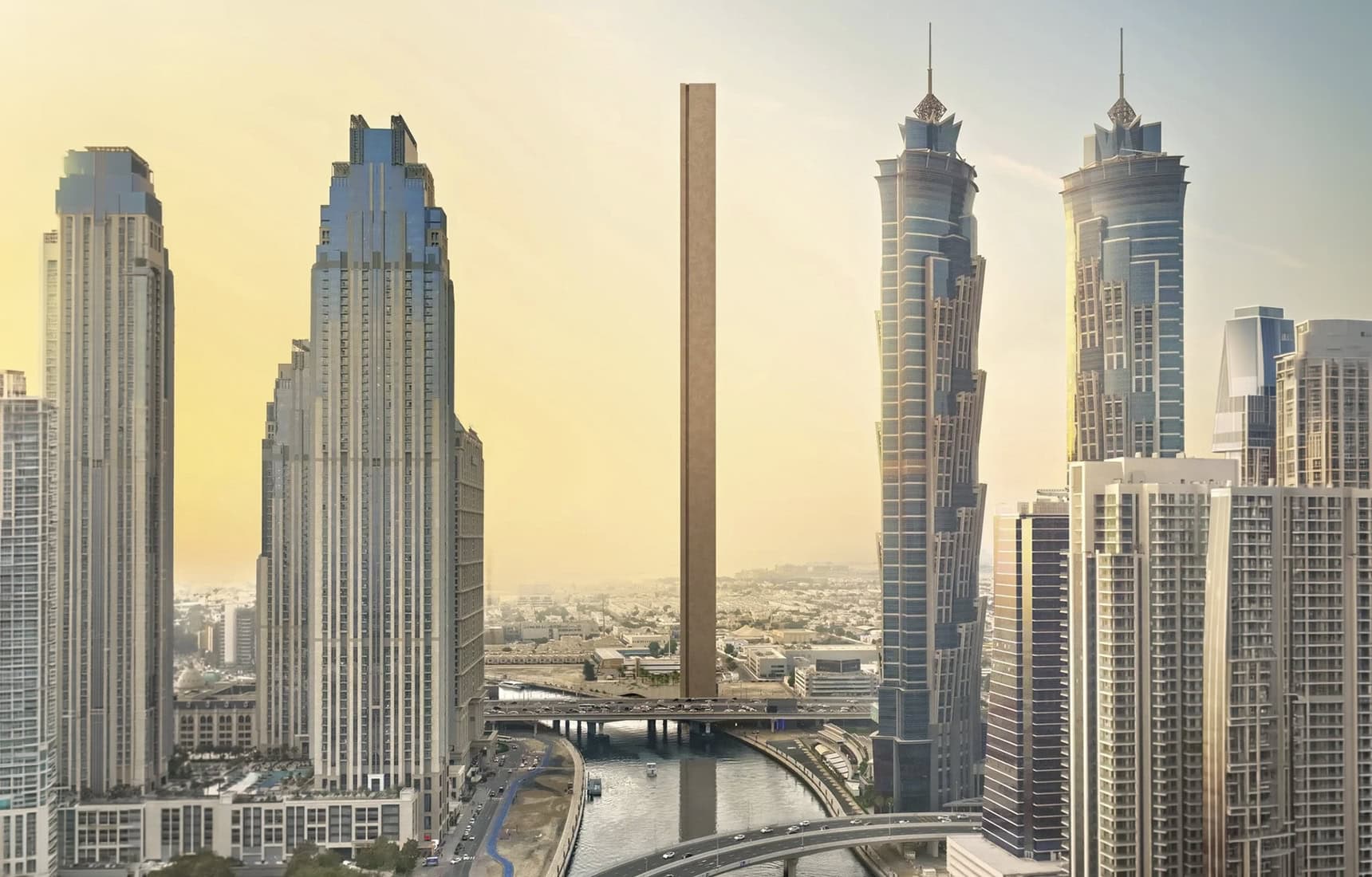
Muraba Veil is a 380-metre residential tower rising beside the Dubai Canal, off Sheikh Zayed Road, developed by Muraba Properties. At 22.5 metres wide, it is billed as the world’s second-thinnest skyscraper, a vertical thread drawn across a skyline built on scale and ambition.
And it is designed by RCR Arquitectes.
If that name means nothing to you, it is worth pausing on because it is the most interesting fact here. RCR are Rafael Aranda, Carme Pigem and Ramon Vilalta, three architects who work together from Olot, a small town in rural Catalonia, and who won the 2017 Pritzker Prize, architecture’s highest honour. Until then they were little known outside Catalonia. They were honoured for slow, quiet, deeply site-specific buildings, rooted in one landscape, made with a monastic devotion to a single material and the play of light across it.
These are, in short, close to the least likely architects on earth to build a supertall tower in the city of superlatives. Which is exactly why Muraba Veil is worth taking seriously, because they have not abandoned their principles to do it. They have smuggled them in.

What RCR actually believe
To read the tower you have to understand the practice, and the practice is unusual.
The Pritzker jury praised RCR for showing that architecture can have “roots firmly in place and arms outstretched to the rest of the world.” Their method, in their own words, is to read “the place as if it spoke to us with its own alphabet.” They are architects of rootedness; of understanding a specific site so completely that the building could belong nowhere else. Jury chair Glenn Murcutt singled out their conviction that “the unity of a material can lend such incredible strength and simplicity to a building,” and their signature material is steel, often weathered or recycled, used with a restraint that borders on the devotional.
Now hold that against Dubai, a city that has grown at speed and at height, drawing architects from all over the world. At first glance, RCR and Dubai look like an unlikely pairing.
Muraba Veil is the reconciliation, and it works because RCR have done what they always do: found the local alphabet and spoken it. Except here, the place is not a Catalan volcano field, but the Arabian Gulf, so the alphabet they have read is the vernacular of desert building, and the material that carries it is the one they know best.


The veil: a steel mashrabiya
The tower’s defining element, and its name, is the veil, a finely woven stainless steel mesh that wraps the entire building.
This is where RCR’s material obsession meets the region’s oldest environmental idea. The veil is, explicitly, a contemporary reinterpretation of the mashrabiya, the traditional Arabic latticed screen that for centuries has filtered light, cut heat gain and provided privacy without sealing a building off from the world. It does all three here: softening the brutal Gulf sun before it reaches the glass, giving residents privacy while preserving transparency, and, because it is metal mesh rather than solid, never quite blocking the view.
And because it is steel, it does the thing RCR cares about most: it changes with the light. As the day turns, the veil catches amber, blue and silver, so the tower’s surface is never the same twice. A building that reads as a fixed object at noon becomes a shifting, luminous thing at dusk. This is the RCR signature: the unity of a single material, animated by light, translated from a Catalan pavilion to a Dubai supertall.
It is also, and this matters, the same idea now surfacing across the most thoughtful new architecture in the Gulf: the mashrabiya reworked at tower scale, as at Binghatti’s woven balconies. The old climate intelligence keeps proving to be the intelligent answer.

The courtyard, stood on its end
The second borrowed idea is even older, and RCR handle it with real subtlety.
With 131 apartments, one per full floor, each home runs the entire 22.5-metre width of the tower, which gives it uninterrupted views both east and west and light from both sides, a genuine rarity in tower living. But RCR have gone further than the view. Each apartment is organised around a central core conceived as an interior courtyard; a shaded, planted inner sanctum that reinterprets the traditional Arab courtyard house for the vertical.
This is a lovely piece of thinking. The courtyard house is the defining domestic form of the hot, arid world; rooms arranged around a shaded, often planted, central void that provides privacy, cool air and calm. It is horizontal by nature. RCR have taken that logic and stood it on end, embedding a courtyard at the heart of every apartment, 131 times up the tower, so that each home has its own pocket of shade and stillness. External terraces flow into interiors; cross-ventilation and orientation cut the reliance on mechanical cooling.
It is the same instinct as the veil; take the region’s own answer to its own climate, and rebuild it at height. And it echoes exactly the argument running through the best new residential work in the Gulf, from courtyard villas to self-shading towers: that the vernacular was right, and modernity’s job is to translate it rather than replace it.


A base like eroded rock
Where the tower is all verticality and light, its base is the opposite: mass, shade and geology.
The podium is conceived to evoke the undulating dunes and eroded caverns of the desert: organic, carved forms housing the amenity programme; a spa, a private cinema, a gallery, a padel court, a restaurant. The entrance is cut into this sculptural base, so that arrival becomes a “symbolic descent into shade and stillness” before the ascent into “light and air.”
That sequence, down into cool dark rock, then up into the luminous veil, is a genuinely architectural idea, and a memorable one. It gives the building a narrative you move through with your body: the cave and the tower, the shade and the light, the two oldest experiences of shelter in a desert, stacked.

Why it matters
Dubai has tall buildings in abundance, and a real appetite for the extraordinary. What Muraba Veil brings to that skyline is restraint; a tower that makes its argument by subtraction rather than addition.
It is a rarer thing. It is radical not for height or exuberance, but because it is the thinnest and the quietest; a 22.5-metre blade wrapped in a single shimmering material, built around courtyards of shade, by three architects who have spent their careers proving that less, done with total conviction, is more.
The surprise is not that RCR agreed to build in Dubai. It is that they didn’t. They read the place, found its alphabet; the mashrabiya, the courtyard, the play of light on metal, and wrote, in a city of bold towers, something that whispers.

Frequently asked questions
What is Muraba Veil?
A 380-metre residential tower on the Dubai Canal, off Sheikh Zayed Road, developed by Muraba Properties and designed by RCR Arquitectes. At 22.5 metres wide it is billed as the world’s second-thinnest skyscraper, with 131 apartments, one per floor.
Who are RCR Arquitectes?
A Catalan practice: Rafael Aranda, Carme Pigem and Ramon Vilalta, based in Olot, Spain, and winners of the 2017 Pritzker Prize. They are known for slow, deeply site-specific architecture and a devotion to single materials, especially steel. Muraba Veil is a rare, tall international commission for them.
What is the veil?
A finely woven stainless-steel mesh that wraps the entire tower; a contemporary reinterpretation of the traditional mashrabiya screen. It filters light, reduces heat gain and gives privacy while staying transparent, and shifts colour through the day.
What is special about the apartments?
Each occupies a full floor, so it spans the tower’s width with views east and west, and is organised around a central interior courtyard, a vertical reinterpretation of the traditional Arab courtyard house.
What amenities are there?
A podium conceived like eroded desert rock houses a spa, private cinema, gallery, padel court and restaurant, with the entrance carved into the sculptural base.

Final thoughts
In a city of superlatives, the boldest move left may be to build the quiet one.
Three architects from a Catalan town, honoured for the slowest architecture in the world, have come to Dubai and made a 380-metre tower as thin as a thread, wrapped in a steel veil that changes with the sky, and hollowed by 131 courtyards of shade. They did not become Dubai architects to do it. They stayed exactly who they are, and found that the desert had an alphabet they already knew how to read.


Leave a Reply