
INTERIORS · DUBAI
Reading time: 8 minDubai has more than four hundred padel courts. At that density, a good court is the baseline, and everything else about the building starts to matter. Padel Edition in Al Quoz is built on that logic, and it is a commercially astute proposition.
There is a moment in the life of every fast-growing sport when the offer becomes rich enough that players start choosing on experience rather than on availability.
Padel in the UAE has reached that moment. Depending on which count you use, the country now has somewhere north of 950 courts across more than 320 venues, with Dubai alone holding more than 400. Industry sources put the Dubai figure higher still. The counts differ because directories update at different speeds and definitions vary, but the direction is not in dispute: this city has built one of the deepest padel scenes anywhere.
Which is the context that makes Padel Edition in Al Quoz interesting. The club’s proposition is that design improves performance. That is true, and it is also, more importantly, a business strategy.

What is actually there
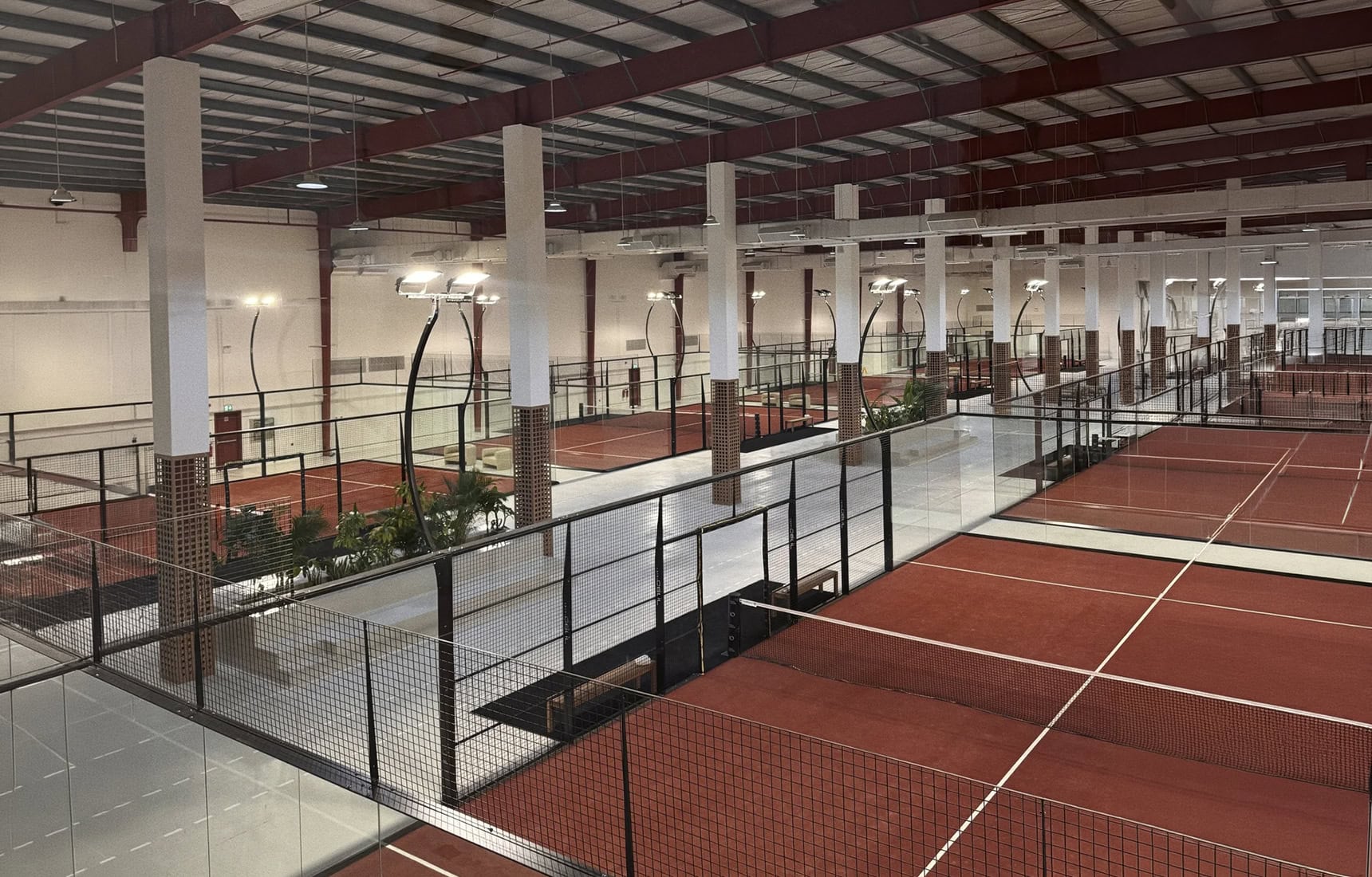
Padel Edition runs eight indoor courts in Al Quoz, built to professional standard, with high ceilings, temperature control and calibrated lighting. Indoor matters here for the obvious reason: for roughly five months of the year, a climate-controlled court is what keeps the game in Dubai comfortable and quick.
Around the courts sit four further offers, each branded as an Edition in its own right:
Recover Edition, a recovery suite with sauna, hybrid plunge and a hyperbaric chamber.
Face Edition, a facial workout facility combining exercises, massage technique and specialist tools, which is an unusual thing to find attached to a racquet sport and tells you exactly who the club is aiming at.
Studio Edition, a fitness studio running stretching, mobility and yoga.
Fuel Edition, the café, positioned as the social anchor rather than a vending machine in a corridor.
The architectural language throughout is restrained: clean lines, natural materials, warm and controlled lighting, and deliberate zoning between playing, recovering and socialising. The stated intent is that it reads closer to a boutique wellness retreat than a sports hall.

Why the design is not decoration
It is worth being precise about this, because “design-led sports venue” is the sort of phrase that can mean nothing at all.
Padel is played inside a glass box. That single fact makes several design decisions performance variables rather than aesthetic ones.
Lighting is the big one. Glass walls create reflection and glare, and a ball travelling at speed against a poorly lit background is genuinely harder to read. Calibrated, even, glare-free light is not a mood choice, it changes how well you play.
Ceiling height governs the lob, which is the tactical centre of the padel game. Low ceilings do not just feel cramped, they delete a whole category of shot.
Acoustics matter more in padel than in most racquet sports, because a glass-and-mesh enclosure is an acoustically hostile object and because the sport is social and conversational by nature. Eight courts under one roof with no acoustic treatment is a very unpleasant room.
Sightlines and circulation determine whether spectating is comfortable, and comfortable spectating is what converts a booking into a two-hour visit with food attached.
So the claim that thoughtfully designed spaces perform better is defensible on its own terms. What follows from it commercially is the more interesting part.

The market Padel Edition is entering
Padel’s global expansion has been extraordinary. Counts vary by source, from roughly 58,000 courts in one 2025 industry report to more than 77,000 by the end of that year in another, with somewhere between 19 and 35 million players. Nearly 5,000 new clubs opened worldwide in 2025 alone.
The UAE has been among the sharpest growth markets anywhere, with participation rising an estimated 40 to 50 per cent a year and a player base skewed heavily towards beginners and early intermediates. Padel has moved into the property market too: luxury developments now build tournament-grade courts as an amenity, and the UAE ranks among the top three global markets for residential listings that include one.

What the revenue data rewards
Here is the part every operator in Dubai should be reading carefully.
In 2024, Chile saw its padel market rebalance, with around 80 clubs closing and bookings down 27 per cent. Chile was an early adopter and built at speed, and its experience shows how quickly the emphasis shifts from court numbers to what each club offers.
The revenue data explains where the strongest clubs make their difference. Across the global market, the best-performing clubs generate up to five times more revenue per court than those at the other end of the range: roughly €3,500 per court per month against €736. Court reservations account for around 68 per cent of average club revenue, which means the differentiation happens in the other third, through academies, tournaments, coaching, food and everything that persuades a player to stay in the building.
Put those two facts together and the strategy behind Padel Edition becomes legible. In a market with four hundred courts in one city, the court itself is a commodity. What is not a commodity is a venue where a player will book a court, use the recovery suite, take a mobility class and eat lunch. Every one of those is additional revenue on the same footprint, and every one of them depends on the building being pleasant enough to linger in.
The recovery suite, the studio and the café are not luxuries bolted onto a sports club. They are the business model. The design is what makes them work.

Al Quoz, again
The location is not accidental either.
Al Quoz is Dubai’s industrial and creative district, and it offers exactly what an eight-court indoor venue needs: large-span warehouse volumes, high ceilings, generous floor plates, straightforward vehicle access and floor space at a fraction of what the same area costs on the waterfront. The high ceilings that make padel work are standard in a warehouse and expensive to build anywhere else.
It also puts the club among galleries, studios and creative businesses rather than in a residential tower podium, which suits the audience. Al Quoz has spent fifteen years absorbing uses that need volume and cannot pay for a view, from art galleries to independent cinema, and a design-led padel club is a logical addition to that list rather than an intrusion into it.

What happens to padel next
Two things worth knowing if you are watching the sport rather than just playing it.
Padel makes its Asian Games debut in 2026, which is a significant step in its campaign for eventual Olympic inclusion and will accelerate adoption across Asia. Federated participation is growing alongside the recreational boom.
The market is maturing rather than slowing. The industry consensus has shifted from counting courts to measuring what each one earns. Spain, the sport’s heartland, has moved from expansion to optimisation. The UK reports peak-hour occupancy around 85 per cent. These are the metrics of a maturing category, and maturity rewards operators who invested in the experience over those who simply installed courts.
For Dubai, that means the next few years will reward depth. The clubs that thrive will be the ones people choose deliberately rather than by proximity.

Playing there
Padel Edition sits in Al Quoz, with courts bookable individually or as packages through its online system. The recovery and café offerings have proved popular enough to run waitlists, so it is worth checking availability when planning a full session around them.
Practical advice for the venue type rather than the venue: book indoor courts well ahead between May and September, when every indoor court in the city is under pressure, and go off-peak if you want a court without a fortnight’s notice. Peak evening slots across Dubai are the hardest thing in the market to get.
If you are new to the sport, the UAE market is unusually beginner-friendly, since the majority of players are also beginners or early intermediates, and academy programmes are widespread.

Frequently asked questions
Where is Padel Edition?
In Al Quoz, Dubai, the city’s industrial and creative district, chosen for the warehouse-scale volumes an eight-court indoor venue requires.
How many courts does Padel Edition have?
Eight professional-standard indoor courts, with high ceilings, temperature control and calibrated lighting.
What else is there besides courts?
Recover Edition, a recovery suite with sauna, hybrid plunge and hyperbaric chamber; Face Edition, a facial workout facility; Studio Edition, for stretching, mobility and yoga; and Fuel Edition, the café.
Are the courts indoor?
Yes, all eight are indoor and climate-controlled, which is essential for play through the Dubai summer.
How do you book?
Courts can be booked individually or as packages through the club’s online booking system.
How big is padel in the UAE?
Very. The country has upwards of 950 courts across more than 320 venues, with over 400 in Dubai alone, and participation has been growing at an estimated 40 to 50 per cent a year.
Is padel becoming an Olympic sport?
Not yet, but it makes its Asian Games debut in 2026, which is widely regarded as a step towards eventual Olympic inclusion.

Final thoughts
The easy version of this story is that someone built a handsome padel club. That version is true, and there is a good deal more to it.
The more interesting reading is that Padel Edition is a bet on what comes after a boom. Dubai has built courts at remarkable speed, the market has reached the density at which a court is simply a court, and the evidence from elsewhere is that experience becomes the deciding factor faster than anyone expects. In that environment, the venues that hold their players are the ones that are worth being inside for reasons beyond the eighty minutes on court.
That reframes every design decision here. The lighting is a performance question. The acoustics are a retention question. The café and the recovery suite are a revenue question. The restraint is what stops the whole thing feeling like a gym.
The measure of it will be commercial rather than aesthetic. The thinking is right, and it is rigorous in a way that sets a standard for the category.


Leave a Reply