
INTERIORS · LONDON
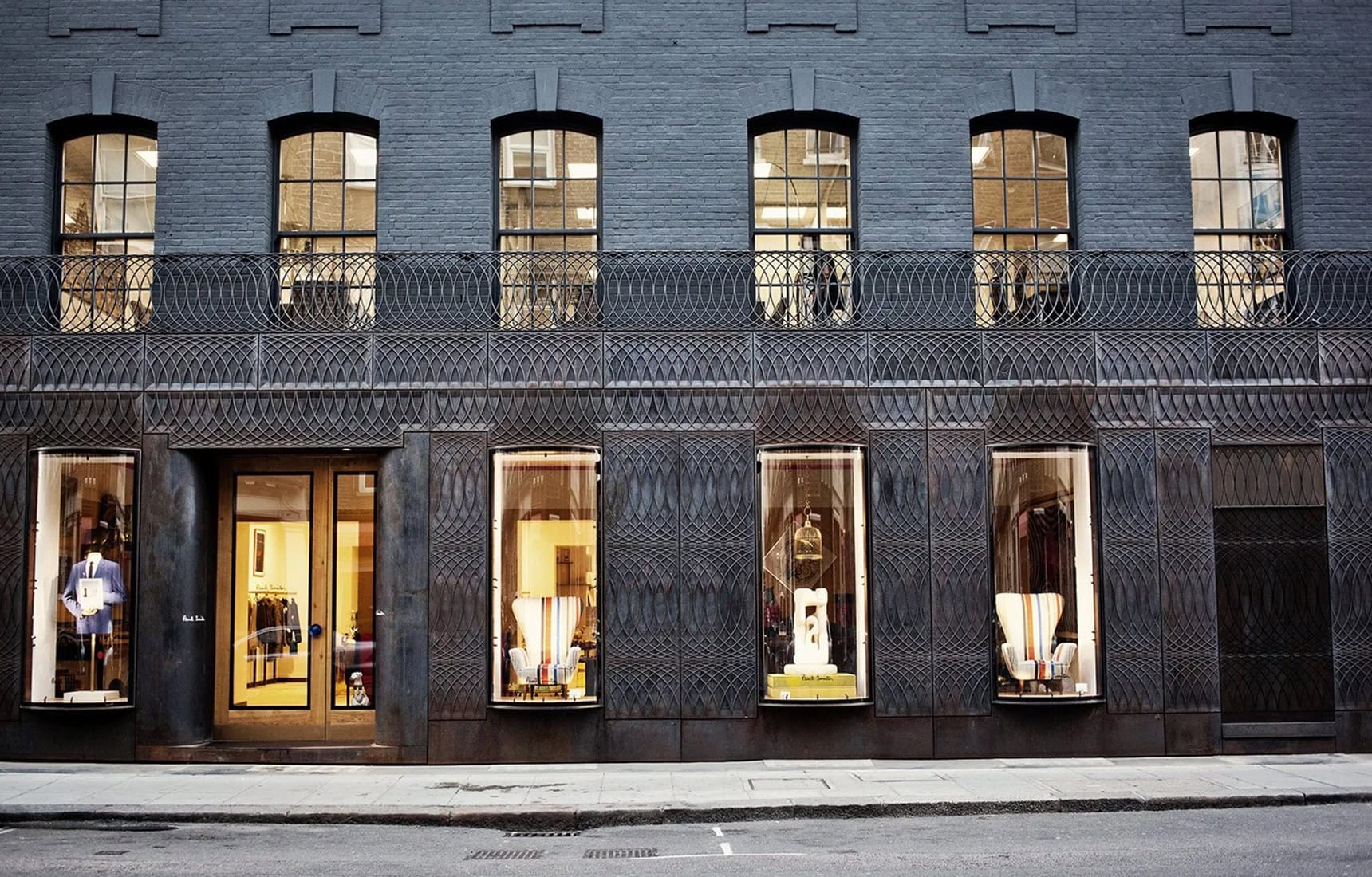
Reading time: 5 minI have never been able to walk past the Paul Smith store on Albemarle Street without stopping. Its cast-iron facade, all interlocking circles, sits among the polite Georgian fronts of Mayfair like nothing else on the street. And the more I have learned about it, the more it seems to me the purest expression of Paul Smith himself: classic on the surface, and full of surprises the moment you look closer.
Paul Smith has always been a designer of the hidden detail. It might be a flash of patterned fabric on the inside of a sleeve, or a lining you only notice when you turn back a cuff, but there is always something concealed, waiting to reward a second look. “Classic with a twist” is the phrase people use, and it is exactly right. So it makes perfect sense that his London flagship, No. 9 Albemarle Street in Mayfair, works the same way.
I have been fascinated by this store since it opened in 2013. You cannot pass it without being pulled in by that striking cast-iron facade and its luxurious window displays, and I have wanted to write about it for a long time. Because what looks, at a glance, like a beautifully bold shopfront turns out, on closer acquaintance, to be one of the most thoughtful pieces of retail design in London, a building that behaves like a Paul Smith garment. Let me take you behind those iron walls.


A doodle turned into a building
The facade is the part everyone knows, and its story is lovely.
It was designed by the London studio 6a architects, working closely with Paul Smith, and it does something clever with his own hand. 6a took Smith’s hand drawings and abstracted them into a repetitive relief pattern of interlocking circles, then cast the whole thing in iron, a material woven into the fabric of London itself. The result wraps an existing eighteenth-century shopfront in a bold, modern, sculptural skin, its colour and character set sharply against the genteel Georgian buildings around it. And in a final, characteristic touch, three of Smith’s actual drawings are cast directly into sections of the facade, so his own hand is literally pressed into the metal. Curved glass cabinets push out through the ironwork to display pieces of furniture, so even the shopfront is a vitrine.
Think about what that means. The most public, permanent face of the store is made from the designer’s private doodles, turned into architecture. It is the whole Paul Smith idea, the personal detail elevated into something grand, executed at the scale of a building. No wonder it stops you on the pavement.


The 26,000 dominoes
Inside, the store keeps playing the same game, and my favourite example is almost invisible.
The walls of the accessories room are covered in 26,000 dominoes. From across the room you would never know; you simply register a subtly textured, patterned surface. It is only as you approach that the material resolves, and you realise you are looking at tens of thousands of tiny tiles, each one placed. It is the perfect physical translation of the Paul Smith philosophy: a detail that hides in plain sight and rewards you for coming closer, exactly like that flash of colour inside a sleeve. It is a store confident enough to keep its cleverness quiet, and to trust you to find it.
That instinct, restraint on the surface and delight underneath, runs through the whole shop, and it is what makes No. 9 such a rewarding piece of luxury retail design.


Three floors, three worlds
The store extends the original Paul Smith shop next door into the neighbouring building, spreading across three floors of men’s and women’s clothing, furniture and one-off exclusive pieces, and 6a gave each area its own distinct character.
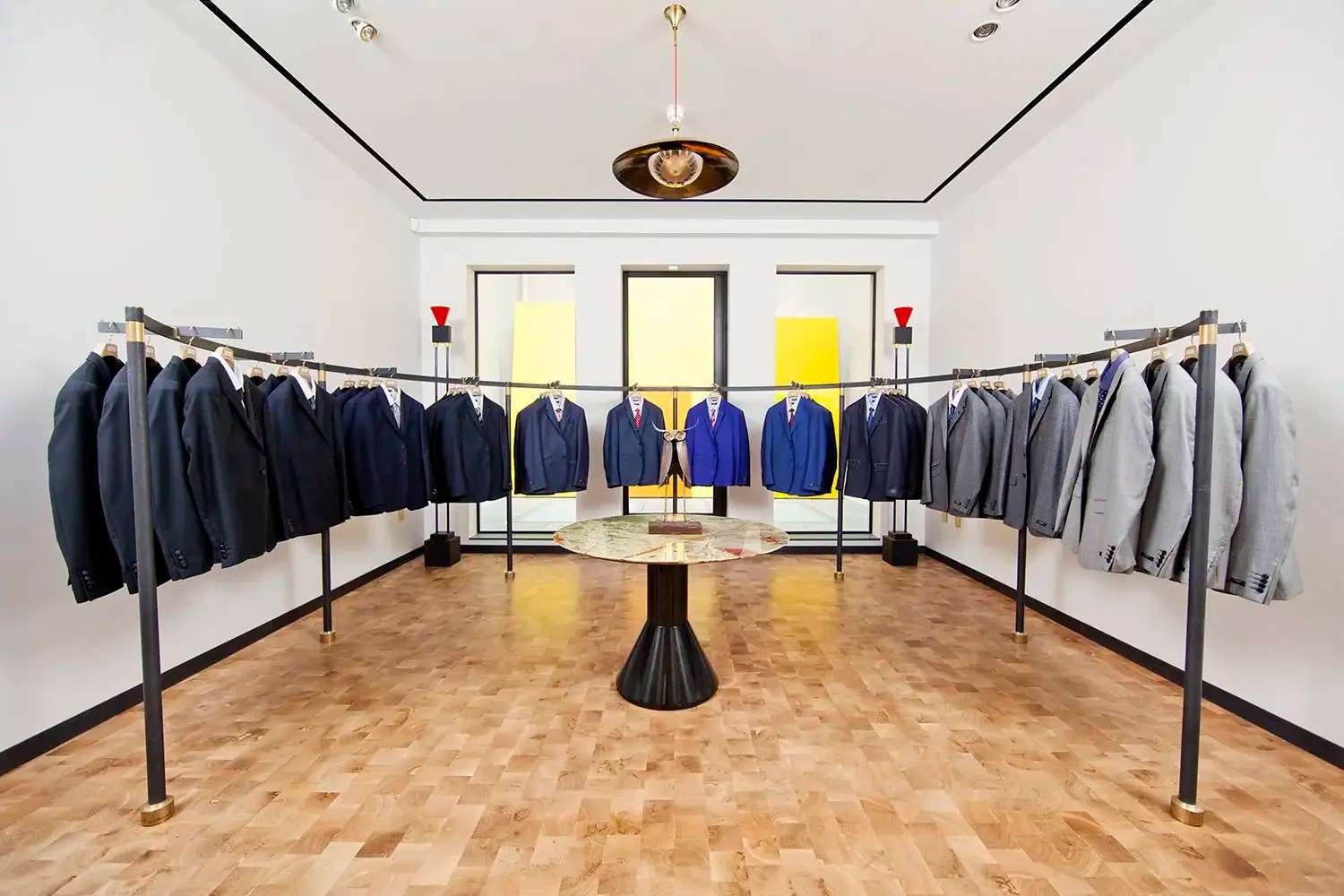
The women’s space is the soft, luxurious one, with light wooden flooring, brass fixtures and glass furniture, and it holds the domino walls, a nod, fittingly, to Mayfair’s rich history as a home of art and craft. The furniture area is handled almost like an open gallery: clear walls injected with panels of vibrant Paul Smith colour play against the natural calm of limestone floors, and because it shows unique, often restored pieces given the Paul Smith touch, it is designed to keep changing as its contents do. And the men’s space is the most modernist and architectural, leaning into a confident masculinity with bold upholstery and a painting on the stairway. Here the materials turn to organic wood and bronze, the floors mix end-grain wooden blocks with limestone, and a black curved steel rail stands proud of the wall as a feature in its own right, the men’s tailoring suspended beneath it. Sculptural lighting gives the otherwise clean room its artistic finish.
Three rooms, three moods, one sensibility. You move between them and never lose the sense that a single, particular eye has been at work.

Frequently asked questions
What is No. 9 Albemarle Street?
Paul Smith’s flagship store in Mayfair, London, on the corner of Albemarle and Stafford Street. It opened in 2013, extending the original Paul Smith shop across three floors of men’s and women’s clothing, furniture and exclusive pieces.
Who designed the cast-iron facade?
The London studio 6a architects, in collaboration with Paul Smith. They abstracted Smith’s hand drawings into an interlocking-circle relief and cast it in iron, with three of his actual drawings cast directly into the facade.
What is the domino feature?
The walls of the accessories room are covered in 26,000 dominoes, a texture that is unnoticeable from a distance and only reveals itself as you approach.
How is the interior arranged?
Across three distinct areas: a soft, luxurious women’s space with light wood and brass; a gallery-like furniture room with colour-panel walls and limestone floors; and a modernist men’s space in wood and bronze with a signature curved steel rail.
Why does it stand out on the street?
Its bold, dark, sculptural cast-iron front contrasts deliberately with the polite Georgian architecture of the rest of Mayfair.


Final thoughts
Twelve years after it opened, No. 9 Albemarle Street still enchants me, and writing about it has helped me understand why. It is not simply a handsome shop. It is a piece of architecture that thinks exactly the way Paul Smith thinks, and 6a architects deserve enormous credit for translating a fashion designer’s sensibility into iron, glass and stone without ever losing his voice.
Everything about it rewards attention. The bold facade turns out to be built from the designer’s own drawings. The plain accessories wall turns out to be tens of thousands of dominoes. The three floors turn out to be three separate worlds held together by one eye. It is classic with a twist, made permanent, and it remains, for me, the clearest proof that Paul Smith’s genius was never really about clothes. It was about the joy of the detail you almost miss, and here it is, cast into a building on a Mayfair street, waiting for anyone who slows down enough to notice.



Leave a Reply