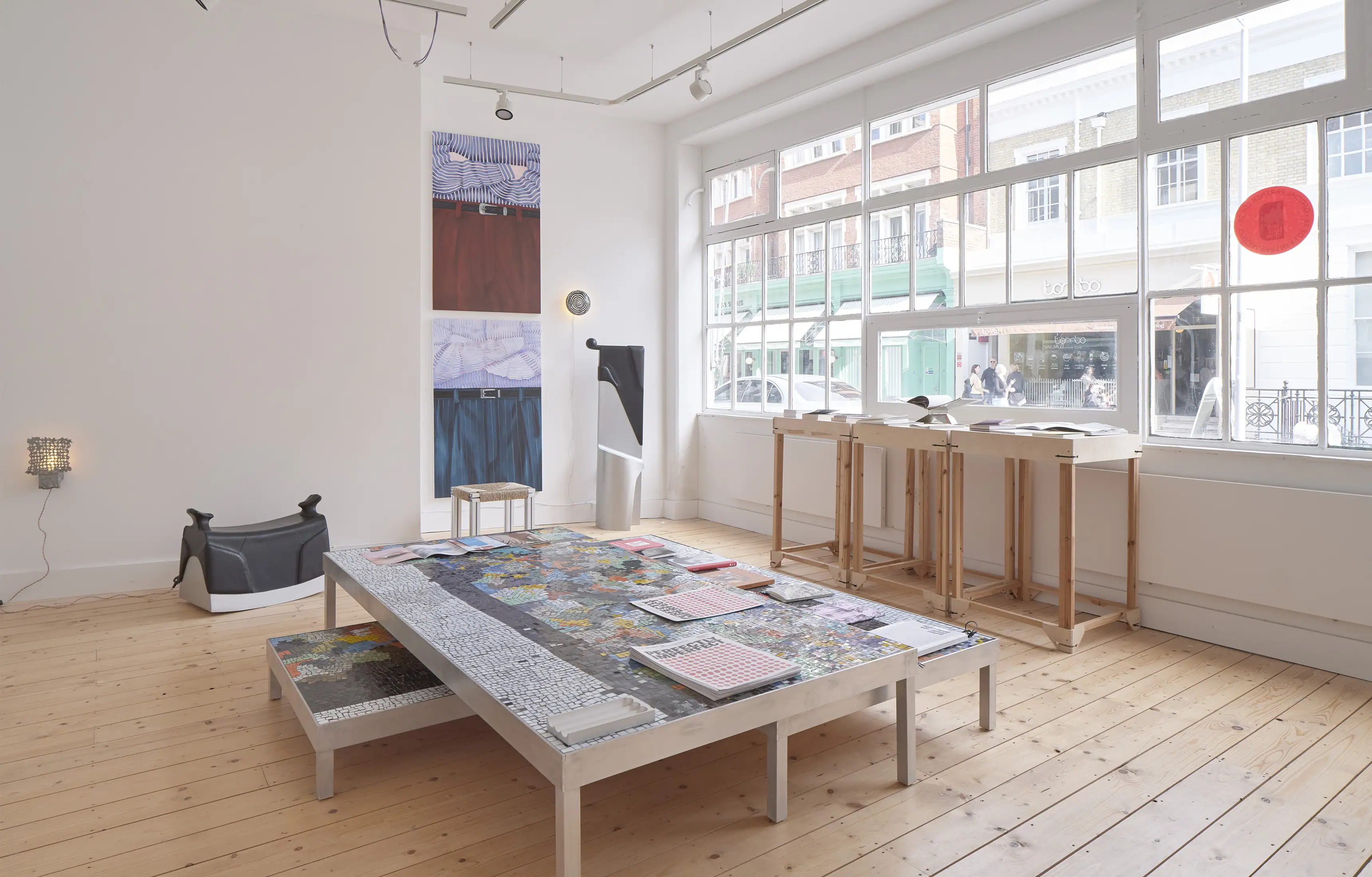
Gaston Bachelard’s The Poetics of Space treats the house as a shelter for daydreams, and reads its cellars, drawers, nests and corners as the places where that happens. Paired with a reading room built to keep you for an hour and a collection of furniture shaped by the body, it becomes a guide to what makes a room hold you.
The Poetics of Space is Gaston Bachelard‘s book about the house as it is lived in and remembered: cellars and attics, drawers and wardrobes, nests, shells and corners. It was published in Paris in 1958, and the edition linked here is the Penguin Classics paperback of 2014, 288 pages, in Maria Jolas‘s English translation, with a foreword by the novelist Mark Z. Danielewski and an introduction by the philosopher Richard Kearney.
Danielewski is a telling choice. His novel House of Leaves, about a house that is larger inside than out, drew on Bachelard, and the pairing says something about the book’s reach. Philosophers, poets, novelists and architects all use it, and the architectural reading has been strong since the Norwegian theorist Christian Norberg-Schulz made it one of his key texts.
It is on the Read the Room shelf because it gives a name to what a room does to the person inside it. Bachelard is less interested in how a space looks than in how it holds you, and that is a question every interior on this shelf card is built to answer.
A postal clerk who became a philosopher of daydreams
Bachelard was born in 1884 in Bar-sur-Aube, in Champagne, and his route to philosophy was a long one. He worked for the postal service as a young man while studying science, taught physics and chemistry in his home town after the First World War, and took his doctorate in his forties. He taught at Dijon and, from 1940, held the chair of history and philosophy of science at the Sorbonne.
His first books were about how science thinks. Then, with The Psychoanalysis of Fire in 1938, he began a second career in parallel, a series of books on the imagination of the elements: water, air and earth. The Poetics of Space, written in his seventies, is the most famous of them. It turns the same patient attention from the elements to the rooms we live in, and it works almost entirely through poetry, reading images from Baudelaire, Rilke and many others as evidence of how people actually experience a space. He died in Paris in 1962.
How The Poetics of Space is built
The book moves from the largest scale to the smallest and back out again, in ten chapters. It begins with the house itself, from cellar to garret, and the significance of the hut. It continues through house and universe; drawers, chests and wardrobes; nests; shells; corners; miniature; intimate immensity; the dialectics of outside and inside; and, to close, the phenomenology of roundness. Bachelard calls his method topoanalysis, the study of the sites of our intimate lives.
Its central claim is that the house matters less as shelter from weather than as shelter for the imagination. In Jolas’s translation, “the house shelters day-dreaming, the house protects the dreamer.” Everything else follows from that. The cellar and the attic give a house its vertical imagination, the dark root and the rational roof. A drawer, a chest or a wardrobe has an inside that is also an intimacy, a place where order and memory are kept. A corner is the smallest room there is, the place a body goes to be still.
Made concrete, the book offers a short list of things to look for in any room. Where can a person withdraw? What is kept, and how is it closed? Which surfaces have been shaped by the people who use them? And does the room invite you to stay long enough to start daydreaming? Those are design questions, and both rooms on this shelf card were built around them.
A reading room is a house for daydreams
At 36 Thurloe Place during Brompton Design District, the curator Alex Tieghi-Walker built The Reading Room, a temporary reading room for queer design, creativity and cultural history in London, with a library curated by Tenderbooks. It was designed to keep visitors for an hour: light to read by, chairs comfortable for a long sit, tables at writing height, shelving within arm’s reach of the seats.
Bachelard explains why those decisions carry the argument. If a house is above all a shelter for reverie, then a reading room is that house opened to strangers, and its success is measured in time spent rather than in images taken. The shelves do the work of his chests and wardrobes, holding a history that is meant to be opened and handled. The chairs and corners do the work of his corner chapter, giving each reader a small territory inside a shared one. Tieghi-Walker’s claim that queer design is a living history, kept in objects and in the people who gather around them, is very close to Bachelard’s claim about the house: that its meaning is stored in its furniture and released by being used.
Nest, shell and the body that shapes them
On Hay Hill in Mayfair, Haya Jarrar‘s first London show for Romani Home gathered eight pieces about support, made across her pregnancy and the first months of motherhood. A glass table stands on carved and cast human legs. The oak legs of the Man Chair were modelled on her husband’s. Candlesticks of stacked spheres resolve, at the top, into a breast, and silk embroideries hang unstretched and pool on the floor.
Bachelard’s chapter on nests contains the passage that unlocks this room. He draws on the historian Jules Michelet, who described a bird building its nest with no tool but its own body, pressing and turning its breast against the materials until the walls take the curve of the bird. The house is shaped from the inside, by the body it will hold. Jarrar’s collection works on precisely that principle. A chair leg carved from the body that did the holding is a nest in Michelet’s sense: a support whose form is the record of a body pressing outward.
The shell chapter adds a second reading. Bachelard is fascinated by the creature that secretes its house around itself, and by the way a shell is both hard protection and intimate interior. Jarrar’s materials divide the same way: bronze, oak and travertine take the load, and silk, which takes none, softens the rooms around them. The setting is a domestic first-floor room with herringbone parquet and cornices, which is the right scale for a book whose whole subject is the house.
Read it, then walk it
Both festival rooms have now closed, but the book’s best companion in London is open until 28 November 2026. At Dora House, 108 Old Brompton Road, the Royal Society of Sculptors is showing There’s No Place Like It, an exhibition about home curated by Henry Holland, in a house named after the woman who made it one. While it runs, the building’s derelict basement has been turned into a flat and a new home for the Society’s archive.
Read the first chapter, on cellar and garret, before you go. Then walk the house from top to bottom and notice where its memory is being kept. In Milan, Aesop Corso Magenta makes a second pilgrimage: thirty-five square metres lined with glass-fronted cabinets, designed by Dimorestudio for a company that gives Bachelard to its designers to read. It is, quite literally, a chapter on drawers, chests and wardrobes built as a shop.
Who it is for
Interior designers will use it to explain why a room feels right before they can say what makes it so. Architects will find a vocabulary for thresholds, corners and enclosure that sits comfortably beside drawings. And anyone who has ever kept a box of letters in the back of a wardrobe will recognise themselves on almost every page. It is a slow book, best read a chapter at a time, in a chair you like.
Frequently asked questions
What is The Poetics of Space about?
It is a philosophical study of intimate spaces, published in French in 1958. Gaston Bachelard examines how people experience the house and its parts, from cellars and attics to drawers, nests, shells and corners, largely through images taken from poetry.
Who translated the Penguin Classics edition?
Maria Jolas, whose English translation was first published in 1964. The 2014 Penguin Classics edition adds a foreword by Mark Z. Danielewski and an introduction by Richard Kearney.
How many chapters does The Poetics of Space have?
Ten, after Bachelard’s own introduction: the house from cellar to garret, house and universe, drawers, chests and wardrobes, nests, shells, corners, miniature, intimate immensity, the dialectics of outside and inside, and the phenomenology of roundness.
Who was Gaston Bachelard?
A French philosopher, born in Bar-sur-Aube in 1884, who worked for the postal service and taught physics and chemistry before holding the chair of history and philosophy of science at the Sorbonne from 1940. He died in 1962.
Why do architects and designers read The Poetics of Space?
Because it describes space as it is lived rather than as it is drawn. It has been a key text in architectural theory since Christian Norberg-Schulz, and Aesop includes it on the reading list it gives to the designers of its stores.
Which martynwhite.co stories does the book connect to?
Alex Tieghi-Walker’s The Reading Room at Brompton Design District and Haya Jarrar’s Romani Home show on Hay Hill, with the Royal Society of Sculptors’ exhibition about home and Aesop Corso Magenta as further reading.
Final thoughts
The Poetics of Space can look like a book about houses. It is really a book about being held, by a room, a corner, a chair or a box with a lid, and about the daydreams that arrive once you are.
A reading room built to keep you for an hour and a chair carved from the body that held its maker are both answers to Bachelard’s question.
Read a chapter, then go and find a room that makes you want to stay.
Book Credits
Read next
Oliver Burns Studio has designed a new show apartment at The Bryanston, Hyde Park, drawing its bespoke pieces from a lake that was itself designed in 1730.
London