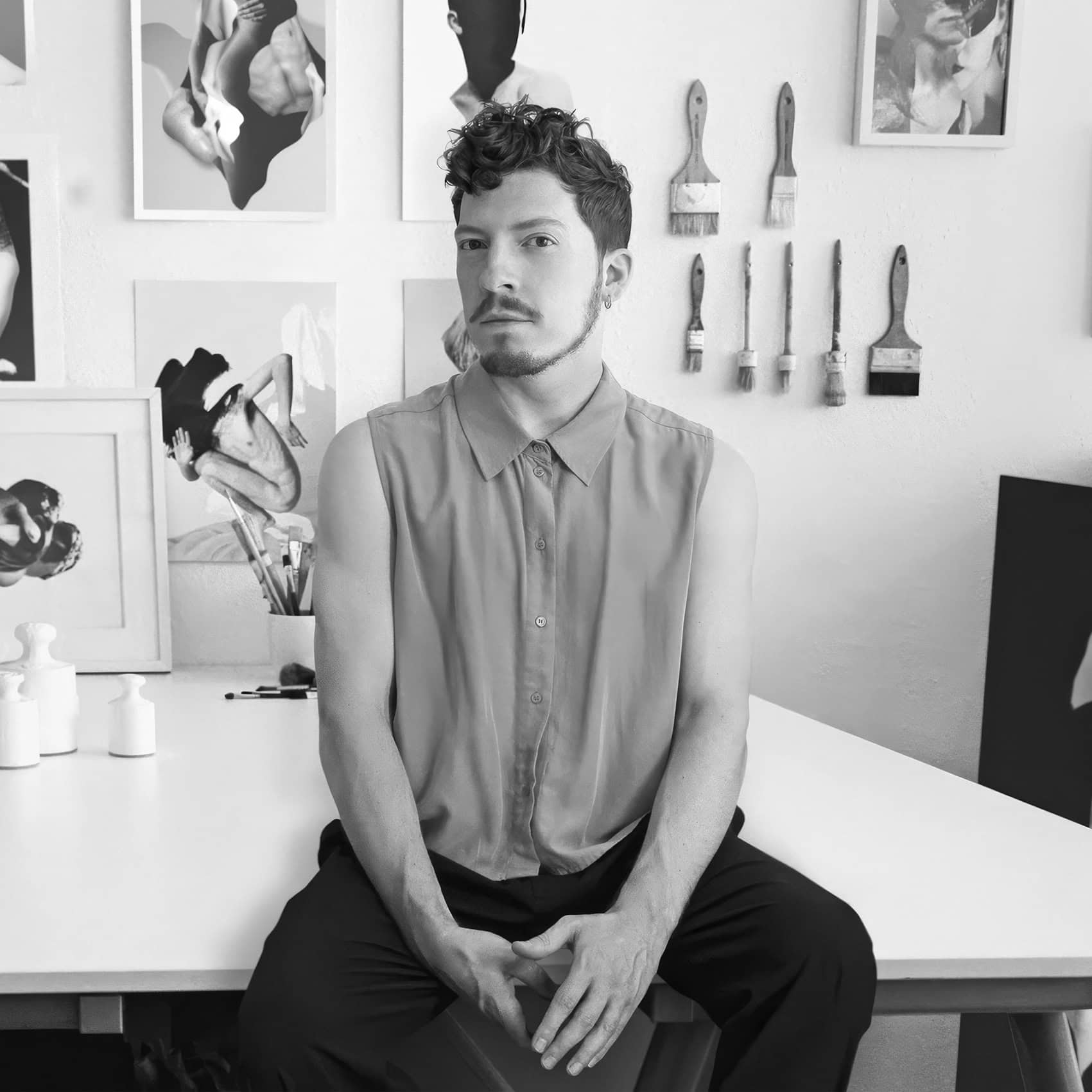
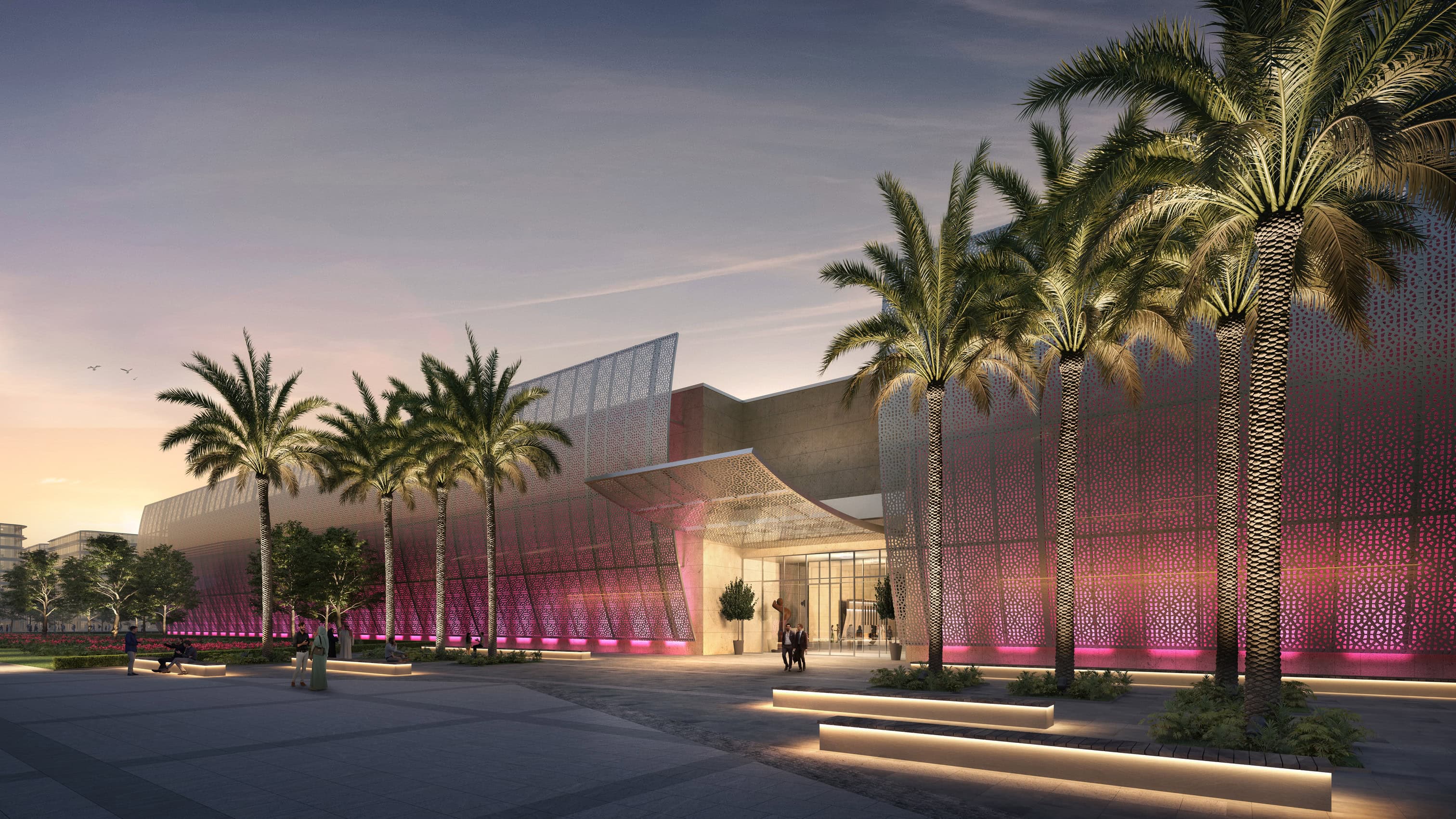
Fashioning Design is the first monograph on Lee Broom, and it is organised by theme rather than by date, which is exactly how he works. Read alongside his rooms, one argument comes through clearly: everything he has made since 2007 was designed to be performed.
Lee Broom has spent close to two decades turning lighting and furniture launches into productions. Fashioning Design, published by Rizzoli in November 2022, is the first book to gather that work in one place: 224 pages, written by the design journalist Becky Sunshine, with a foreword by the milliner Stephen Jones and contributions from Vivienne Westwood, Christian Louboutin and Kelly Wearstler.
More than a hundred products and exhibitions sit inside it, and the obvious way to read a book like this is as a catalogue. It works far better as something else. Broom trained as a performer before he trained as a designer, and the book is arranged around that fact, so it reads less like a list of objects than a record of how a stage instinct became a body of product.
That is why it is the first book on the Read the Room shelf. It explains the rooms.
Why this book is personal
I have followed Lee Broom’s work for more than ten years. It started the way it does for most people, with a product seen in print and then a presentation in Milan, and over the years it has grown into conversations with Lee in person, on more occasions than I would have expected when I first started paying attention.
That is not a credential, and this is not a book about me. It is simply the reason this one matters. Following a designer from a distance, you see the work arrive one collection at a time, a season apart, each one a surprise. Fashioning Design puts the whole arc in one place: the stage school, the fashion years, the first neon, the crystal bulb, the carousel, the van. To see a story you have watched unfold gathered between two covers, told with this much care, is a rare and genuinely lovely thing.
A Lee Broom book arranged the way he works
Sunshine built the text from long conversations with Broom, held over video in multi-hour sessions, and the structure follows his thinking rather than his calendar. The book moves through four chapters, each one a force in the work: his relationship with architecture, in Art Form; his fascination with history, in History Repeats Itself; his approach to making and materials, in Material Boy; and, to close, his background in theatre and fashion, in Drama of Design.
Arranging it this way does something useful. A crystal bulb, a hanging chair and a carousel built in a railway vault end up side by side because they share an idea, and the reader starts to see the recurring moves: a familiar object taken back to an earlier, more crafted version of itself; a material pushed until it behaves like light; a launch staged so that the room explains the product. Those three moves account for most of what Broom has made.
The choice of contributors makes the same point. A milliner writes the foreword, two fashion names and an interior designer add their voices, and between them they place Broom where he has always worked: on the line between dressing a person and dressing a room.
The stage school behind the showroom
Broom’s training began at seven, at the Betty Fox Stage School in Birmingham, where he learned to act, sing and dance. Television, advertising and West End work followed, along with time at the Royal Shakespeare Company. At seventeen he won a Young Designer of the Year competition judged by Vivienne Westwood, who invited him to her studio and then offered him an internship. He studied fashion at Central Saint Martins, ran an interior design practice for four years, and launched his own label in 2007 with Neo Neon, a limited-edition collection shown during London Design Festival.
Every part of that sequence is visible in the work. The stage gave him timing and an instinct for the reveal. Fashion gave him the seasonal collection, the show and the idea that an object can be dressed in finishes the way a garment is cut in fabrics. Interiors gave him the room as the unit of thought. The brand that came out of it is unusual in being designed, manufactured and sold under one name, with everything made by hand in Britain at the studio’s own factory in East London and shown at its showroom on Rivington Street in Shoreditch.
Fifteen years of Milan, staged as scenes
The book’s real subject is the presentation, and the Milan shows are where it is clearest. Public House, his first solo show at Salone del Mobile, staged at Ventura Lambrate in April 2012, launched the Crystal Bulb: an ordinary light bulb remade in hand-blown, hand-cut lead crystal by Cumbria Crystal, its facets taken from a whisky decanter. The most everyday object in lighting, given the finish of the drinks cabinet. In 2015 The Department Store turned a run of empty shops into a store with departments. In 2016 Salone del Automobile was staged inside the studio’s own delivery van, driven from Shoreditch to Milan, its doors opening onto a miniature palazzo.
For the studio’s tenth anniversary in 2017 he went underground. Time Machine filled a vault beneath Milano Centrale, closed for more than thirty years, with a slowly turning carousel of his work. A year later Observatory took the sky as its brief, and in 2019 Park Life carried the same theatrical logic to Sydney. In June 2022 Divine Inspiration, his largest exhibition to that point, launched six lighting collections at once.
Laid out in sequence, these stop looking like a series of clever stunts. They are the same method applied at a growing scale: build a world in which the new pieces make sense, then let the visitor walk into it. That is a theatre director’s way of launching a product, and the book is the first place it can be followed from beginning to end.
Why a hanging chair is on the cover
The cover carries a single object against a field of deep red: the Hanging Hoop Chair of 2015, a polished brass ring suspended from a chain, with a small red velvet seat and back held inside it. Broom chose it himself, and it is a revealing choice for a designer best known for lighting.
Look at it as a stage designer would and it makes complete sense. It is a piece of furniture that hangs like a light, frames the person sitting in it like a proscenium, and turns the simple act of sitting down into an entrance. The brass does what his lighting does, catching and returning the light in the room, and the velvet is pure costume. It is the whole book in one object: architecture, material, history and performance, hung from the ceiling.
Where the book ends and the story carries on
The most interesting thing about Fashioning Design may be its timing. It went to press a few months after Divine Inspiration, and that June 2022 show is where Chant began: a light built from cubes of hand-blown glass, taking its cue from the pressed glass bricks once used in place of stained glass in churches. It launched as one of six collections that season, alongside Vesper, Hail, Pantheum, Altar and Requiem.
Since then it has become something much larger. In Copenhagen in 2025 Chant appeared as a chandelier with nothing to hang from, and at London Design Festival this year the Chant Chambers showed it as a modular architectural system, sold by the course like glass blocks and able to turn a corner. Alongside it, Beacon, made with Brokis from recycled glass, took the same instinct for staging out of the showroom and into a public square.
So the book closes on what turned out to be the opening scene of the next act. Read it now and the last chapter carries a particular pleasure: you can see, in a single collection photographed in 2022, the start of everything Broom has done since. The stories on this site pick up exactly where the book leaves off, and the two are best read together.
Read it, then walk it
The room to pair with this book is Broom’s own. The Rivington Street showroom in Shoreditch is where London Design Festival presentations such as Kaleidoscopia and the Chant Chambers have been staged, and the place where the theatrical method in the book can be experienced at full scale. Read the chapter on theatre and fashion first, then go during a festival week and watch how the room is used: screens, mirrors, low light and a sequence of reveals rather than a display.
In Mayfair, Hail, his installation for the Mandarin Oriental, shows the same thinking applied inside a working hotel, and Alchemist shows where his interest in material and myth has taken the lighting more recently.
Who it is for
Interior designers and specifiers will use it as a reference for more than a hundred pieces, with the thinking behind each. Collectors will find the limited editions and exhibition pieces documented properly. And anyone interested in how a design brand is built on narrative rather than on catalogue will find it one of the clearest case studies in print: a designer who treated every launch as an opening night, and a book that finally lets you see the whole run.
Frequently asked questions
What is Fashioning Design: Lee Broom?
It is the first illustrated monograph on the British designer Lee Broom, published by Rizzoli in November 2022. It runs to 224 pages and covers more than one hundred of his products and exhibitions.
Who wrote Fashioning Design?
The text is by the design journalist Becky Sunshine, with a foreword by the milliner Stephen Jones and contributions from Vivienne Westwood, Christian Louboutin and Kelly Wearstler.
How is the Lee Broom book organised?
By theme rather than by date. It moves through his relationship with architecture, his interest in history, his approach to making and materials, and his background in theatre and fashion.
What is on the cover of Fashioning Design?
Lee Broom’s Hanging Hoop Chair of 2015, a polished brass ring suspended from a chain with a red velvet seat inside it, photographed against a deep red background.
Who is Lee Broom?
A British designer of lighting and furniture who trained at stage school, interned with Vivienne Westwood and studied fashion at Central Saint Martins. He launched his brand in 2007 and makes his work by hand in East London.
Where can you see Lee Broom’s work in London?
At the Lee Broom showroom on Rivington Street in Shoreditch, which also hosts his London Design Festival presentations.
Why is it the first book in Read the Room?
Because it explains the rooms. Martyn White has followed Lee Broom’s work for more than ten years, and the book gathers that whole story in one place, connecting to the Lee Broom stories published on martynwhite.co.
Final thoughts
It would be easy to file Fashioning Design as a handsome book about handsome lights. It is more useful than that. It is a record of a method: take a familiar object back to a more crafted version of itself, build a world for it, and let people walk in.
Broom learned that method on a stage long before he made a lamp, and every chapter of the book shows it at work. The rooms he has built since show it still growing.
That is what Read the Room is for. Read the book, then go and stand in the room.
Book Credits
Go further from here
Add to calendar
Google CalendarApple or OutlookRead next
Lee Broom's Chant Chambers turned his Shoreditch showroom into a corridor of light for London Design Festival, and a chandelier into a building system.
London