
Moses Fashion Designer, Illustrator & Fine Artist
New York City JULY 2026

Few contemporary creatives move as fluidly across disciplines as Rebecca Moses. A fashion designer, illustrator, author and fine artist, she was among the first American designers to break into the European market in the 1990s, before turning her focus to painting, pattern and personal storytelling. Her work — instantly recognisable for its bold colour, expressive linework and unapologetically confident women — reads like chapters in a much longer autobiography, shaped by a lifetime studying global textiles, an American-Italian heritage, and an insatiable curiosity about the people around her.
In this interview, Rebecca Moses discusses the emotional power of colour, the discipline behind her creative freedom, and why she believes a truly individual voice is worth protecting in an era shaped by algorithms and trends.
My life has been a constant, passionate, disciplined and unpredictable journey. My love of creating is based always on telling a story. I believe that no matter what we do there must be purpose. All the twists, turns and experiences of my journey are all connected. Good, great and even negative chapters lead you to the next chapter. They are the building blocks that define my language. And my language is still developing. Everything is most definitely linked and influenced by each “chapter”. So most definitely it’s “Rebecca’s language” — whether it’s fashion, style, art, words, tales, and design. It’s all in the mix.


Colour has always been my emotional motivator. Every colour has an emotion. Pretty, ugly, weird, romantic, morbid, curious, troublesome — these are all adjectives that I use in describing colours. It’s the tension and imperfection that creates magic in the story of colour. And how you manipulate the colours is how the story becomes unique. Colour is the most influential visual stimulus, so it has immense power.
Pattern and prints have grown greatly in recent years, but that evolved from my painting. Learning and development comes in layers, and the layers develop as our ability to find new voices and melodies to the creative process grows. Texture is also deep-rooted from my fashion tools — a lifetime studying global textiles creates deeper expression. Texture adds another dimension to colour expression. They work hand in hand. They produce new effects on each other, and they grow together to enhance the visual experience.
My linework also has a great deal of variation depending on the mediums that I use. Sometimes I want it to be tight… sometimes imperfect… sometimes elusive — depending on the medium and my emotions in the expression of the tale. Canvas, fabric, papers — all affect the story. Each has its own power.
 From Rebecca Moses’ collaboration with Alcantara.
Fashion has always been a powerful tool for style and self-expression. It can define a person both positively and negatively. It can create a magical world or a tragic world. I can never escape my love for fashion. It is a deep part of who I am and where I have come from.
It’s everything. The person, the persona, the voice, the glance — that’s what turns me on creatively. But the person is not isolated; it’s part of a much bigger picture. So I never can isolate fashion or the person — it’s too big a part of my visual expression. I love the unique, the courageous, the unheard voices, and the voices that go their own way… the brave, the odd, the determined. In fact, my eye is obsessed with studying the world around me. So much to see and wonder about. So much to be celebrated. So much to be entertained by. And the person — how they fit into the environment around them, how people react, the offbeat reactions of humans, how they cope with their environments and their experiences — this is what fascinates me.
 Genny Spring/Summer 1995 presentation.
I believe everything I reveal is my observations of what fascinates me. It’s all open to interpretation — what makes me laugh, cry, curious and troubled. It is life and the world around me that I care to share. Some people may get it, some may not. We are all unique in what we understand or care to understand. This is an important acceptance that a creative person must be able to make. You will not be understood or accepted by all. If you can accept this, you can find the courage to grow, experiment and, most importantly, survive a creative life.
I always tell young people that where you are today is not where you will be in five years or ten years. How can you know at twenty years old what you really want? Knowledge, experience, struggles, failures and success will make you grow and evolve — if you allow it. The question is: do you have the courage, discipline and humbleness to allow yourself to embrace the good, the bad and the most challenging experiences you will confront? A creative road is not set in stone. If you can balance your mind and be fatalistic, and allow destiny to happen, you could survive and reinvent.


I think colour is very instinctive for me. But I also want the colour narrative to be ever-evolving. Sometimes it begins with colour itself, and sometimes it begins with a narrative that will dictate the colour. It’s one of those “chicken or the egg” stories, lol.
I think that creativity, whether in the art world or the commercial world, needs the power of honesty. If the story is honest, success will embrace it. The authenticity and honesty is absolute. Acceptance is being convinced that it’s the real deal and has purpose.

 ‘Fleur’, from Rebecca Moses’ wallpaper collection.
Discipline and passion are the most critical part of my creative process. I have to find something that drives me — something that gives me purpose to create. Sometimes the passion has to be pushed through discipline, discovery and always the strength to keep moving forward.
My mind is typical of an ADHD mind. It thinks widely. It jumps. It jumps back. It goes sideways, backwards, upside down. But I am obsessive about connecting it all together. I like big challenges. My mind can think fashion, environment, music, set, pain, scent, humour, the human condition… and then, how does it tell the story.
I am always thinking: what can I do to make someone smile, to lift someone up, to make someone feel better about themselves or their lives? I also love to resolve problems. Creativity is what will save the world. I am very good at laughing at myself — I think it’s what gives us the ability to survive the darkest moments.
Hope and faith are everything to me, so perhaps that is a deep part of what drives me. We have to be kinder to each other, celebrate each other, and be accepting of each other without trying to change the other person.
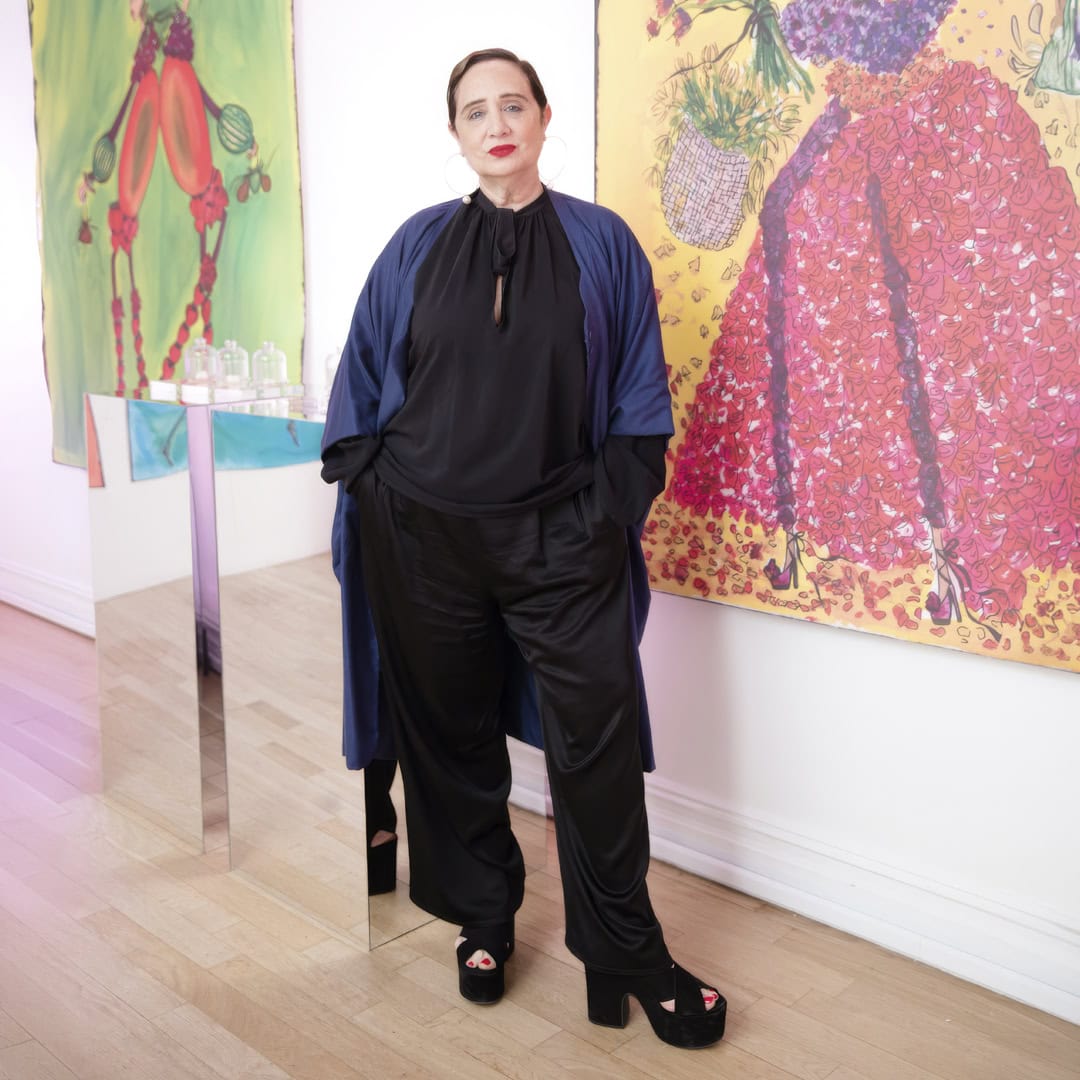
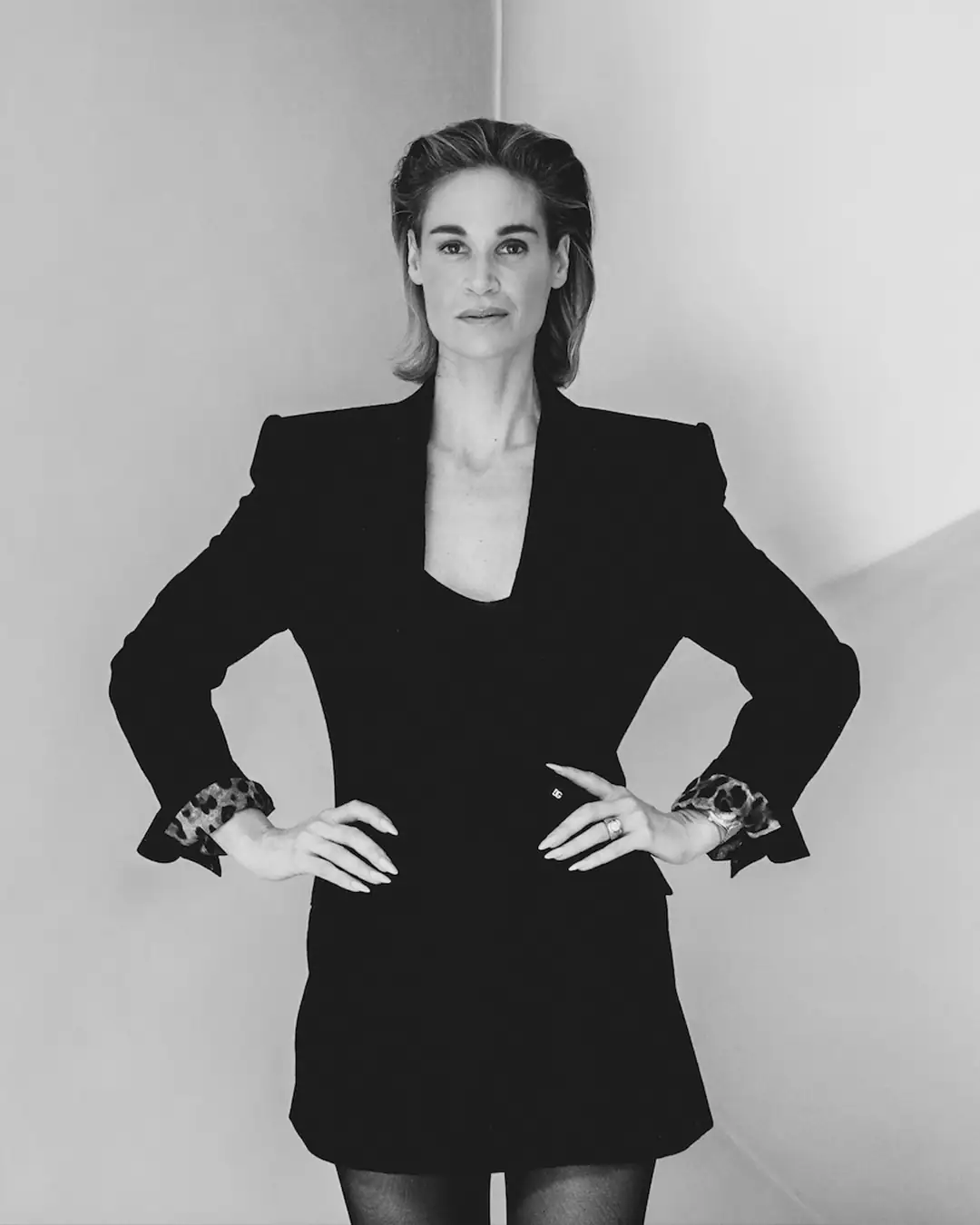
 Rebecca Moses. Image courtesy of the artist.
I would like to thank Rebecca Moses for so generously sharing her time, energy and insight. Her reflections on colour, storytelling and the courage to reinvent offer a fascinating window into a creative life still very much in motion. We look forward to following where her ever-developing language leads next.
Rebecca Moses is represented by Ralph Pucci in the United States and Nilufar in Italy.



Leave a Reply